
Bloggers and agencies deciding between SEOwind and Autoblogging.ai need a direct feature and pricing breakdown before they commit.
By the end of this article you will see the exact capabilities each tool offers for bulk generation, SERP analysis, and publishing, plus the pricing tiers and the single scenario where Autoblogging.ai wins outright.
Quick Verdict: SEOwind vs Autoblogging.ai
Autoblogging.ai delivers superior bulk generation for agencies while SEOwind focuses on niche SERP forecasting. This core difference shapes which tool serves specific business needs best.
Autoblogging.ai supports bulk generation with Godlike Mode competitor analysis. The platform brings semantic SEO tools and a 21-point SEO audit into every workflow.
SEOwind offers traffic forecasting instead. This capability helps teams predict content performance before they commit resources.
Agencies handling high-volume publishing choose Autoblogging.ai. The platform includes one-click WordPress publish and human proofreader across all plans.
Teams focused on individual keyword strategy may prefer SEOwind forecasting features. Most content operations benefit more from Autoblogging.ai bulk capabilities.
Autoblogging.ai generates 1M+ articles for 40,000+ content creators. The service maintains a 4.9 average rating across users.
Both platforms serve different primary use cases in the AI content generator space. Autoblogging.ai wins for teams that need scale and integrated SEO features.
At a glance: how Autoblogging.ai compares to SEOwind on the features that matter most.
| Feature | Autoblogging.ai | SEOwind |
|---|---|---|
| Pricing | $19/mo | $49/mo |
| Free plan / trial | 10 free credits/mo | 3-day trial |
| Languages | 35+ languages | 12 languages |
| WordPress integration | ✓ | ✓ |
| AI article generation | ✓ | ✓ |
| Keyword research | ✓ | ✓ |
| Internal linking | ✓ | ✓ |
| Humanizer / proofreader | ✓ | ✓ |
What Is Autoblogging.ai?
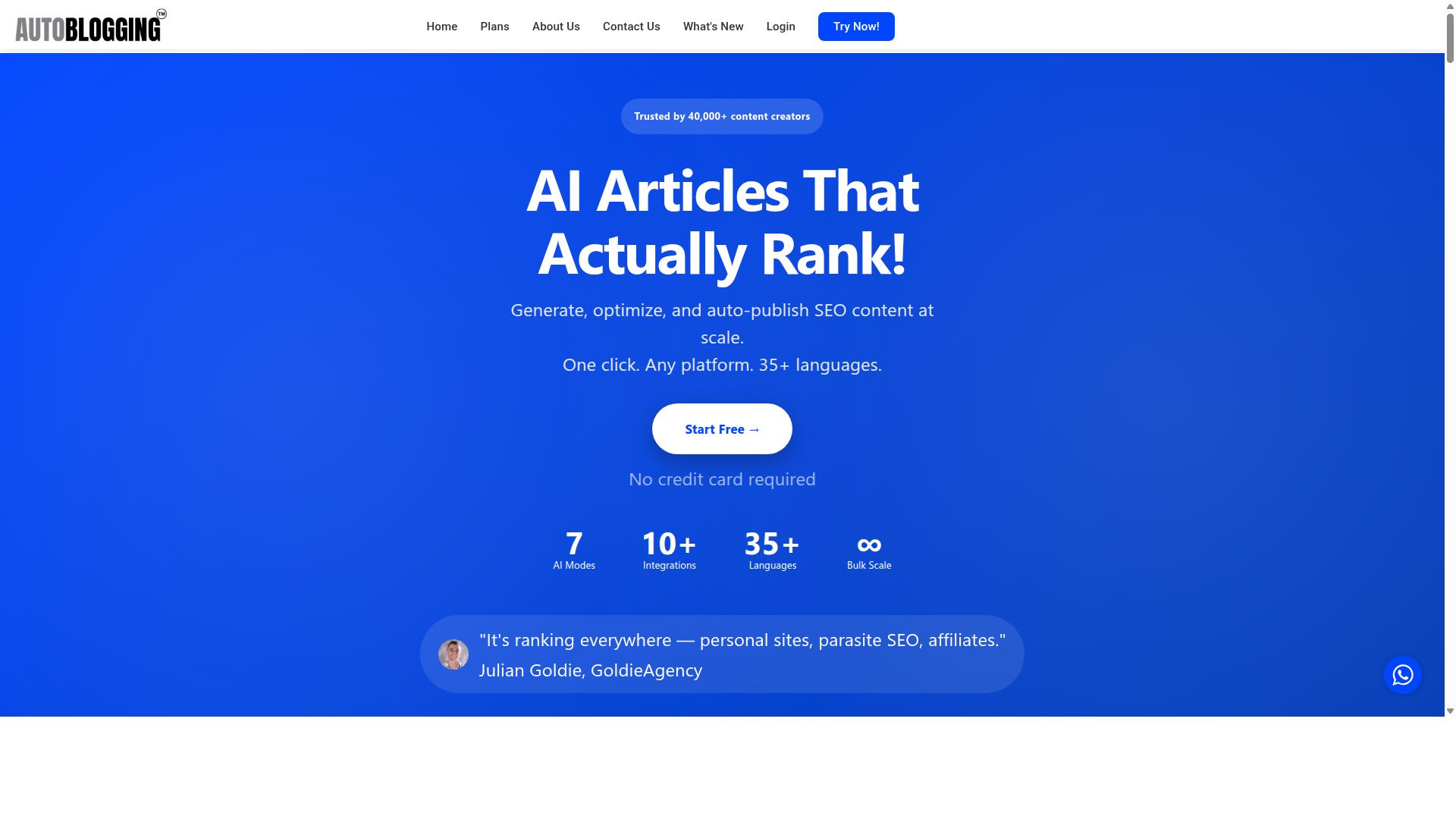
Autoblogging.ai is an AI article generation platform created to automate content for bloggers and agencies. The tool serves as a SaaS product of Digimetriq.com. Users rely on it to convert SERP data into articles quickly and efficiently.
Autoblogging.ai supports 10+ AI modes that help generate different types of content. The platform works across 35 languages. Bloggers and agencies use these options to match their specific project needs.
Over 1M+ articles have been generated through the platform. More than 40,000+ users have adopted Autoblogging.ai for their content workflows. This adoption shows the tool’s reach among content creators.
The mission focuses on helping bloggers, website owners and agencies save time. Autoblogging.ai improves online presence through cutting-edge technology. The platform aims to cut down content costs for teams of all sizes.
Autoblogging.ai give the power tos human counterparts in SOPs with the first draft. Digimetriq aims to replace human counterparts entirely over time. This approach positions the platform as a long-term solution for content creation.
What Is SEOwind?
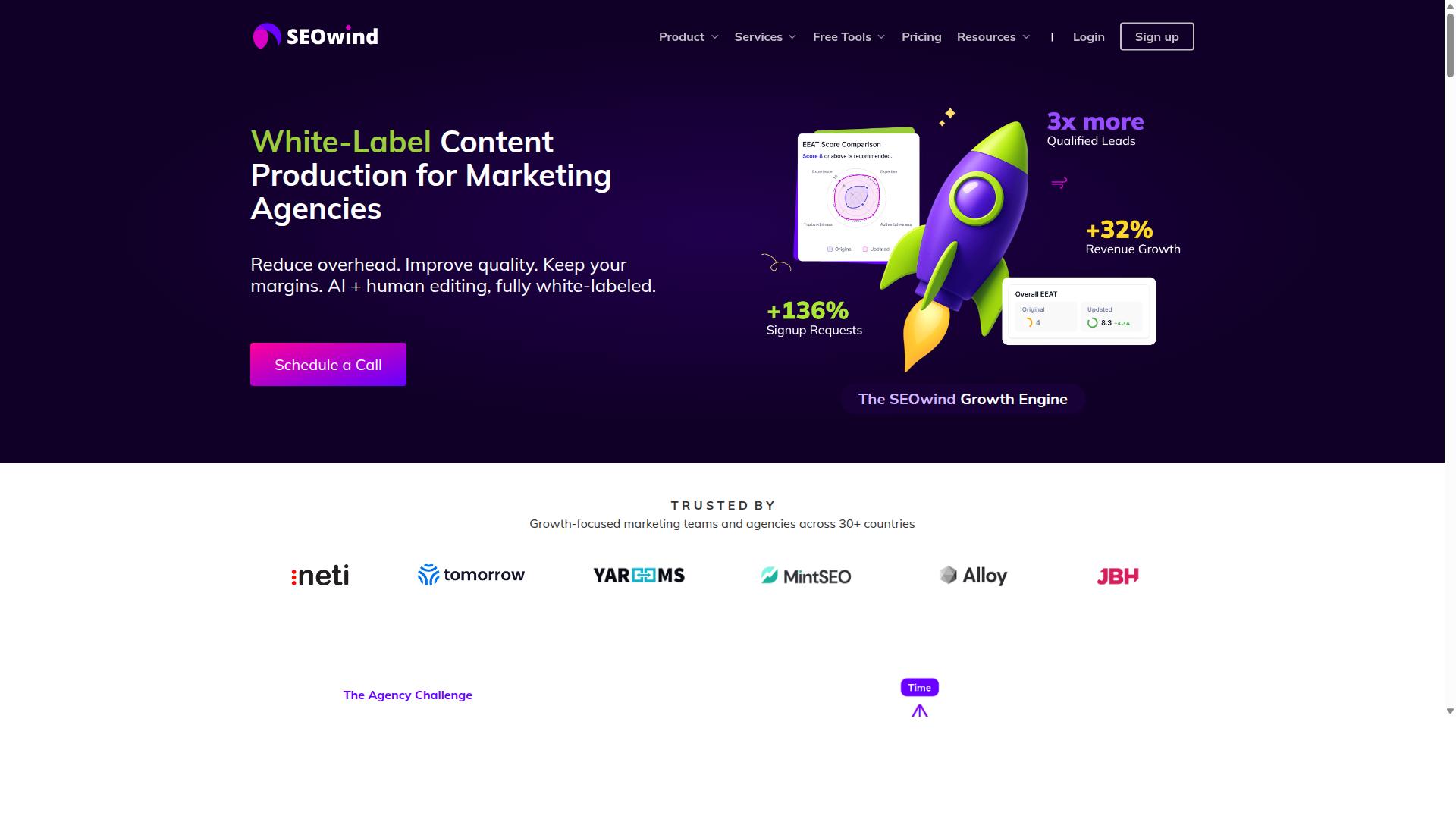
SEOwind is an AI writing tool centered on content briefs and search-volume forecasts. The platform helps users generate outlines while predicting traffic potential for different topics.
Many teams use this SEO content tool to understand keyword opportunities before they begin writing. The approach combines traditional research methods with automated predictions to support planning decisions.
Users often compare platforms like SEOwind against alternatives such as Autoblogging.ai. Each solution targets content creators who need support with research and creation tasks.
SEOwind focuses primarily on the upfront analysis phase. The system provides forecasts that help writers select topics with estimated search potential.
Content teams evaluate these tools based on their specific workflow needs. Some prefer dedicated forecasting features while others seek broader automation capabilities through an auto blogging platform.
Features Compared
Feature depth separates Autoblogging.ai from SEOwind in automation scale and publishing reach. Autoblogging.ai delivers a complete system that handles generation, analysis, and distribution in one platform. SEOwind offers solid capabilities but lacks the same breadth across multiple workflows.
Users who need consistent output across dozens of sites see clear differences in how each tool manages volume. Autoblogging.ai supports larger operations without requiring multiple accounts or external plugins. This integrated approach reduces friction for teams managing complex content programs.
SEOwind focuses on core writing functions while Autoblogging.ai extends further into semantic tools and direct publishing. The difference becomes apparent when scaling beyond single articles. Teams benefit from having analysis, optimization, and distribution built into the same interface.
AI Article Generation & Bulk Mode
Autoblogging.ai produces up to 500 full articles in one run via Bulk Generation. This capacity exceeds typical single-article tools and suits publishers who need regular content across multiple topics. SEOwind handles generation but does not match this scale in a single operation.
Quick Mode provides a free single-article option for testing ideas or creating isolated pieces. Godlike Mode extracts LSI keywords plus knowledge graph entities to build richer content foundations. Credit rollover keeps unused allocations available for future runs.
Weekly feature updates keep Autoblogging.ai current with new optimization methods and platform changes. SEOwind releases updates less frequently according to available information. Users who value ongoing improvements find this cadence practical for long-term content strategies.
SERP Analysis & Semantic SEO Tools
Autoblogging.ai runs SERP competitor analysis inside Godlike Mode to build topical clusters. The platform extracts knowledge graph data to identify entities that strengthen content relevance. On-page entity optimization helps align articles with current search patterns.
Autoblogging.ai combines these steps so writers move from research to draft without switching tools. This consolidation saves time when producing multiple pieces on related subjects.
Integrations & Publishing Options
Autoblogging.ai connects to 35+ platforms including direct WordPress publishing and content scheduling. WordPress integration supports unlimited sites through the plugin with one-click publishing. Zapier and n8n connections extend automation to other systems when needed.
Multi-platform support covers Shopify, Wix, Webflow, Blogger, and Ghost. Web 2.0 options include Medium, Dev.to, Hashnode, Telegraph, and Tumblr for broader distribution. SEOwind offers fewer native connections according to current details.
The scheduling workflow lets users set daily auto-posting across selected sites. Content Repurposer tools extend the value of existing articles into new formats. Teams managing several properties gain efficiency from these unified options.
Pricing Compared
Autoblogging.ai pricing scales from $19 monthly Starter to $999 Enterprise plans. This range gives users clear entry points for different business sizes and content goals. Each tier comes with defined credit allowances that match typical publishing schedules.
Autoblogging.ai offers six monthly credit tiers that increase in capacity. The Starter plan delivers 40 credits, Regular 120 credits, Standard 300 credits, Gold 600 credits, Premium 1,000 credits, and Enterprise 5,000 credits. Users can select the exact volume that matches their publication needs.
SEOwind pricing structures often appear less transparent in public comparisons. Many users report difficulty understanding exactly what each package includes before committing. Autoblogging.ai removes this uncertainty with explicit credit counts listed upfront.
Annual billing provides additional savings across all tiers. Starter drops to $12 monthly, Regular to $32, Standard to $64, Gold to $116, Premium to $162, and Enterprise to $649 when paid yearly. These discounts reward users who commit to longer terms.
Every Autoblogging.ai plan includes credit rollover. Unused credits carry forward to the next month without expiration. This flexibility prevents waste when content production slows temporarily.
New accounts receive 10 free credits each month without requiring a credit card. Autoblogging.ai also allows additional credit purchases when projects exceed standard allowances. Payment options include major cards, PayPal, and bank transfers for enterprise agreements.
Who Should Choose Autoblogging.ai
Agencies managing multiple client sites and affiliate marketers needing bulk long-form content choose Autoblogging.ai. The platform serves bloggers, website owners, and marketing agencies who want reliable AI content generation at scale.
Solo bloggers benefit most from the Starter plan. This option works well for personal sites and smaller affiliate projects that need consistent content without complex management tools.
Gold or Premium plans suit agencies handling ten or more sites. These tiers support client websites, portfolio sites, and local business pages that require coordinated publishing across different domains.
High-volume operations find the Enterprise plan most effective. Large agencies and content teams use this tier when managing many sites with demanding output requirements.
Parasite SEO practitioners rely on Autoblogging.ai for rapid content deployment. The platform helps users create content that ranks on third-party domains without manual writing bottlenecks.
Portfolio site owners gain steady publishing capacity through Autoblogging.ai. Regular updates across multiple showcase sites become manageable when AI handles the first draft creation.
SEO professionals and content creators also select Autoblogging.ai when volume matters more than manual control. The platform supports affiliate sites and client work where consistent output drives results.
Who Should Choose SEOwind
SEOwind suits teams that prioritize content calendars and search-volume predictions over bulk publishing. Organizations focused on planning rather than volume often find this approach useful. The platform serves teams that want forecasting tools built into their workflow.
Users who manage editorial schedules may benefit from traffic forecasting features. Content planners often need visibility into expected search demand before assigning topics. SEOwind provides this forecasting layer that supports broader strategy decisions.
Teams working with limited resources sometimes prefer tools that help them select topics carefully. Brief generation becomes valuable when writers need direction before drafting begins. This focus on planning distinguishes SEOwind from platforms built for high-volume output.
Companies that publish fewer articles but require strong topic alignment may find the approach suitable. SEOwind supports teams that measure success through targeted search performance rather than publication count. The emphasis remains on prediction and planning instead of automation at scale.
Autoblogging.ai serves different needs when organizations require consistent publishing across multiple sites. The platform supports teams that want ongoing content creation without manual intervention each week. WordPress integration allows content to publish automatically once schedules are set.
Businesses managing several blogs often choose Autoblogging.ai for its ability to handle volume while maintaining topic relevance. The system reduces the time spent on repetitive publishing tasks. Teams focused on growth through regular content updates tend to prefer this approach over forecasting-focused alternatives.
Final Verdict
Autoblogging.ai wins for volume, integrations, and proven scale with 1M+ articles generated. The platform delivers consistent results when users need reliable output at scale.
Autoblogging.ai maintains a 4.9 rating across its user base. This score reflects steady performance in real publishing environments.
The tool supports 35+ languages for content creation. Businesses reach international audiences without switching platforms or losing quality.
Human Proof mode gives teams another layer of control. Editors can review and refine AI output before publishing.
Support runs around the clock for users who need help. Autoblogging.ai provides assistance through phone, WhatsApp, email, and Skype channels.
India contact details include the address at 501, Trinity Orion, Vesu, Surat 395007, Gujarat with phone and WhatsApp options at +91 84605-06553. The UK office sits at 2nd Flr, SEO Content Suite, 35 Water Ln, Wilmslow, Cheshire SK9 5AR with phone support at +44 1625 359056.
Reach the Autoblogging.ai team through the contact page to discuss a personalized plan that matches
Frequently Asked Questions
What are the main differences in features between SEOwind and Autoblogging.ai?
Autoblogging.ai offers 10+ AI modes including Quick Mode, Godlike Mode with SERP competitor analysis and LSI keywords, Bulk Generation for up to 500 articles via CSV, and News Mode, along with 35+ languages and 35+ integrations. SEOwind focuses on AI writing with options for SERP analysis and outlines, though specific mode counts are not detailed in available information. Autoblogging.ai also includes human proofreaders in select plans and weekly feature updates.
How does the pricing of SEOwind compare to Autoblogging.ai?
Autoblogging.ai provides monthly plans starting at $19 for 40 credits and scaling up to $999 for enterprise-level usage with 5,000 credits, plus annual discounts and credit rollover. SEOwind lists options such as $189 per month billed annually for 20 articles or review-site tiers beginning around $49 monthly for basic plans with limited articles and domains. Users should review current details on both sites as plans vary by article volume and project needs.
Which tool supports larger-scale bulk article generation?
Autoblogging.ai includes a dedicated Bulk Generation mode that supports up to 500 articles through CSV uploads, making it suitable for agencies and high-volume creators. SEOwind offers article generation within its project limits, such as 20 articles on the annual plan or higher tiers on review-site pricing. Autoblogging.ai’s credit system and rollover feature provide flexibility for ongoing bulk workflows.
Is Autoblogging.ai appropriate for SEO professionals and marketing agencies?
Autoblogging.ai targets bloggers, website owners, SEO professionals, marketing agencies, and affiliate marketers, with tools like Godlike Mode for competitor analysis and support for parasite SEO, affiliate sites, and client projects. It has earned a 4.9 rating from over 40,000 content creators and generated more than 1 million articles. SEOwind also serves SEO-focused users through its analysis capabilities.
What kind of support and reliability does Autoblogging.ai provide?
Autoblogging.ai delivers 24/7 support, credits that roll over between periods, and new features shipped weekly, backed by a team led by founder Vaibhav Sharda since 2022. The platform is available worldwide with contact options in India and the UK. SEOwind includes a 3-day free trial, though detailed ongoing support information is limited in public sources.
Does Autoblogging.ai include quality controls similar to other AI writing tools?
Autoblogging.ai incorporates a human proofreader option in certain plans, knowledge graph extraction in Godlike Mode, and multi-language support to help maintain content standards. It has received positive testimonials from SEO professionals and agencies. SEOwind also emphasizes research-backed outputs, so evaluating sample articles from both remains advisable.
