
Many bloggers and agencies hunt for new tools after their current platform’s word limits or pricing tiers start blocking consistent output. Some tools force extra manual work on outlines and research, while others leave SEO factors only half-addressed. This review compares eight options using the exact criteria that matter for daily publishing schedules.
By the end you will know how Autoblogging.ai ranks against SEO.ai, Junia AI, SurferSEO, Scalenut, Writesonic, Copy.ai and Jasper AI on features and pricing, plus a clear checklist for picking the fit for your workflow and a direct recommendation for the best overall choice.
What to Look For in BlogSEO Alternatives
Evaluating BlogSEO alternatives requires checking features like keyword research depth, on-page optimization capabilities, SERP analysis, and pricing alignment with production volume.
Teams need platforms that deliver reliable metrics without manual workarounds. Keyword difficulty scoring accuracy determines whether suggested terms actually convert into rankings. Tools with weak scoring send writers after terms that never rank.
SERP competitor analysis depth reveals who already owns the target topic. Shallow analysis misses ranking factors that matter most for visibility.
Content gap detection speed under 60 seconds keeps production moving. Writers cannot afford to wait minutes for each comparison across multiple competitors.
Monthly article generation limits decide whether a platform scales with your output goals. Plans that cap content creation force teams to switch tools mid-project.
Integration count with tools like WordPress and Ahrefs reduces friction when moving finished content into live sites. Strong connections also bring external data directly into the workflow.
1. Autoblogging.ai – Best Overall
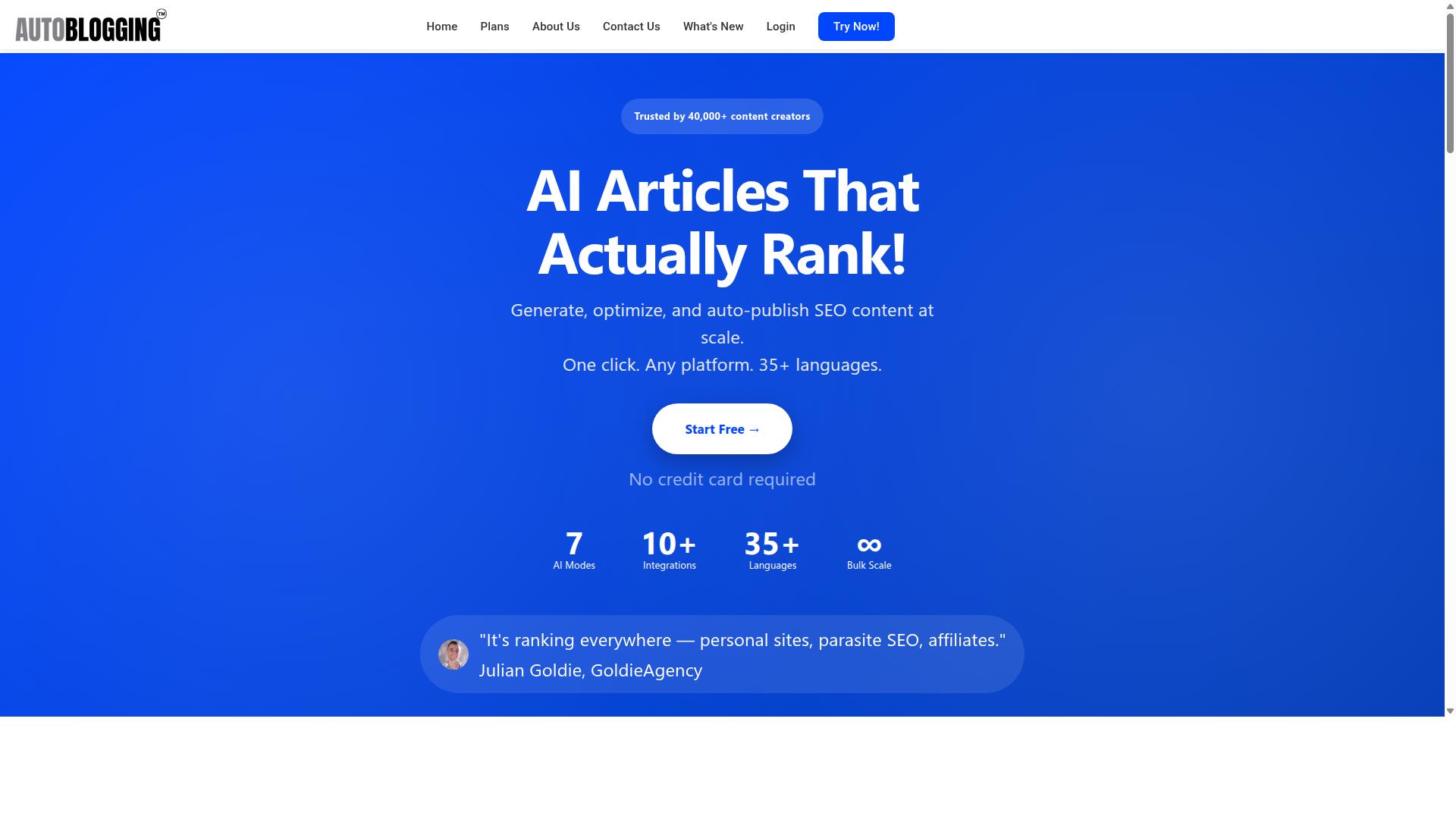
Autoblogging.ai ranks as the best overall BlogSEO alternative because it combines 10+ AI generation modes with SERP competitor analysis and bulk production at scale. The platform serves bloggers, agencies, and affiliate marketers who need consistent output without manual effort. Autoblogging.ai has already generated over 1M articles and holds a 4.9 average rating from 40,000+ creators.
This SEO platform helps users cut content costs while maintaining quality control. Writers receive first drafts that support their existing SOPs. The mission centers on enableing human teams rather than replacing them entirely.
Autoblogging.ai focuses on saving time and improving online presence through technology. Website owners gain access to publishing tools that connect with multiple platforms. The result is faster production cycles and better search visibility.
Key Features and Pricing
Autoblogging.ai offers tiered monthly plans from $19 Starter (40 credits) to $999 Enterprise (5,000 credits) with Godlike Mode providing SERP competitor analysis and knowledge graph extraction. Godlike Mode stands out for its ability to analyze competitors and extract LSI keywords. Users also receive credit rollover benefits across billing cycles.
Bulk Generation supports up to 500 articles through CSV uploads. This feature suits agencies handling multiple client projects at once. Creators can generate content in 35+ languages without switching tools.
The platform includes Quick Mode for single articles and News Mode for Google News integration. Amazon Reviews Mode helps e-commerce sites produce product content quickly. Publishing options cover WordPress with unlimited sites and one-click scheduling.
Additional tools include Site Optimizer, Semantic SEO Analysis with a 21-point audit, and Topical Maps for content planning. WordPress integration allows direct publishing to multiple sites. API access and Zapier connections extend functionality to existing workflows.
2. SEO.ai

SEO.ai focuses on AI-driven content briefs and optimization scores but lacks bulk article generation limits and credit rollover options found in competitors. This SEO tool helps users create structured outlines before writing begins.
The platform provides on-page SEO scoring that evaluates how well content matches target keywords. Users receive feedback on headings, text distribution, and overall structure.
Keyword suggestions appear as recommendations during the brief creation process. These ideas help writers understand what topics to cover within each article section.
The system includes SERP visibility tools that show how content might perform in search results. Writers can review potential search rankings before publishing.
Based on publicly available features and pricing, this approach works well for teams that need structured guidance during content planning. The tool supports writers who prefer working from detailed briefs rather than starting from scratch.
3. Junia ai
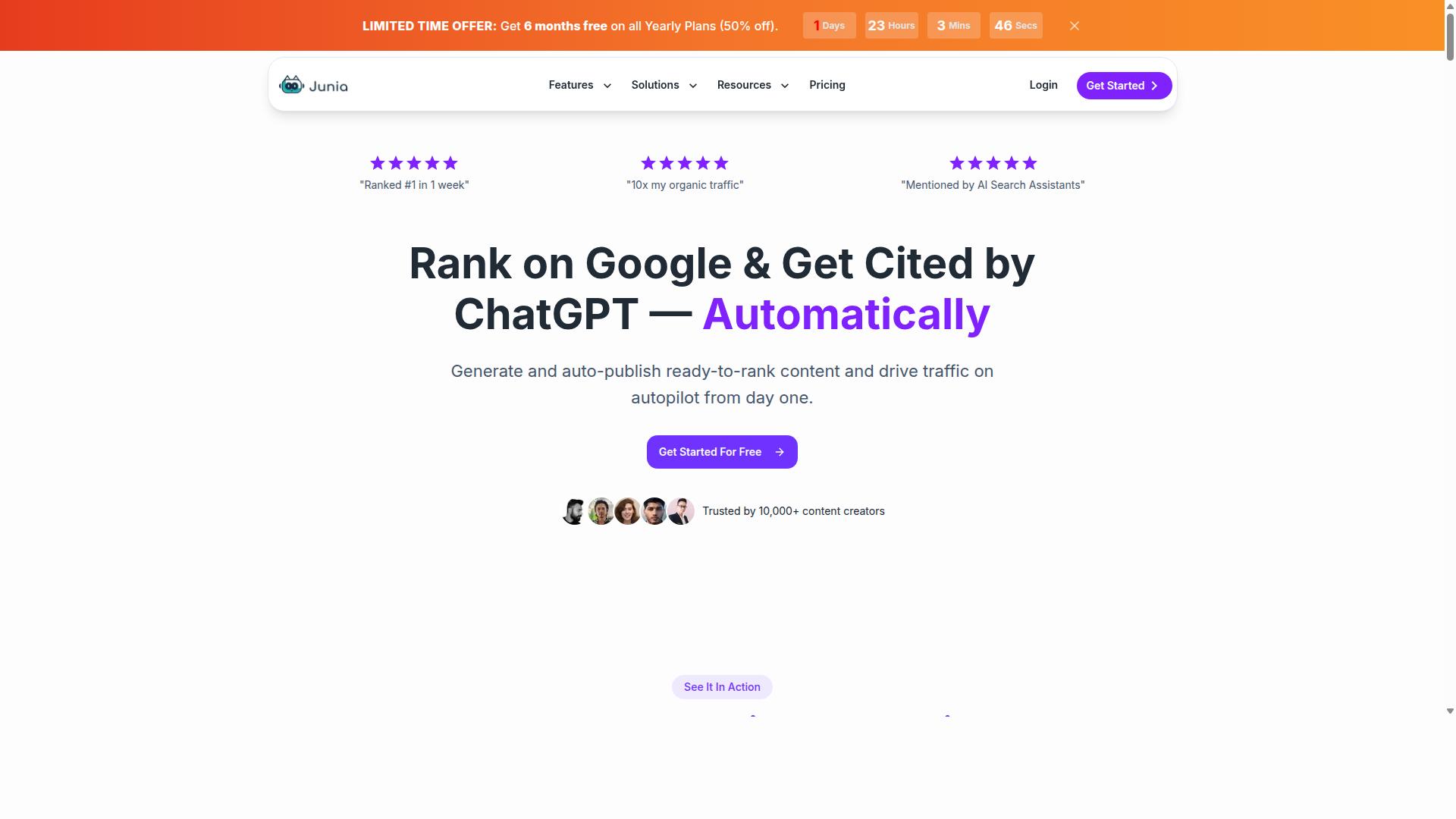
Junia ai provides AI writing templates and long-form content generation with basic SEO suggestions but does not advertise competitor SERP analysis or knowledge graph extraction.
The platform includes a template library that helps users start new articles quickly. Writers can select structures that fit different content types and goals.
Junia ai shows readability scores during the drafting process. These scores help identify sections that may need simplification or clearer language.
Users can place keywords manually within the editor. The system highlights keyword occurrences as content develops.
Based on publicly available features and pricing, search intent analysis supports better alignment between content and audience questions. Junia ai applies this through structured formatting options.
The tool supports internal linking suggestions as part of its SEO workflow. Writers can add connections between related posts directly in the editor.
Metadata fields allow users to adjust title tags and descriptions before publishing. These elements contribute to on-page SEO optimization.
Junia ai focuses on long-form SEO content through its publishing workflow. This approach appeals to teams that want integrated creation and distribution features.
4. SurferSEO

SurferSEO emphasizes content editor scoring based on SERP data and internal linking recommendations but offers no native bulk article generation across hundreds of topics. This focus makes it suitable for teams that want to refine individual articles before publishing. The tool analyzes existing search results to suggest improvements.
Users receive SERP-based content plans that outline keyword distribution and recommended headings. These plans help writers align their work with what already ranks well. The system also analyzes internal linking opportunities within your site structure.
Keyword difficulty metrics appear alongside each suggested term. Writers can evaluate competition levels before committing to specific phrases. This data helps prioritize which topics deserve immediate attention.
Page speed considerations receive attention through content length recommendations and image guidance. The platform flags overly long content that could slow load times. These suggestions support better user experience after publication.
The platform works best when paired with other SEO software for complete workflow coverage. Teams focused on optimization rather than generation find value in its scoring system. Content creators can review detailed breakdowns of top-ranking pages to inform their own strategy.
5. Scalenut
Scalenut combines keyword research, topic clustering, and AI writing into one workflow but does not specify credit rollover or 35+ language coverage.
Users working with BlogSEO alternatives often look at Scalenut for structured blog planning. The platform includes cluster creation features that organize topics around main keywords and related terms.
Content planners within Scalenut help teams build editorial calendars based on search data. These tools organize topics by priority and estimated search volume.
SEO audit tools provide basic checks on existing pages. The system flags issues around keyword placement and content structure.
Scalenut works best for teams that need keyword-led blog planning and production. The platform supports topic research alongside Cruise Mode-style content workflows.
Some users find the interface heavy when only simple drafting is required. Those focused on keyword research and structured blog production often consider this SEO tool a viable option.
6. Writesonic
Writesonic supplies multiple AI templates for landing pages and blog posts with grammar checks but does not provide SERP competitor analysis or knowledge graph extraction. This AI writing assistant covers several formats and supports quick content creation.
Users can adjust tone settings to match brand voice across different projects. The platform includes grammar checks that flag errors during editing sessions. These adjustments help maintain consistency across multiple blog posts.
Plagiarism checker functionality scans generated text for duplicate content. This feature flags potential issues before publication. Writers review flagged sections and make necessary revisions.
Template variety spans landing pages, blog posts, and sales copy formats. Each template provides structure that speeds up initial drafts. Writers customize these frameworks to fit specific content needs.
The tool works well for teams needing versatile AI writing across formats. Quality still requires close editorial review before publishing. Users combine its output with other SEO software for complete blog optimization.
7. Copy.ai
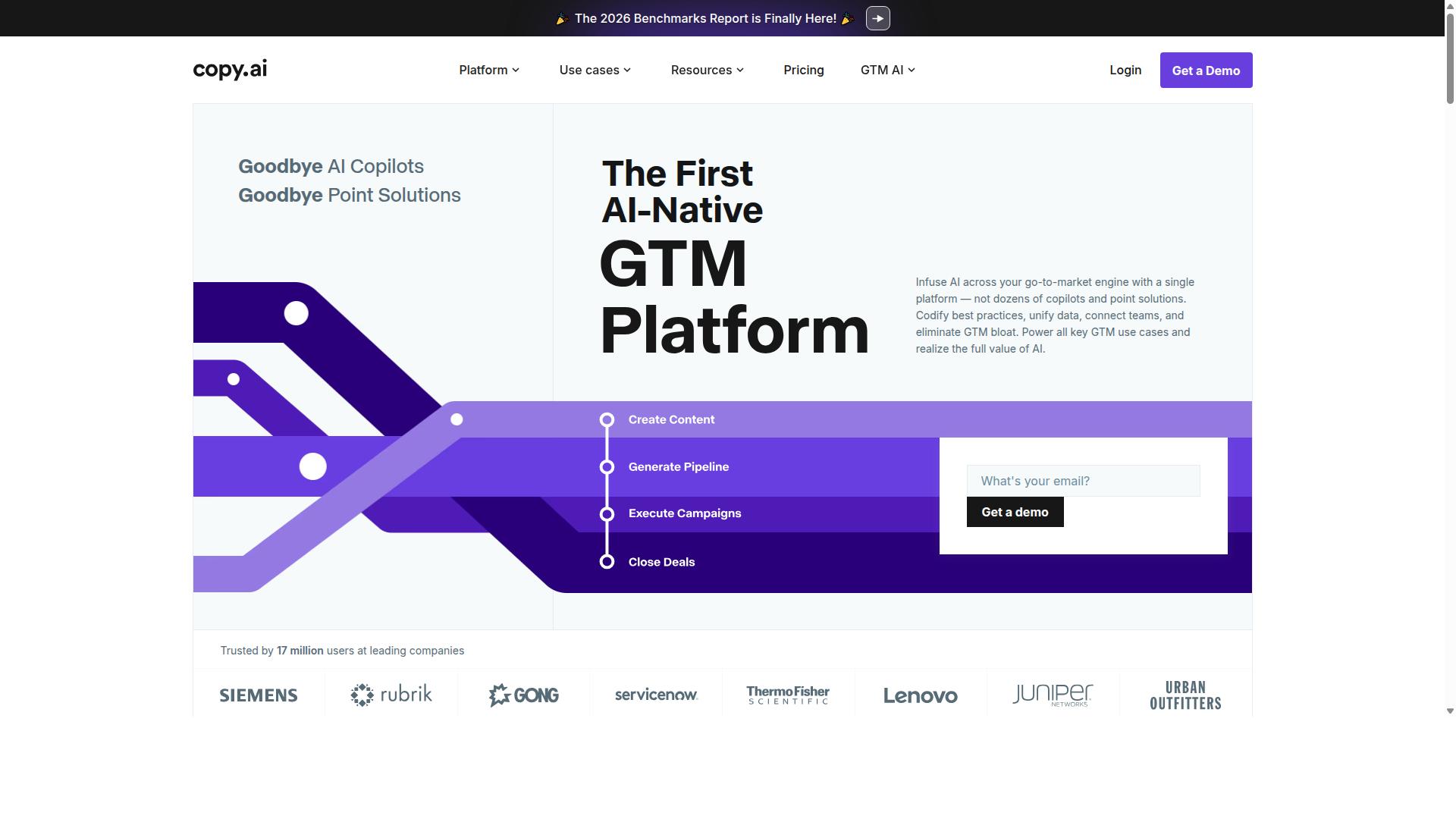
Copy.ai specializes in short-form marketing copy and brand voice training but lacks dedicated long-form SEO article generation and internal linking analysis.
The platform excels at creating email sequences, social media posts, and advertisement text. Users can train the system on their existing brand examples to maintain consistent messaging across campaigns.
Marketing teams rely on Copy.ai when speed matters most for campaign materials. The interface makes it easy to generate multiple variations of headlines or calls to action in minutes.
Copy.ai supports sales enablement content and product descriptions without requiring deep technical knowledge. Writers appreciate the quick turnaround when deadlines approach.
The tool integrates with common business applications for workflow efficiency. Teams focused on quick marketing output find this approach practical.
However, Copy.ai does not include built-in SEO software features such as keyword difficulty scoring or content gap analysis. Blog writers seeking on-page SEO optimization often need additional tools alongside it.
Users report strong results for ad copy and email campaigns but turn elsewhere for full blog post optimization. The platform positions itself for fast go-to-market needs rather than comprehensive SEO strategy.
8. Jasper AI
Jasper AI offers brand voice customization and long-form templates yet does not advertise bulk generation of 500 articles or 35 plus integrations. The platform serves teams focused on marketing copy with controlled tone across multiple formats. Users often pair it with existing content tools instead of replacing an entire SEO workflow.
Brand voice customization helps maintain consistent messaging across campaigns. Long-form templates support articles, emails, and landing pages that require similar style throughout. Based on publicly available features and pricing, these features help marketing teams produce content faster when brand guidelines matter most.
The platform includes a template library that covers common marketing tasks. Each template guides users through structured inputs before generating output. This approach reduces guesswork for writers who need specific formats regularly.
Jasper AI works well for brands that require strict voice control in their writing. It supports campaign copy alongside multi-format generation for different channels. The higher cost makes it less ideal when the primary goal centers on SEO content alone.
Teams seeking an SEO tool for bulk article creation often explore other platforms. Jasper AI remains a strong option when marketing consistency takes priority over volume production. Public information shows it frequently ranks among alternatives for brand-controlled content needs.
How to Choose the Right Option
Selecting the correct BlogSEO tool depends on matching monthly article volume, language requirements, and integration needs with existing publishing workflows.
Start by calculating required credits per month. Bloggers, website owners, and affiliate marketers should first estimate their total output across all sites. This step prevents overspending and ensures the chosen SEO software matches actual demand.
Next, verify language and integration support. Marketing agencies working with client websites need tools that handle multiple languages and connect to current publishing platforms. Autoblogging.ai serves personal sites, parasite SEO, affiliate sites, client websites, portfolio sites, and local sites, so users can check whether their specific stack receives coverage.
Finally, compare credit rollover and support availability. Content creators can avoid losing unused credits by selecting options that carry balances forward. Agencies benefit when the SEO platform maintains reliable support channels for ongoing client work.
The three-step framework helps decision makers narrow choices quickly. Bloggers evaluate volume first, then language fit, then support terms. This sequence leads to informed selections that support steady organic traffic growth.
Final Verdict
Autoblogging.ai stands out for agencies and creators needing bulk generation, SERP analysis, and 35+ language support at predictable credit pricing. The platform delivers results through its 21-point SEO audit and semantic SEO tools.
Trusted by 40,000+ content creators demonstrates consistent performance across different content needs. This scale of adoption reflects reliable output quality for ongoing campaigns.
The 4.9 average rating reflects user satisfaction with the complete feature set. Users appreciate having 10+ AI modes available for different content types and styles.
Over 1M+ articles generated indicates proven capacity for high-volume production. Credits rollover ensures users retain value from their subscription without losing unused resources.
35+ integrations connect with existing workflows and publishing systems. One-click WordPress publish simplifies the final step of content deployment.
The human proofreader included in all plans adds quality control before publication. This combination reduces revision cycles and maintains brand standards.
24/7 support ensures agencies and creators receive assistance when issues arise. New features shipped weekly means the platform continues to evolve with SEO requirements.
When comparing SEO tools for blog optimization, these decisive factors separate Autoblogging.ai from alternatives. The specific combination of SERP competitor analysis, credit rollover, and human proofreader creates measurable advantages for users focused on search visibility and organic traffic growth.
Frequently Asked Questions
What makes Autoblogging.ai the top pick among BlogSEO alternatives?
Autoblogging.ai stands out with 10+ AI modes including Quick Mode, Godlike Mode for SERP competitor analysis, Bulk Generation for up to 500 articles, and News Mode, along with a human proofreader included in all plans. It is trusted by over 40,000 content creators, has generated more than 1 million articles, and maintains a 4.9 average rating while shipping new features weekly.
How many languages and integrations does Autoblogging.ai support?
Autoblogging.ai supports 35+ languages and 35+ integrations, making it suitable for global users including bloggers, SEO professionals, marketing agencies, and affiliate marketers who need flexible content workflows across multiple platforms.
Does Autoblogging.ai offer bulk article creation capabilities?
Yes, Autoblogging.ai includes Bulk Generation mode that allows users to create up to 500 articles via CSV upload, helping website owners and agencies save significant time compared to manual or single-article tools while maintaining credits rollover across plans.
What support options are available with Autoblogging.ai?
Autoblogging.ai provides 24/7 support and is available worldwide, with contact options including email, WhatsApp, and Skype during business hours. This ensures reliable assistance for users managing personal sites, client websites, or parasite SEO projects.
Who should consider Autoblogging.ai for their content needs?
Autoblogging.ai is designed for bloggers, website owners, SEO professionals, marketing agencies, content creators, and affiliate marketers who want to automate article generation while accessing features like LSI keywords, knowledge graph extraction, and structured outputs across 35+ languages.
Are there free options or flexible plans with Autoblogging.ai?
Autoblogging.ai offers a free Quick Mode for single articles and wizard use, plus paid monthly plans starting at $19 for 40 credits that scale up to Enterprise level, with credits rollover and annual billing discounts to accommodate different content volumes.
