
Most site owners switch from Wix AI tools after hitting monthly limits on custom posts and slow content output. Those limits force teams to hire writers or delay publishing schedules. The result shows up in traffic charts that flatten while competitors keep posting weekly.
By the end of this article you will compare nine concrete alternatives that handle blogging, site building, and automation. You will see Autoblogging.ai ranked first overall with its key features and pricing next to Squarespace, Shopify, Webflow, and five other options. You will finish with a decision checklist that matches your current workflow and budget.
What to Look For in Wix AI Blog Tool Alternatives
Strong Wix AI Blog tool alternatives must deliver fast article generation, accurate SEO data, and reliable publishing workflows. Users need tools that handle research and drafting without constant oversight. The right choice depends on matching specific capabilities to your content goals.
SERP competitor analysis depth determines how well a tool understands current rankings. Platforms that scan top results can reveal content gaps and structure opportunities. This insight leads to posts that compete directly with established pages.
LSI keyword extraction accuracy affects how naturally your content covers related terms. Strong extraction pulls terms from high-ranking articles and suggests logical placements. Writers get better topical coverage without manual research.
Credit rollover policy impacts budget planning and usage flexibility. Some services reset unused credits monthly while others allow carryover across billing cycles. This difference matters when content needs spike or slow down unexpectedly.
Credit-to-article conversion rate shows how efficiently each credit produces finished content. Higher conversion means fewer wasted resources per published piece. Teams can estimate output more accurately before committing to a platform.
Integration count decides how easily new content reaches your live site. Tools that connect to multiple publishing platforms reduce manual steps and errors. Direct connections to WordPress, Webflow, and similar systems speed up the workflow.
Language support determines whether you can create content for different markets. Services that handle multiple languages accurately expand audience reach without requiring separate tools. This capability proves essential for international content strategies.
1. Autoblogging.ai – Best Overall
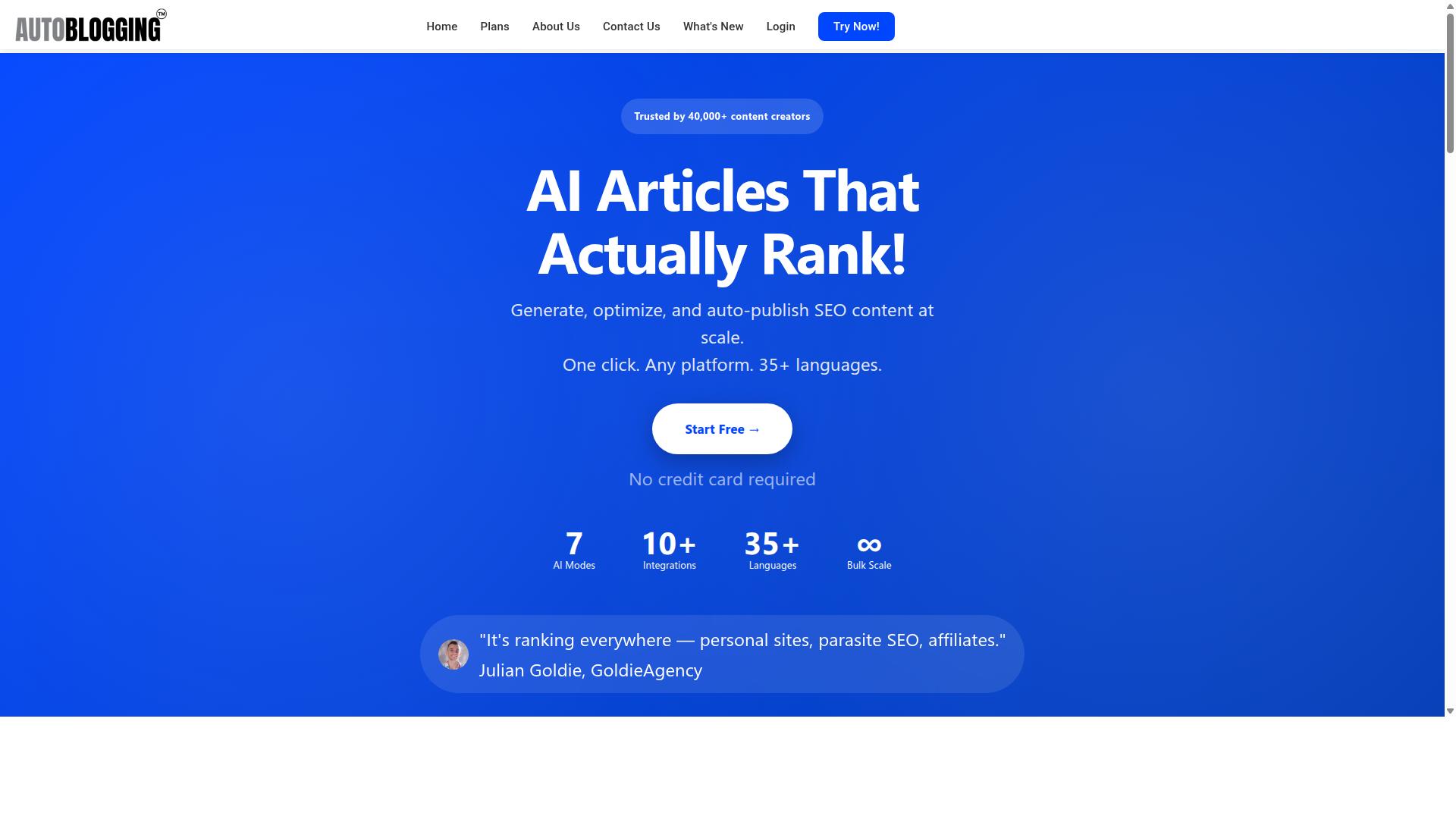
Autoblogging.ai stands out as the strongest Wix AI Blog tool alternative for bloggers and agencies needing automated, high-volume content.
This platform delivers specialized modes that address the exact pain points bloggers face when scaling their sites. The tool focuses on automation and quality control through multiple generation options.
Many creators find that traditional website builders like Wix require manual effort for each post. Autoblogging.ai changes this dynamic by handling bulk creation while maintaining SEO standards. The platform supports publishing across multiple channels including WordPress, Webflow, and Shopify.
Agencies benefit from features that handle content strategy and optimization without constant oversight. This approach reduces the time spent on repetitive tasks while improving overall output consistency.
Key Features and Pricing
Autoblogging.ai offers ten AI modes, 35 languages, and credit-based plans starting at $19 per month.
Quick Mode handles single articles and wizard-based generation for straightforward needs. This option suits bloggers who want fast results without complex settings. The mode produces ready content for immediate use.
Godlike Mode includes SERP competitor analysis along with LSI keyword integration. The system extracts knowledge graph data to strengthen topical coverage. This approach helps content rank better in search results.
Bulk Generation supports up to 500 articles through CSV uploads. Users can process large volumes at once rather than creating posts individually. This capability proves valuable for agencies managing multiple client sites.
Plans range from Starter to Enterprise tiers with varying monthly credit allocations. Each tier unlocks additional optimization tools including the 21-point Semantic SEO Analysis and Site Optimizer. WordPress integration allows one-click publishing across unlimited sites with scheduled auto-posting options.
2. Squarespace

Squarespace provides built-in blogging and basic AI-assisted design but lacks dedicated bulk AI article generation.
The platform includes AI Website Builder, templates, ecommerce, portfolios, blogs, analytics, marketing tools, email campaigns, SEO tools, and AI Visibility.
Squarespace suits creative services, professional services, education, beauty, sports, health, home services, events, nonprofits, and personal use.
It offers Squarespace Premium for scaling businesses with advanced features, lowest processing rates, and priority support. Pricing starts at $25/mo per sources.
Squarespace functions as a general website builder. It does not include specialized SERP analysis or bulk content credits.
Users seeking Wix AI Blog tools alternatives often compare platform capabilities for content creation needs. Squarespace covers standard blog publishing but leaves advanced AI writing to separate solutions.
3. Butternut AI
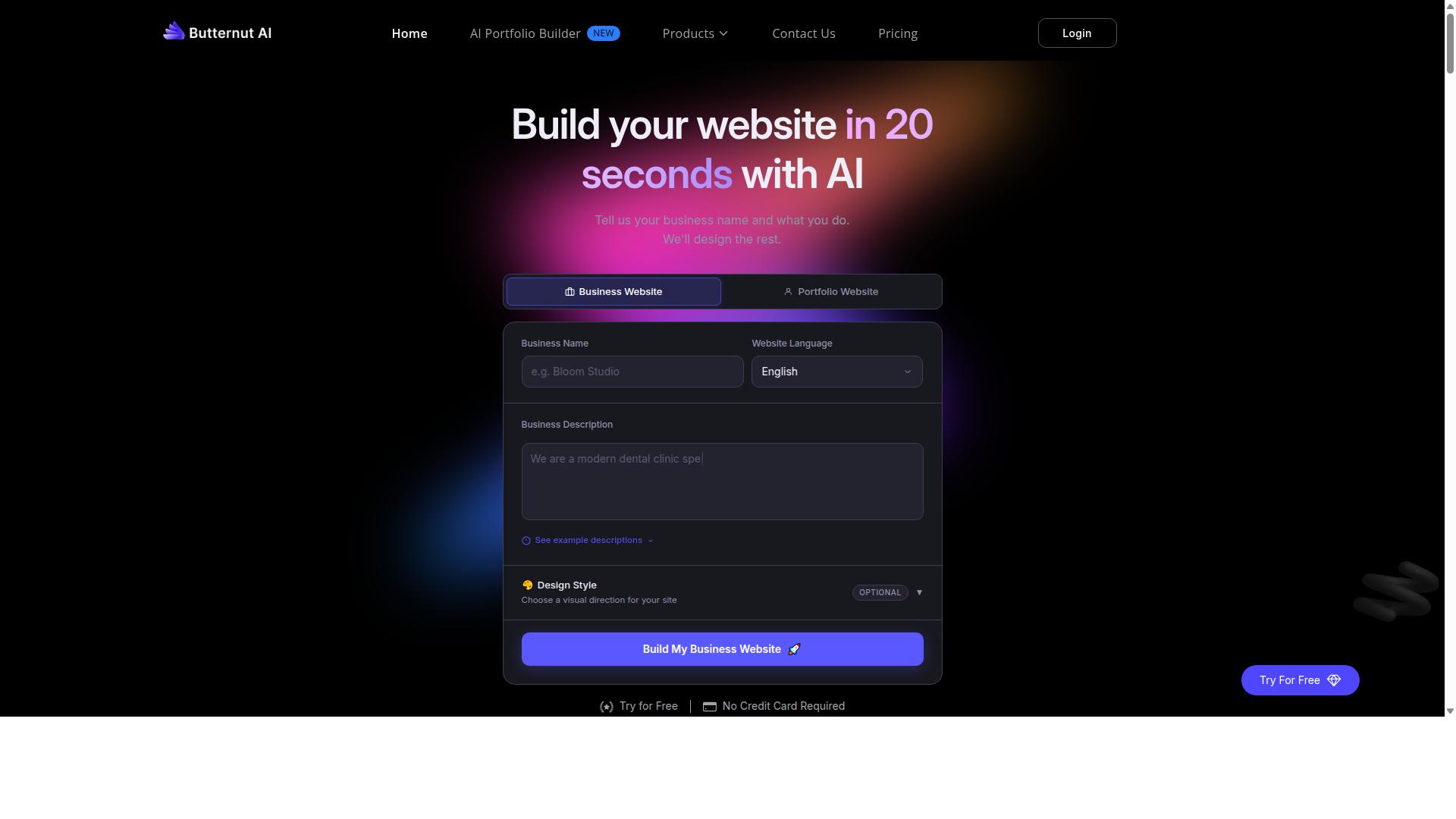
Butternut AI focuses on one-click website creation with limited long-form blog capabilities. This tool generates complete website structures from short descriptions in about 20 seconds. The service targets founders who need quick online presence rather than ongoing content production.
Core functions center around instant website generation and built-in hosting options. Users receive layout suggestions, copy creation, and payment integrations like Stripe and PayPal. The platform includes GA4 tracking and basic HTML editing features for customization needs.
Butternut AI offers narrower scope compared to dedicated AI content generators focused on blog production. The service provides complete article generation but lacks advanced content planning tools and SEO optimization features found in specialized platforms. Founders and creators use this option primarily for initial setup rather than regular publishing schedules.
The pricing structure starts at $20 per month for the Starter plan. Professional users pay $69 monthly for expanded access to AI agents handling social media across Facebook, LinkedIn, and Instagram. This approach works well for businesses requiring quick deployment over comprehensive content strategies.
4. GoDaddy
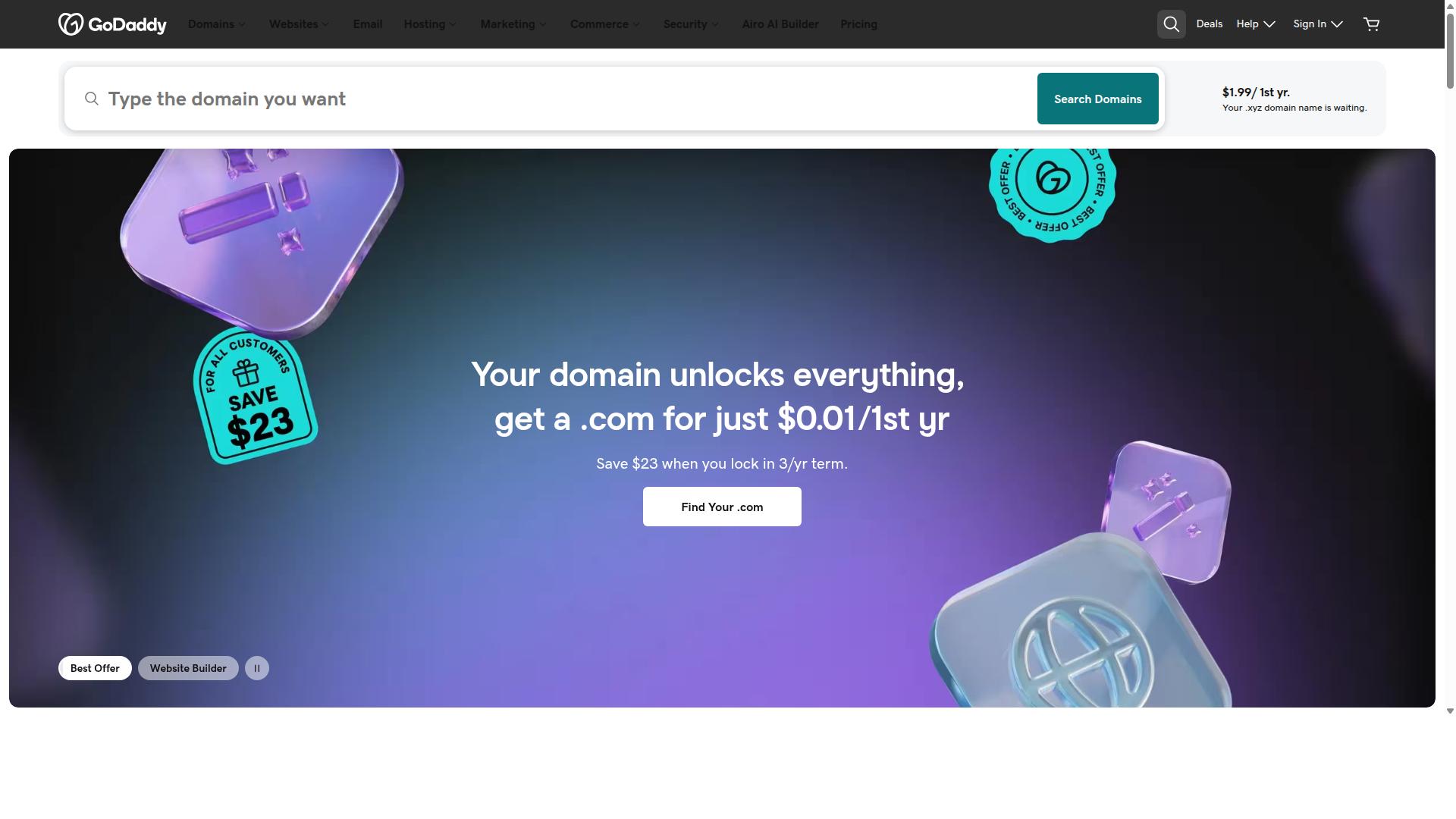
GoDaddy’s AI builder generates basic pages and offers simple blog templates without advanced SEO or bulk publishing. The platform focuses on quick setup for beginners who need a domain and basic website presence.
Users can create pages in under 30 seconds through the Airo AI-powered builder. The system provides over 100 templates and a marketing suite that includes social scheduling and email tools.
GoDaddy includes SEO tools and a marketing dashboard for small business owners. These features help users manage basic content without requiring technical expertise.
The platform integrates directly with GoDaddy domains and hosting services. This combination makes it convenient for users who already use GoDaddy for their domain registration.
GoDaddy lacks a credit system for content generation. The service also does not support multi-language bulk generation for blog posts.
Business owners who need straightforward templates may find value in the platform. Users seeking advanced AI blog features often explore other options beyond GoDaddy’s basic offerings.
5. Hostinger
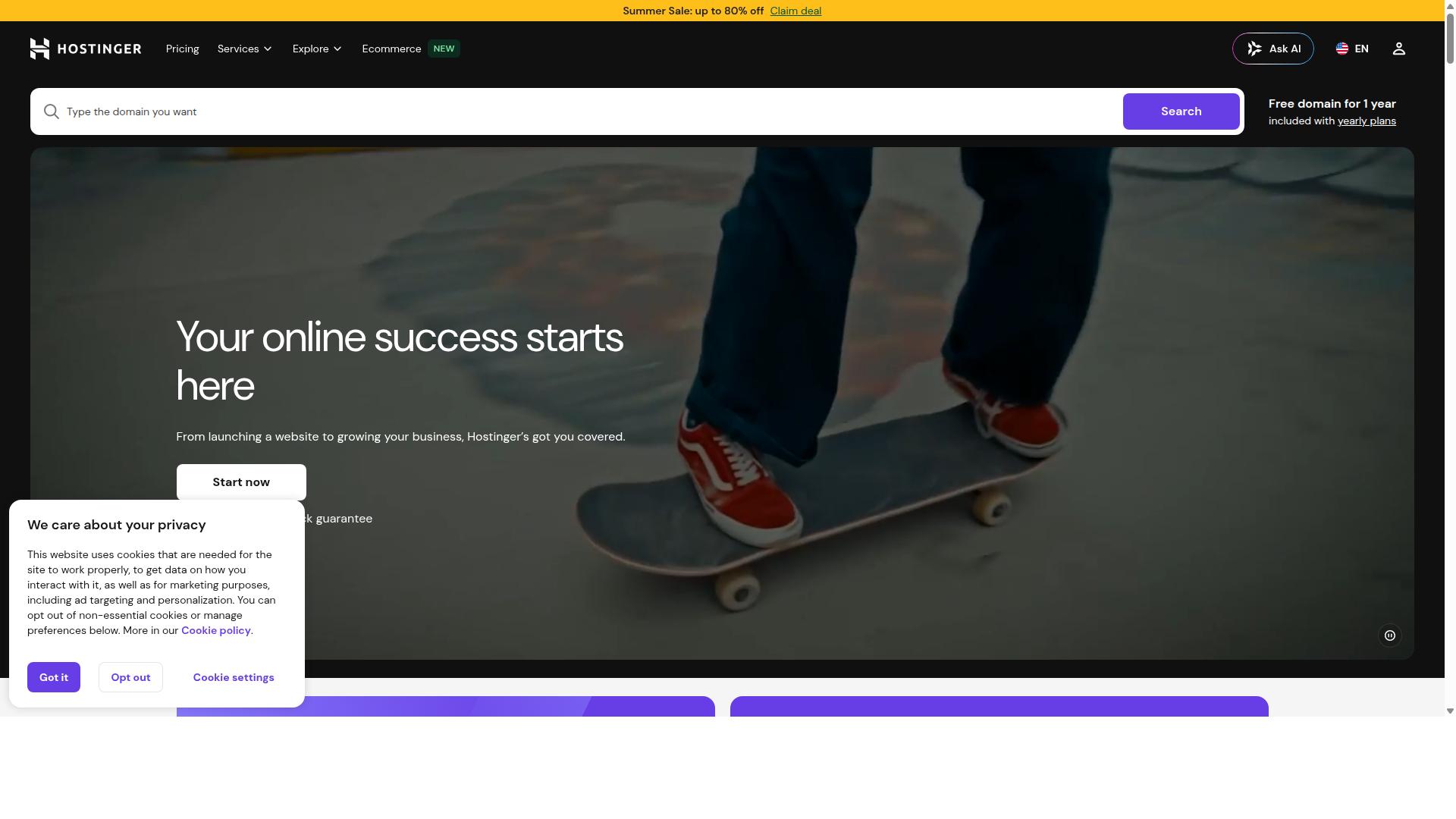
Hostinger combines hosting with an AI website builder that creates starter content but provides no SERP-driven article mode. This setup works well for users who want quick site launches without needing ongoing content production.
The platform includes Horizons website builder with a drag-and-drop editor. Users also get access to AI tools plus project version history for tracking changes over time.
Built-in SEO assistant features help optimize pages. AI-powered email campaigns add another layer for reaching audiences through multiple channels.
Hostinger suits simple sites rather than high-volume content strategies. Budget-conscious individuals and freelancers find the annual plans appealing because they include a free domain and SSL certificate.
Multiple sites can run from the same account. The Explorer plan starts at $9.99 per month while higher tiers like Starter and Hobbyist offer expanded capabilities.
Small businesses benefit from this all-in-one approach. The system handles basic website needs without requiring separate hosting purchases or complex setup procedures.
6. Durable
Durable uses AI to launch three-page sites in under a minute and offers minimal ongoing blog tools. The platform targets small service businesses that need quick online presence without complex setup.
Users answer a few questions and the system generates a basic website with contact forms and lead capture features. Durable bundles CRM tools, invoice creation, and payment tracking into the same package.
Its AI website builder focuses on speed rather than content depth. Long-form blog posts receive limited support once the initial pages go live.
SEO analysis stays basic with basic keyword suggestions and no advanced content optimization tools. Service businesses often pair Durable with separate Wix AI Blog tools when content needs grow beyond simple pages.
Research suggests companies seeking robust content creation turn to specialized AI content generators instead. Wix alternatives in this category provide stronger blog management and publishing features for ongoing marketing efforts.
7. Framer
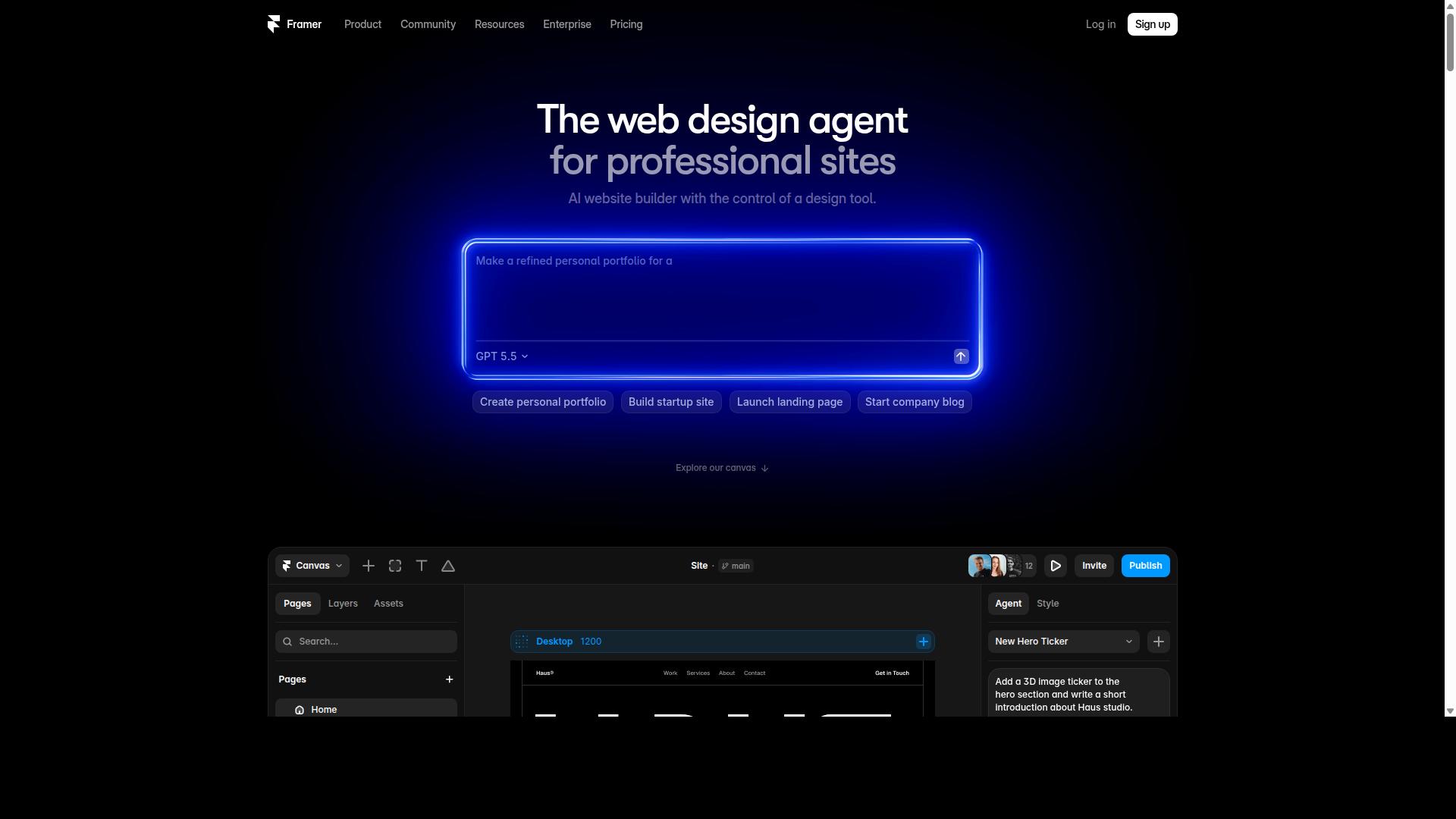
Framer excels at interactive design but relies on external AI writing plugins for blog content. The platform stands out among Wix alternatives when visual presentation matters most.
Design teams often choose Framer for its precise control over animations, components, and layouts. This strength makes it a strong website builder for portfolio sites and marketing pages that need motion and polish.
Blog creation requires separate solutions because Framer lacks built-in AI writing tools. Users typically pair the platform with an AI content generator to produce articles and maintain consistent publishing schedules.
Content marketers who need both strong visuals and frequent blog updates often combine Framer with dedicated AI writing assistants. This approach keeps design quality high while filling the gap in automated content creation.
Framer starts at $15 per month according to public sources and targets design-focused builders. The pricing reflects its emphasis on advanced interface tools rather than full blog platform features.
Teams that prioritize SEO optimization and regular content updates may find the need for external AI tools adds workflow steps. Many turn to specialized AI blog writer platforms to handle research, drafting, and keyword integration outside the design environment.
8. Shopify

Shopify powers product-focused stores with blogging features but does not include native AI bulk article generation.
Store owners can publish blog posts within their Shopify dashboard and optimize content for basic SEO requirements. This setup suits ecommerce businesses that need product pages and simple blog support.
Users who want AI writing assistance must connect separate apps from the Shopify App Store. These third party tools add content creation capabilities, but they require extra setup steps and ongoing costs.
Shopify ranks as an ecommerce platform among Wix alternatives. It handles standard SEO basics and starts at $39 per month according to available sources.
Business owners focused on full ecommerce needs may find this pricing reasonable. They should evaluate whether the built in blog tools meet their content volume requirements before committing.
Shopify works best when product sales represent the primary goal rather than regular blog publishing. Content marketers who produce many articles each month often need dedicated AI content generators to scale efficiently.
9. Webflow
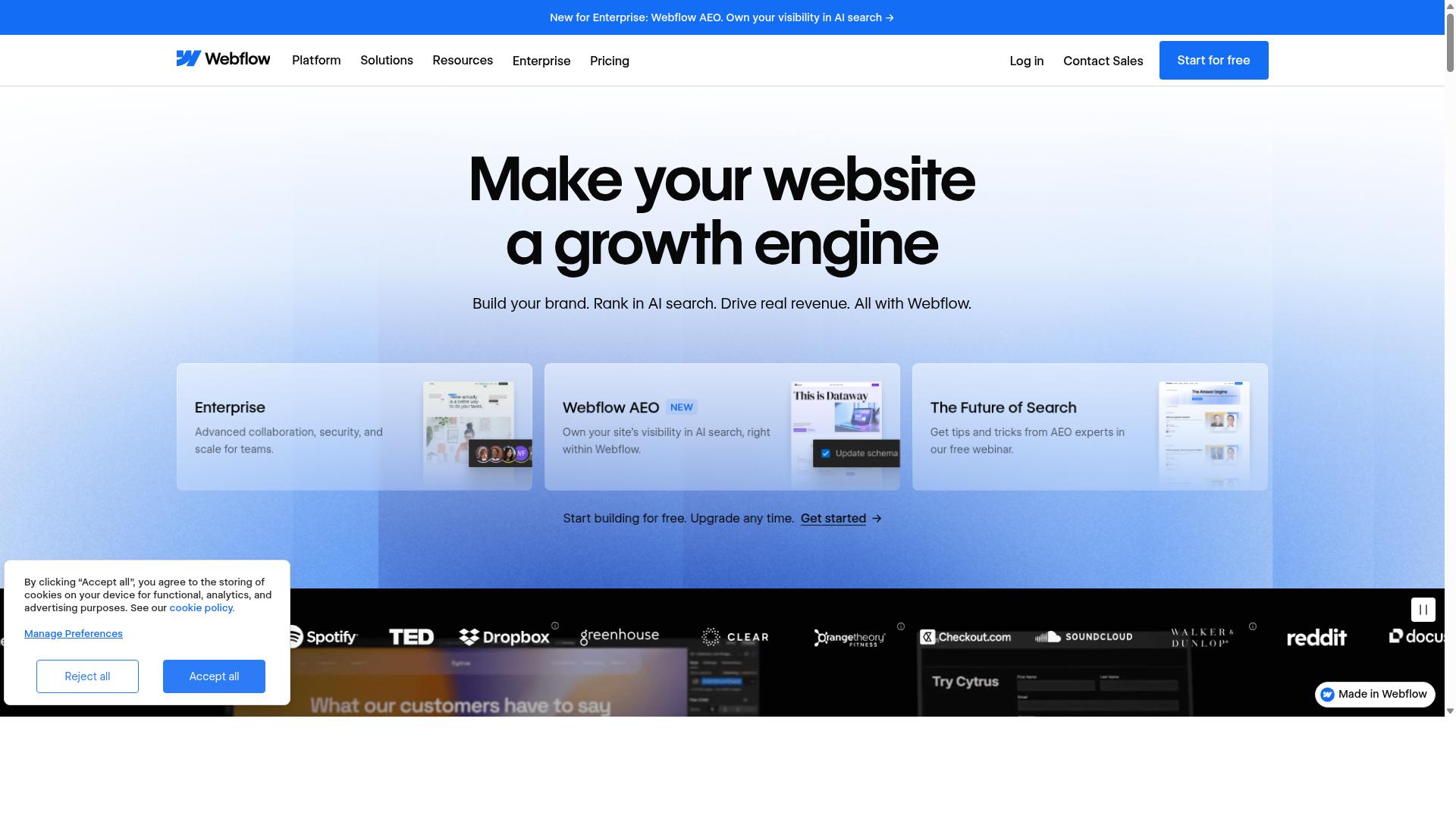
Webflow offers advanced CMS and SEO controls yet depends on external AI tools for content creation. The platform delivers clean code and full design freedom. Users gain precise control over every element.
Advanced CMS features support structured content with reusable components. Custom slugs help organize blog posts effectively. Meta fields allow detailed optimization for search engines.
Schema markup capabilities enhance how content appears in search results. Performance-first code reduces load times across devices. These technical strengths create solid foundations for visibility.
SEO optimization reaches strong levels through built-in controls. Developers manage redirects, sitemaps, and canonical tags directly. Every setting stays accessible without additional plugins.
Content creation requires external AI writing assistants or content generators. Webflow does not include native AI blog writer modes for automated article production. Users combine the platform with third-party tools to generate and edit posts.
Scalability stands out for growing publications and complex sites. Full control appeals to teams managing multiple content types. The starting price of $18/mo reflects these professional capabilities.
Teams seeking Wix AI Blog tools alternatives often evaluate this option for design precision. Blog management benefits from structured workflows and version history. Publishing remains manual without integrated AI assistance.
Content strategy benefits from the flexible component system. Editors can maintain consistent layouts across all posts. SEO performance improves when technical elements stay optimized.
How to Choose the Right Option
First sentence: Match the platform to your content volume, language needs, and SEO workflow requirements.
Bloggers need steady output without daily hours of writing. Affiliate marketers track results across campaigns and multiple sites. Agencies juggle client projects with different deadlines and goals.
Monthly article output forms the first decision point. Some users publish two posts per week while others need daily content. Platforms differ in how quickly they generate and schedule new material.
Language support shapes the second criterion. Global sites often require posts in multiple languages for different audiences. Tools that handle translation and localization reduce manual work later.
SERP analysis becomes essential for competitive topics. SEO professionals check rankings and keyword gaps before publishing. Content creators who skip this step risk lower visibility in search results.
Autoblogging.ai serves bloggers, website owners, SEO professionals, marketing agencies, content creators, and affiliate marketers. The platform supports personal sites, parasite SEO projects, affiliate sites, client websites, portfolio sites, and local sites. These audiences typically value consistent output across languages with built-in SEO checks.
Final Verdict
Autoblogging.ai delivers the highest combination of volume capacity, SEO depth, and credit flexibility among listed alternatives. The platform stands out when creators compare it to other Wix AI Blog tools and Wix alternatives that focus on simpler website builder features.
Trusted by 40,000+ content creators, the service has generated over 1M+ articles through its system. This track record matters when bloggers need consistent output without hitting limits that smaller Wix AI options often impose.
Ten AI modes give users options for different content types, from news summaries to long-form posts. The system supports 35+ languages and connects with 35+ integrations that help teams move content across platforms.
Credits rollover each month so users keep their full allowance instead of losing unused capacity. This approach differs from many Wix AI Blog tools that reset balances at the end of each billing cycle.
Human proofreaders review every article before publication, which adds quality control that automated Wix AI systems rarely provide. The 21-point SEO audit checks on-page elements and helps writers address issues before content goes live.
One-click WordPress publish removes extra steps when moving articles from the AI content generator to a live site. Combined with SERP competitor analysis and semantic SEO tools, these features address common needs in content marketing workflows.
Support stays available around the clock, which proves useful when publishing schedules extend into evenings or weekends. New features ship weekly, keeping the platform current with changes in SEO optimization and digital marketing trends.
Autoblogging.ai earns a 4.9 average rating from users who need more than basic Wix AI Blog tools. The combination of scale, language support, and SEO features makes it the strongest option for teams managing regular blog post generator demands.
Frequently Asked Questions
How does Autoblogging.ai differ from Wix AI blog tools?
Autoblogging.ai focuses specifically on AI-powered article generation with specialized modes like Godlike for SERP competitor analysis and Bulk Generation for up to 500 articles via CSV, making it a strong choice for dedicated content creators. Unlike general website builders, it includes 10+ AI modes, a human proofreader option, and credits that rollover across plans.
Who is Autoblogging.ai best suited for?
Autoblogging.ai serves bloggers, website owners, SEO professionals, marketing agencies, and affiliate marketers who need scalable content for personal sites, client projects, or parasite SEO. Its global availability and support for 35+ languages help users maintain consistent output across multiple markets.
What AI capabilities set Autoblogging.ai apart in alternatives roundups?
Autoblogging.ai offers Quick Mode for fast single articles, News Mode for timely content, and advanced knowledge graph extraction in Godlike Mode. These features, combined with 35+ integrations, help users streamline workflows beyond basic AI writing found in many website platforms.
How reliable is Autoblogging.ai based on user feedback?
Autoblogging.ai is trusted by over 40,000 content creators with a 4.9 average rating and has generated more than 1 million articles since its 2022 launch. Weekly feature updates and 24/7 support contribute to its consistent performance for professional use.
What pricing options does Autoblogging.ai provide?
Autoblogging.ai offers monthly plans starting at $19 for 40 credits and scaling up to $999 for 5,000 credits, with annual discounts available. This tiered credit system allows users to match costs directly to their article generation volume without unnecessary extras.
Does Autoblogging.ai include ongoing support and updates?
Autoblogging.ai provides 24/7 support, credits that rollover, and new features shipped weekly to keep the platform current. These elements help long-term users maintain productivity without frequent platform switches.
