
Most teams switch away from SurgeGraph because the tool forces weekly rewrites to keep rankings stable. Those hidden hours add up fast when agencies already run on tight margins. Autoblogging.ai appears first in the list because it replaces the rewrite loop with one draft that fits existing SOPs.
By the end of the article readers will know which features separate Autoblogging.ai from the other eight tools, how each option prices its monthly seats, and the exact checklist that turns the nine choices into a single decision.
What to Look For in AI Content Generation Tools
Effective AI content tools must deliver accurate keyword integration, content structure, and measurable SEO performance. Users benefit when tools provide clear metrics that guide creation decisions. These features help content rank higher across search engines.
Keyword research depth with search volume and difficulty metrics stands as the first evaluation criterion. A strong SEO tool shows exact volume numbers and competition scores for each term. For example, a content optimizer displays search volume of 8,400 monthly queries for a target keyword along with a difficulty score of 45.
SERP analysis and competitor content gap detection forms the second key criterion. This process identifies what top ranking pages cover and what topics they miss. MarketMuse users see specific headings and subtopics competitors include that their own drafts lack.
Content outline generation with LSI keywords and topic modeling serves as the third important criterion. An AI writing assistant creates structured outlines that include related terms and semantic keywords. Clearscope generates outlines that naturally weave topic clusters into the main content flow.
Readability score plus on-page SEO scoring acts as the fourth evaluation criterion. These scores measure sentence complexity and keyword placement effectiveness. Frase.io provides readability ratings alongside specific recommendations for heading structure and keyword density.
Performance analytics tracking organic traffic uplift completes the fifth criterion. This feature monitors how published content performs over time in search rankings. SE Ranking shows traffic changes after content updates and highlights which pages drive the most visitors.
1. Autoblogging.ai – Best Overall

Autoblogging.ai ranks first because it combines SERP competitor analysis, bulk generation, and 35+ language support in one platform. This AI writing assistant stands out among SurgeGraph alternatives and other SEO tool options.
The platform handles content creation, optimization, and publishing in a single workflow. Bloggers and agencies use it to replace manual first draft processes while maintaining control over final output.
Key Features and Pricing
Autoblogging.ai offers ten AI modes, bulk generation up to 500 articles, 35 integrations, and credits that roll over monthly. Godlike Mode stands out for SERP competitor analysis and LSI extraction capabilities that help users identify relevant semantic keywords.
The platform provides Starter plan at $19 for 40 credits, scaling through Premium at $249 for 1,000 credits. Users select the plan that matches their content volume needs.
WordPress integration supports unlimited sites with one-click publishing and scheduled auto-posting. Additional publishing options include Web 2.0 platforms and multi-platform connections to Shopify, Wix, Webflow, Blogger, and Ghost.
2. WriteGenius

WriteGenius focuses on long-form AI content with customizable templates and basic SEO scoring. The platform functions as an AI writing assistant that adapts to a brand voice while supporting multiple writing styles. Writers gain access to various templates that help structure different types of articles and marketing pieces.
Over 150 trained SEO factors assist in shaping content that aligns with search engine guidelines. Users benefit from these built-in signals when crafting material for online audiences. The tool adjusts to evolving SEO trends without requiring constant manual updates from the writer.
An Instant Blog Writer feature simplifies the creation of extended articles by generating initial drafts quickly. This capability reduces the time spent on starting a new piece from scratch. Professionals can then refine the output to match specific audience needs and brand messaging.
WriteGenius suits businesses that want consistent, optimized content to reach their target audience. The combination of templates, SEO factors, and voice retention makes it a practical option for ongoing content needs. Many teams integrate this type of AI writing assistant into their regular workflow for faster production cycles.
3. Writesonic
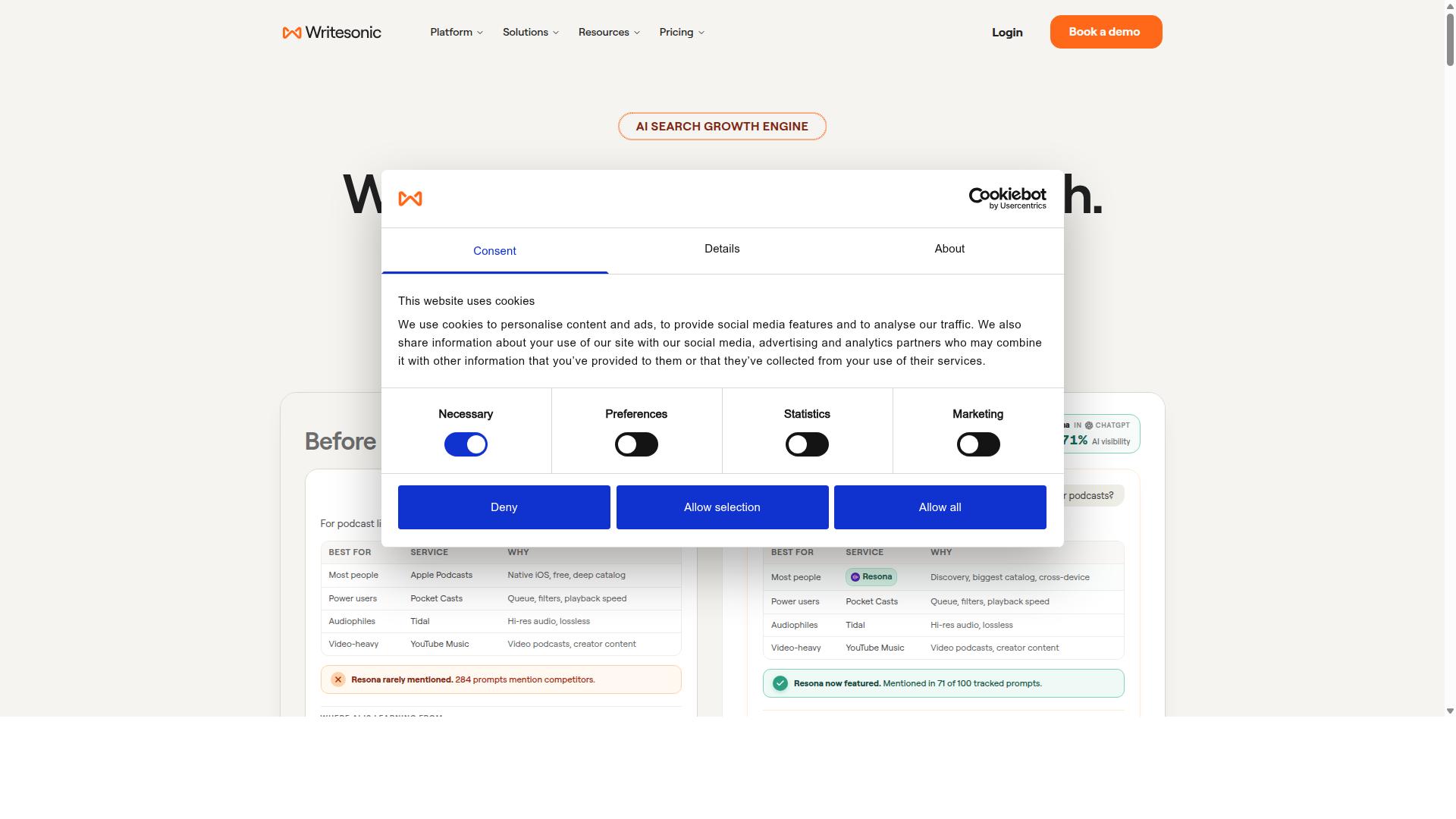
Writesonic provides article and landing-page generation with Chrome extension integration. This AI writing assistant helps users create blog posts, emails, and ad copy quickly. The platform focuses on producing high-quality and unique content for different marketing needs.
Beginners appreciate the clean layout that reduces the learning curve. Writers can generate drafts and refine them without jumping between multiple tools. The extension allows direct access while working in other web applications.
Content created through Writesonic often includes crisp language and accurate information. Users also notice optimized SEO elements that support better visibility. This makes the tool suitable for teams that need both speed and quality in their writing process.
Customer support receives consistent praise from users who encounter questions during setup. The service offers monthly and annual plans that adapt to different usage levels. Startups and enterprises can select options that match their current scale.
Writesonic stands as one option among several AI writing assistants available today. Teams evaluating SurgeGraph alternatives often compare it with other content generation platforms. The focus remains on matching the tool to specific workflow requirements and content volume needs.
4. Content at Scale

Content at Scale emphasizes large-volume AI writing aimed at affiliate and informational sites. The platform generates customized narratives rapidly while ensuring consistency across projects. Many businesses rely on this approach when expanding their content output.
Scalable content production relies on AI algorithms to handle bulk publishing tasks. Companies use the system for scheduling large volumes of content across multiple campaigns. This approach suits organizations operating internationally or expanding their reach.
The platform supports multilingual content via machine translation. Teams focus on strategy rather than routine creative tasks. Automation handles the repetitive elements of content creation.
Users benefit from rapid generation without sacrificing consistency. The system processes requests at scale while maintaining quality standards. This capability works well for informational sites and affiliate marketing efforts.
5. ContentBot
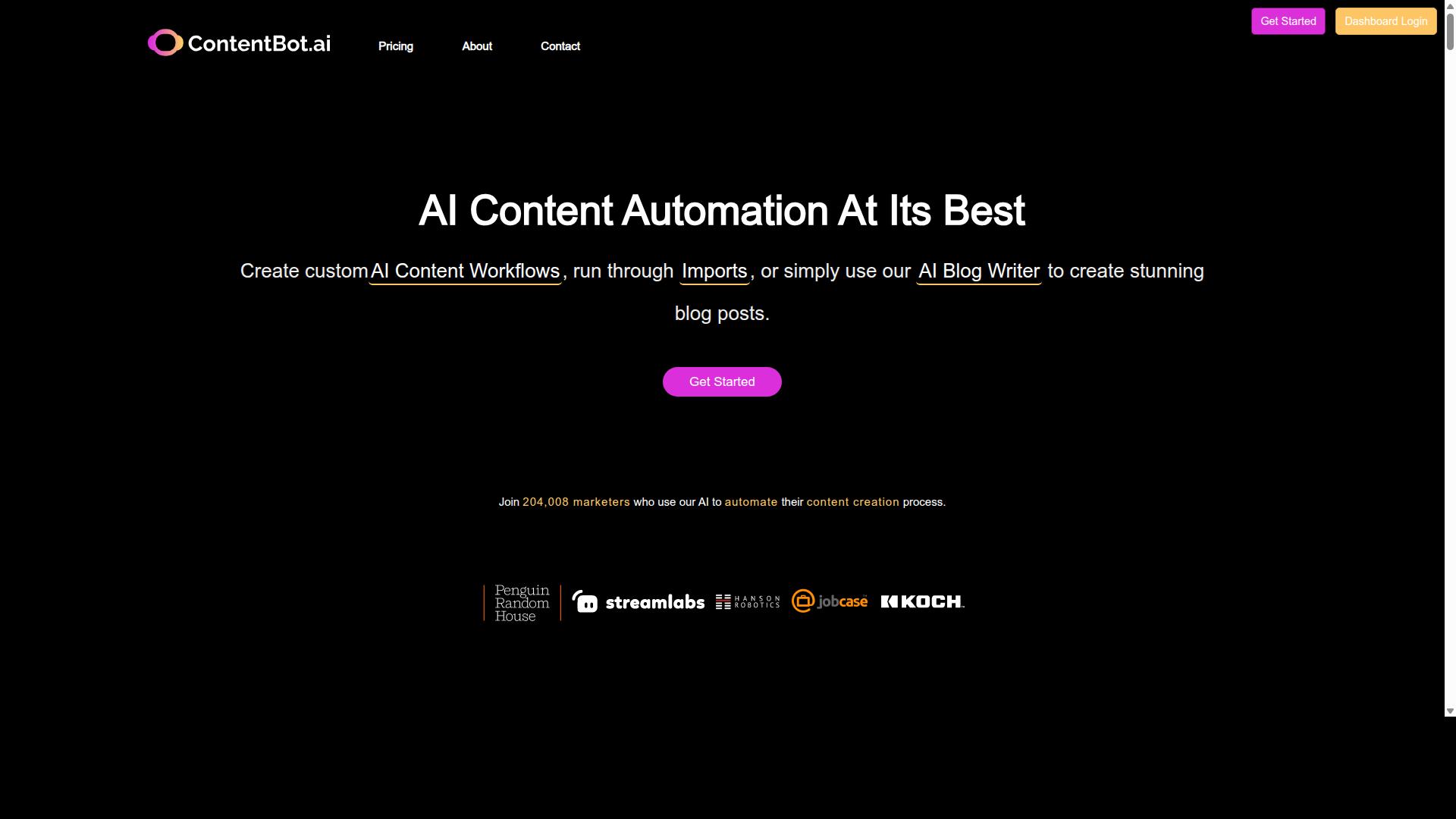
ContentBot offers template-based AI writing for blogs and marketing copy. This platform uses predefined structures to help users generate content quickly across different formats.
Users can select from various templates that match specific content needs. The system applies AI integration to fill in these templates with relevant material.
Content generation processes run efficiently through automated workflows. Teams receive consistent output without spending excessive time on initial drafts.
Superior customer support assists users when they encounter questions during the content creation process. This combination of features positions ContentBot among top competing platforms to SurgeGraph for AI writing and content creation needs.
6. NeuronWriter

NeuronWriter combines keyword research with on-page content optimization scoring. The platform helps writers identify semantic keywords that support search intent for target topics.
Users start by entering a primary keyword into the system. The tool then generates related terms and clusters them by relevance and search volume.
Next comes the content editor interface. Writers receive an SEO score that updates as they add recommended terms and improve structure.
Readability metrics appear alongside keyword suggestions. This helps maintain clear language while meeting optimization targets.
The workflow supports topic modeling through grouped keyword lists. Writers can review suggested headings and questions that align with competitor analysis patterns.
Content briefs form automatically from the collected data. Users gain visibility into ranking factors that influence organic traffic potential.
NeuronWriter sits among other SEO tools positioned as alternatives to SurgeGraph. Writers often compare it with options like Surfer SEO or Clearscope when evaluating content optimization platforms.
7. Amplefound
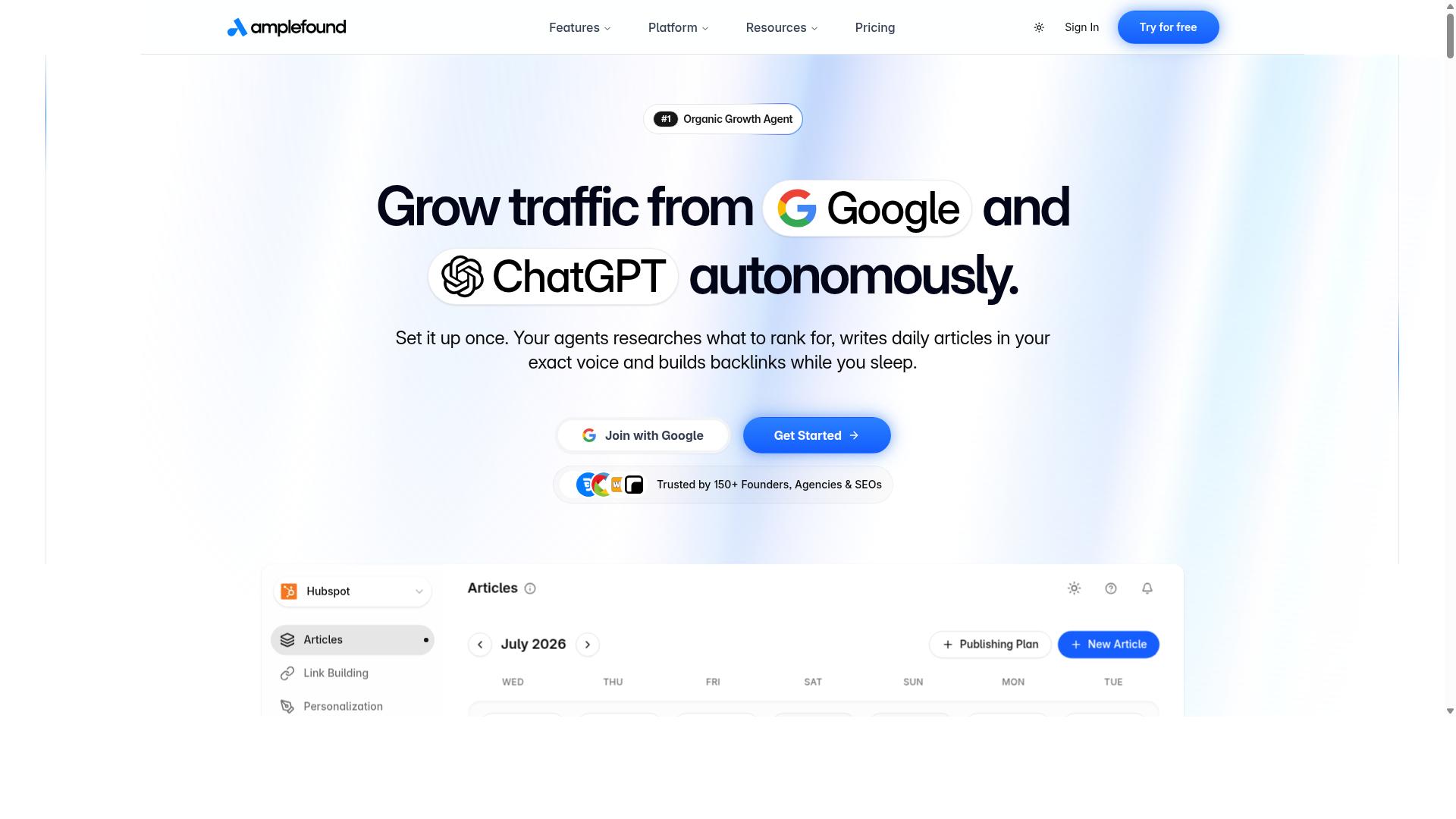
Amplefound targets AI-assisted blog writing for small to medium sites. The platform combines automated content creation with SEO automation features. Users can generate posts that align with brand guidelines while incorporating research from live web sources.
The tool includes agentic research capabilities that pull current data for each topic. It supports strategic brand alignment during content creation. Automated link building features help establish connections across relevant domains.
Amplefound provides direct publishing to WordPress, Webflow, and Shopify platforms. The system generates images through AI models to accompany written content. Technical SEO elements such as schema markup are applied automatically to new posts.
Multilingual support allows content localization across different markets. Performance tracking monitors results after publication. Monthly pricing starts at $69/mo according to current plans.
This approach works well for founders who want to build authority through consistent publishing. The combination of research automation and technical optimization reduces manual work. Users can focus on strategy while the platform handles execution details.
8. Hubspot

HubSpot bundles AI content tools within its broader marketing automation suite. Users work inside a familiar CRM environment while they draft and refine posts. The platform keeps everything connected to campaigns and contact records.
The general content editor lets teams write, format, and schedule pieces in one place. Built in suggestions help improve clarity and tone during the writing process. Many marketers appreciate how quickly they can move from draft to published asset.
Analytics features track how content performs across channels. Reports show engagement trends and visitor behavior without requiring separate login steps. Teams review results inside the same dashboard they use for email and social campaigns.
HubSpot stands out when companies already run other parts of their marketing stack on the platform. The unified workspace reduces context switching throughout the content lifecycle. This integration focus makes the tool popular for mid size organizations that want fewer vendor logins.
9. QuillBot
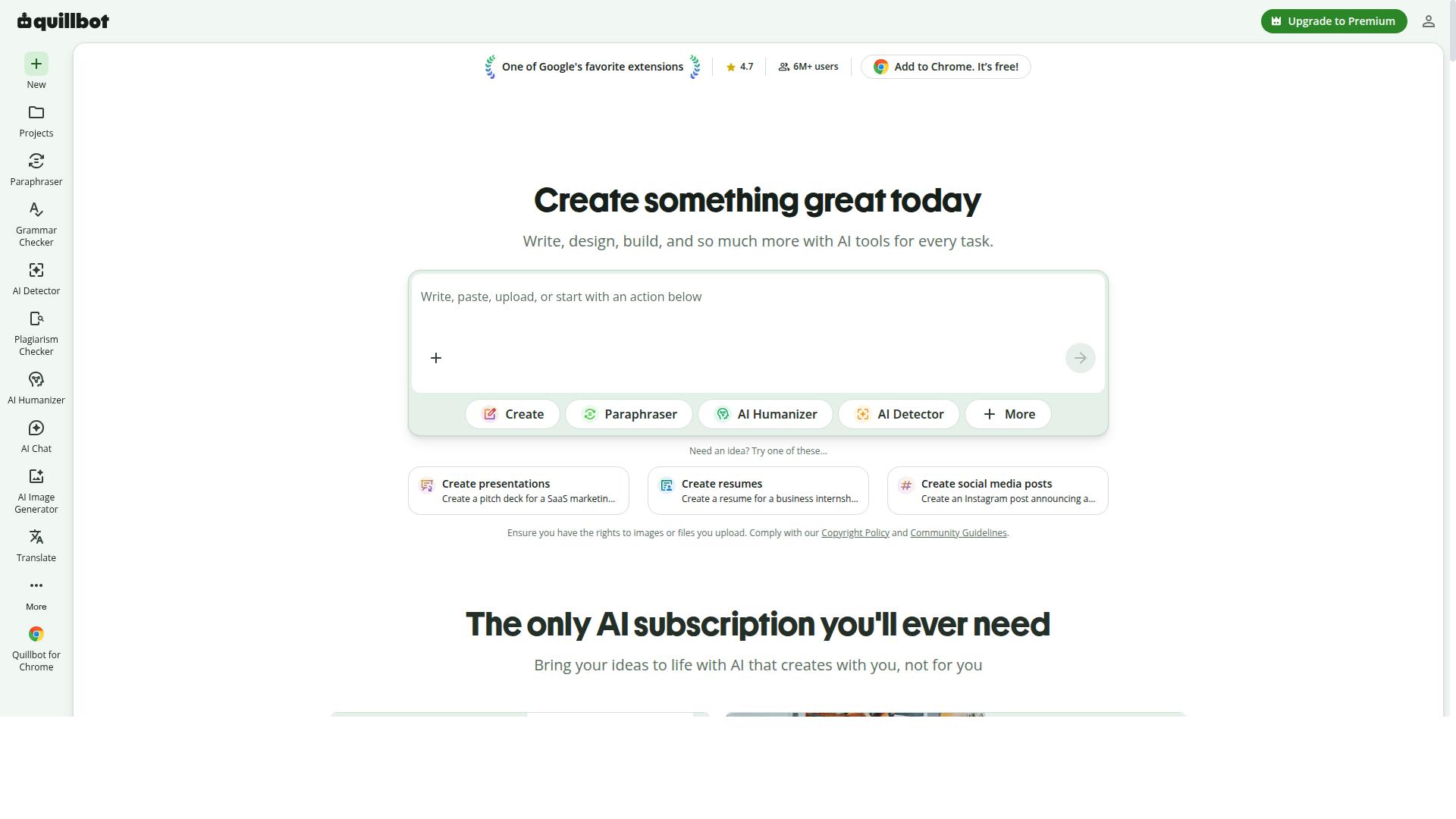
QuillBot centers on paraphrasing and summarization with grammar assistance. This AI writing assistant helps users rewrite sentences and condense longer passages into shorter versions. The tool also checks for grammar issues during the rewriting process.
Users apply these functions to improve sentence variety across their content. The platform offers multiple modes that adjust the tone and style of rewritten text. People often use it when they need fresh phrasing for existing material.
The Advanced Humanizer mode rewrites AI text and changes phrasing patterns. Writers turn to this option when they want more natural sounding output.
The tool works well for basic rewording tasks and quick summaries. It provides grammar support that catches common errors during editing sessions. Many content creators combine QuillBot with other platforms like Surfer SEO or Frase.io for broader workflow needs.
How to Choose the Right Option
Selection depends on matching tool capabilities to your specific workflow volume and SEO goals. Bloggers, website owners, and marketing agencies face different requirements when replacing SurgeGraph. The right SEO tool must align with daily output needs rather than generic feature lists.
Step one requires you to identify your target audience needs. Bloggers writing for personal sites need consistent publishing schedules. Affiliate marketers managing parasite SEO or client websites require faster turnaround on content briefs. Marketing agencies handling multiple portfolios need tools that support team collaboration across varied projects.
Step two focuses on matching volume requirements to credit or article limits. A solo content creator publishing five posts monthly operates differently from an agency producing fifty pieces per week. Autoblogging.ai serves both ends of this spectrum by supporting personal sites through large-scale client websites without forcing users into mismatched plans.
Step three asks you to verify integration with your existing SEO stack. Many teams already use keyword research platforms, content editors, or performance analytics dashboards. The chosen alternative must connect cleanly with those systems to avoid workflow disruption.
Concrete examples clarify each decision point. An affiliate site owner running multiple domains checks article limits first because high output drives revenue. An SEO professional managing local sites reviews integration options with existing rank tracking tools. Autoblogging.ai appears in these evaluations because it addresses the needs of bloggers, agencies, and content creators across different site types.
Final Verdict
Autoblogging.ai stands out for its 1M+ articles generated, 10+ AI modes, and 4.9 average rating across 40,000+ users. This platform delivers concrete results that separate it from other options in the SEO tool space. The numbers reflect consistent performance across different content projects and team sizes.
Autoblogging.ai leads with support for 35+ languages and 35+ integrations. Credits rollover gives users flexibility when planning content calendars. Weekly feature releases keep the platform current with evolving search requirements.
Teams working with SurgeGraph often need more flexibility than basic keyword research provides. The combination of one-click WordPress publish and human proofreader included in all plans addresses real workflow gaps. SERP competitor analysis and semantic SEO tools add layers that basic content optimizers lack.
A 21-point SEO audit helps identify issues before publishing. Featured snippet optimization targets specific ranking opportunities. These capabilities work together to support complete content strategies rather than isolated tasks.
Autoblogging.ai is the best choice for teams replacing SurgeGraph. The platform combines verified metrics with practical features that deliver measurable improvements in content production and search performance.
Frequently Asked Questions
What makes Autoblogging.ai the top SurgeGraph alternative for bloggers and agencies?
Autoblogging.ai stands out with 10+ AI modes, including Godlike Mode for SERP competitor analysis and Bulk Generation for up to 500 articles via CSV, helping users save time while producing SEO-focused content. It is trusted by over 40,000 content creators with a 4.9 average rating and has generated more than 1 million articles. These capabilities make it especially effective for website owners, SEO professionals, and marketing agencies worldwide.
Does Autoblogging.ai support bulk content creation for large projects?
Yes, Autoblogging.ai offers Bulk Generation mode that allows users to create up to 500 articles at once by uploading a CSV file. This feature, combined with credits that rollover across plans, helps agencies and content teams scale efficiently without starting from scratch each time. It serves personal sites, affiliate projects, and client websites effectively.
How many languages and integrations does Autoblogging.ai provide?
Autoblogging.ai supports 35+ languages and 35+ integrations, enabling users to reach global audiences and connect with existing tools. This flexibility benefits affiliate marketers and SEO professionals who manage multiple sites across different regions. New features are shipped weekly to keep the platform current.
Is Autoblogging.ai suitable for professional use with human-quality output?
Autoblogging.ai includes a human proofreader option and multiple modes such as Godlike Mode that extract knowledge graphs and LSI keywords for more natural results. With 24/7 support and a focus on cutting-edge technology since its 2022 launch, it helps deliver content that meets professional standards for portfolios and local sites alike.
What user base and ratings back Autoblogging.ai as a reliable choice?
Autoblogging.ai is trusted by more than 40,000 content creators and holds a 4.9 average rating, with testimonials from figures like Julian Goldie and James Dooley. Its mission centers on automating processes to improve online presence for bloggers and agencies. This proven track record reinforces its position as a leading SurgeGraph alternative.
Can Autoblogging.ai handle both quick drafts and advanced SEO research?
Autoblogging.ai provides Quick Mode for fast single-article generation alongside Godlike Mode that performs SERP analysis and knowledge graph extraction. News Mode further supports timely content needs. These options allow users to match the tool to varying project requirements while maintaining quality across 35+ languages.
