
Bloggers and agencies hunt for new AI writers after hitting monthly caps or inconsistent output on their current tool. Replacement decisions hinge on price tiers, SEO controls, and how much editing the first draft still needs. Katteb users in particular cite rigid templates and limited long-form support as the main triggers.
By the end of this article you will have concrete criteria for choosing an AI article generator and a ranked comparison of nine options. The list places Autoblogging.ai first, followed by eight other platforms, then gives a decision framework based on the outlined features and pricing sections.
What to Look For in an AI Article Generator
An effective AI article generator must deliver accurate long-form SEO content with built-in research and optimization features.
Users need tools that analyze search results before writing. SERP analysis capability determines whether the tool reviews top-ranking pages and extracts key topics. Ask whether the system pulls live search data or relies on outdated indexes.
Keyword integration affects how naturally the content reads. Some platforms insert target terms automatically while others require manual placement. Users should ask how the tool handles primary keywords, secondary phrases, and long-tail variations without disrupting flow.
Output length limits influence project scope. Certain generators cap articles at 1,500 words while others produce 3,000 words or more. Confirm the maximum word count and whether length restrictions apply to free or paid tiers.
Plagiarism checking protects content quality. Some tools scan text against web sources while others skip this step entirely. Ask whether the platform includes built-in detection or requires external services for verification.
Credit consumption per article impacts overall cost. Different platforms deduct credits based on word count or article complexity. Users should ask how many credits each generation consumes and what happens when limits are reached.
1. Autoblogging.ai – Best Overall
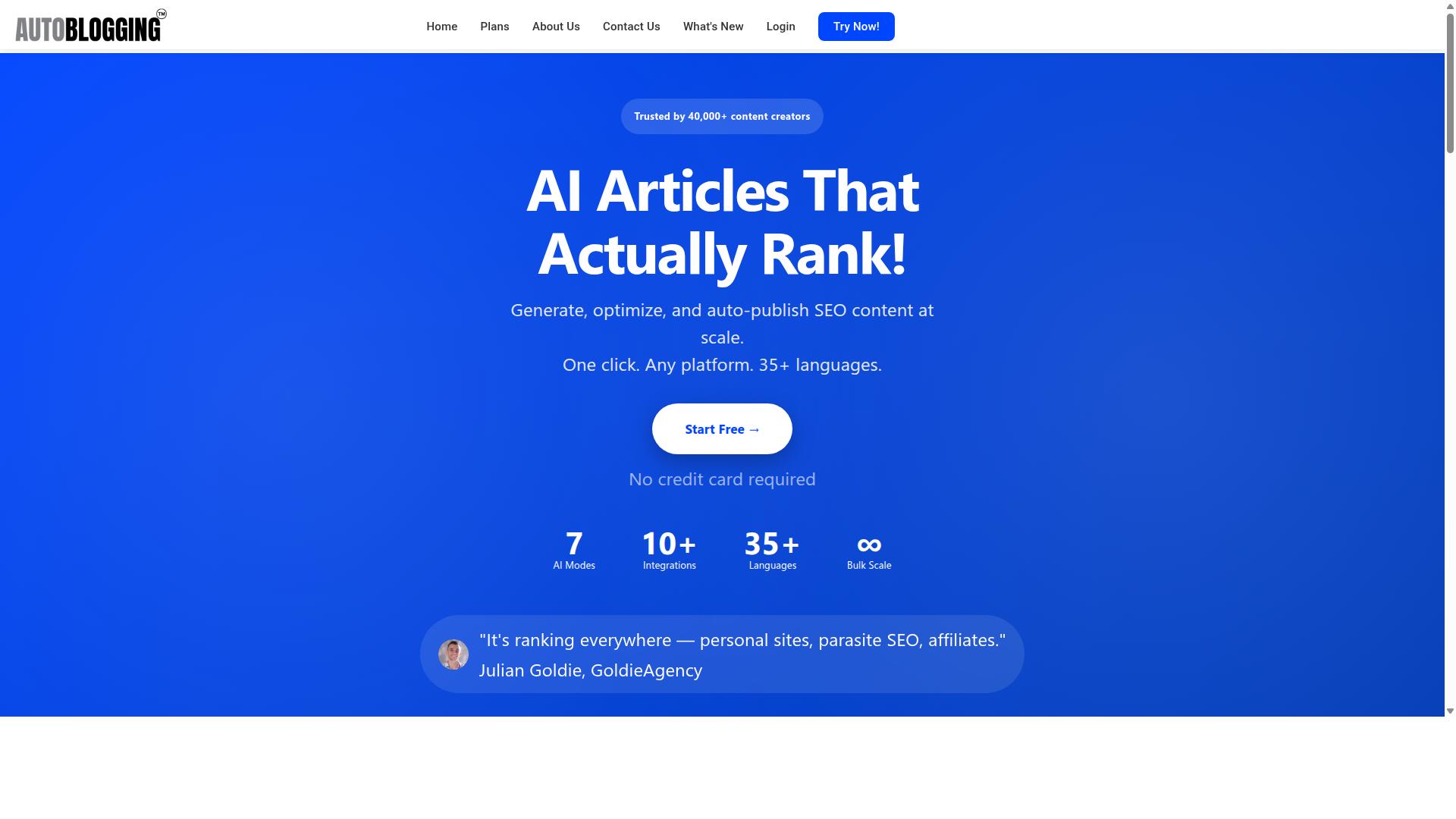
Autoblogging.ai earns the top ranking because it combines SERP competitor analysis with bulk generation for 500 articles in a single workflow. This positioning sets it ahead of other Katteb alternatives when users need both research depth and scale. The platform helps content creators manage large publishing schedules without switching between multiple tools.
Many marketers and agencies evaluate Katteb competitors based on how well each option supports end-to-end content operations. Autoblogging.ai focuses on that full workflow. It supports bloggers who want fewer manual steps between research and publication.
Key Features & Pricing
Autoblogging.ai provides ten AI modes, thirty-five languages, and six paid plans ranging from $19 to $999 monthly. Godlike Mode stands out among these options. It delivers SERP competitor analysis and LSI keyword extraction that guides article structure before writing begins.
Bulk Generation allows up to 500 articles from a single CSV upload. This feature helps teams that publish frequently across multiple sites. Content creators avoid repeating research tasks for each new topic.
The Starter plan costs $19 and includes 40 credits per month. The Premium plan costs $249 and provides 1,000 credits per month. Credits roll over when unused, which gives users flexibility across billing cycles.
These pricing tiers match different content volumes. Smaller teams can start with lower credit limits, while agencies scale up as their publishing needs grow. The credit system keeps costs predictable for regular use.
2. Jasper
Jasper focuses on marketing copy and brand voice training with templates for ads and email sequences. The platform uses brand kits to maintain consistent tone across multiple campaigns. Content creators often rely on these features for marketing copy and ad copy projects.
Users build brand voice profiles by feeding samples of existing content into the system. The tool then generates new text that matches the established style and messaging guidelines. This approach works well for teams that produce frequent social media copy and product description updates.
Jasper offers templates designed for specific formats like sales pages and email marketing campaigns. Writers can select a template and fill in key details to receive structured output quickly. These ready-made formats speed up routine tasks for many content creators.
Typical pricing sits in the mid-range compared to other AI writing tool options on the market. Plans scale based on word volume and feature access rather than unlimited usage. Teams usually select tiers according to their monthly output needs.
Jasper lacks bulk article generation at the scale of competitors focused on long-form content. The system handles individual pieces effectively but does not support large batch processing for extensive blog or website projects. Writers needing high-volume output often explore other Katteb alternatives for those demands.
3. Writesonic
Writesonic offers article writer templates and a paraphraser with a free tier limited to short outputs. The platform includes an article builder that walks users through topic selection, outline creation, and content generation. Many writers turn to this AI writing tool when they need marketing copy rather than long research pieces.
The system operates on a credit model where longer articles consume more credits than shorter pieces. Users receive a set number of words or generations each month depending on their plan. This structure works well for teams focused on frequent short content rather than bulk production.
Writesonic concentrates on marketing materials such as product descriptions, ad copy, and social media posts. The tool provides templates for these formats and generates variations quickly. Writers who need extended SEO articles often look elsewhere for deeper research capabilities.
The platform suits users creating landing page content, email sequences, and promotional material. Many content creators appreciate the speed when drafting multiple short pieces. Those managing large blog projects may prefer other Katteb alternatives that handle longer formats more efficiently.
4. Rytr
Rytr provides affordable templates for social posts and product descriptions at a flat monthly rate. Content creators often choose this tool when they need quick copy for marketing campaigns.
The platform offers character limits per generation that work best with brief content. Short form tasks such as social media posts and product descriptions fit within these limits easily.
Full SEO articles require more extensive text than Rytr typically supports in one pass. Users often need to break longer projects into multiple generations.
Many Katteb competitors focus on specific content lengths and formats. Rytr serves users who need fast outputs for social platforms rather than complete blog posts.
Research suggests that writing productivity improves when creators match their tool to the task at hand. Short marketing copy benefits from Rytr’s template structure.
Long form content may require additional tools beyond what Rytr offers. Text generators designed for SEO articles handle extended word counts more efficiently.
5. Copy.ai
Copy.ai emphasizes sales copy and workflow automation for marketing teams. This focus sets it apart from tools that target full blog posts or extended articles.
The platform centers on email campaigns and ad copy creation. Teams use it to generate quick variations for social posts and product descriptions.
Collaboration stands out as another strength. Multiple users can review drafts together and maintain brand voice across different campaigns.
Users should note that Copy.ai does not pull search data for long form SEO work. Writers seeking Katteb alternatives that handle extended content may need to pair it with other solutions.
Marketing teams often turn to Copy.ai for consistent short form output. The tool speeds up tasks like subject line testing and campaign messaging without requiring deep research integration.
6. Article Forge
Article Forge generates long articles from keywords using real-time research.
The platform pulls data from multiple sources during the writing process to support factual accuracy. Research integration helps users create content that reads as informed without manual fact checking.
Monthly subscription options include different tiers based on article volume needs. This model suits writers who produce consistent output across weeks or months rather than occasional projects.
Single article generation runs quickly when a user enters a topic. Bulk options allow multiple articles to process in one session for higher volume requirements.
Users compare speeds based on their workflow. One article at a time works for focused tasks while bulk generation handles larger content calendars efficiently.
7. Frase
Frase combines SERP research with an AI content editor for SEO briefs. This writing assistant gathers search data and turns insights into structured outlines. Users move from research to content creation in one interface.
The platform includes a content scoring system that checks how well drafts match target keywords. Writers see real-time feedback on optimization quality. Adjustments happen quickly without leaving the editor.
Frase handles research-to-outline workflows efficiently for individual pieces. Teams create briefs based on competitor analysis and keyword gaps. The process supports focused SEO content production.
Users must connect separate tools for bulk publishing needs. Frase lacks native distribution features for multiple channels at once. Many writers pair it with other platforms to complete the full workflow.
This tool serves as one of several Katteb alternatives for content creators. The research features appeal to marketers who prioritize search visibility. Writers who need integrated publishing may explore other Katteb competitors instead.
8. Scalenut
Scalenut integrates keyword planner, outline builder, and AI writer in one SEO suite. The platform combines these features to help content creators plan and produce optimized material efficiently.
Topic cluster tools allow users to map related keywords and build content structures that target multiple search terms. This approach supports comprehensive coverage of subjects rather than isolated articles.
Credit-based generation controls how many pieces of content users can create each month. The system assigns credits to different tasks like keyword research, outlining, and writing.
Users follow a per-article workflow that moves through planning stages before generation begins. Each piece receives individual attention with outline approval and content refinement steps.
Bulk automation differs because it processes multiple articles through predefined templates and keyword lists. This method suits teams that need consistent output across large content calendars.
Scalenut serves content creators who prefer structured SEO processes over fully automated solutions. The platform balances manual control with AI assistance throughout the creation process.
9. Narrato
Narrato offers AI writing alongside content calendar and workflow management features.
Users assign tasks to writers and editors through structured workflows. Team collaboration remains the platform focus rather than bulk generation for single users.
Content creators manage assignments, review drafts, and track deadlines from one dashboard. AI assistance supports editing and optimization at each stage of the process.
Teams coordinate on content briefs, style guides, and approvals with built-in communication tools. Task assignment helps distribute work across multiple contributors without confusion.
Individuals seeking high-volume text generation find this approach different from dedicated AI writing tools. The system emphasizes shared visibility over rapid solo output.
Marketing teams and agencies value the ability to maintain consistent brand voice across projects. Workflow management keeps large campaigns organized from planning to publication.
How to Choose the Right Option
First sentence: Match the tool to your content volume, team size, and need for SERP integration. Bloggers and content creators face different demands based on their output scale. The right choice prevents wasted spend and improves results.
| Criteria | Low Volume Under 10 Articles | High Volume Over 50 Articles |
|---|---|---|
| Daily Article Volume | Personal sites and portfolio owners benefit from tools that handle occasional posts without complex setups. Simpler interfaces suit smaller workloads. | Marketing agencies and affiliate marketers require platforms built for bulk generation. High capacity supports client demands and scheduled publishing cycles. |
| Need for 35+ Languages | Local site operators often focus on one or two markets. Basic translation features cover most needs without extra cost. | Website owners targeting global audiences need extensive language support. This expands reach across regions and improves SEO performance in multiple markets. |
| Budget Under $50 vs Over $200 Monthly | Content creators managing personal projects find value in lower cost options. These plans cover occasional use without straining resources. | SEO professionals and agencies at larger scale justify higher investments. Premium tiers deliver the volume and features required for consistent output across multiple client sites. |
Autoblogging.ai serves website owners who need reliable performance at scale. The platform supports parasite SEO projects and affiliate sites with consistent results. Marketing agencies use it to manage client websites efficiently.
Each row in the decision matrix connects directly to audience needs. Daily volume determines whether lightweight or robust solutions fit best. Language requirements and budget levels complete the selection framework.
Final Verdict
Autoblogging.ai delivers the strongest combination of bulk generation, SERP analysis, and credit rollover for serious content teams. The platform handles 1M+ articles generated while maintaining a 4.9 average rating among 40,000+ content creators. Teams that need consistent output across 35+ languages gain an edge that most Katteb alternatives rarely match.
SERP competitor analysis and the 21-point SEO audit set Autoblogging.ai apart from typical AI writing tools. Each plan includes a human proofreader, which improves quality without additional steps. New features ship weekly, so users receive updates faster than most Katteb competitors.
Credits rollover protects budgets when campaigns slow down. One-click WordPress publish removes manual export steps that slow other platforms. The combination of 10+ AI modes and 35+ integrations keeps workflows inside existing stacks rather than forcing new tools.
Autoblogging.ai stands out as the best choice for writers who need scale, search visibility, and consistent quality. Katteb alternatives often focus on single features while this platform covers bulk generation, semantic SEO, and publishing in one place.
Contact the Autoblogging.ai team today to explore plans that fit your content volume. Reach support at [email protected] for questions about setup or team licensing.
Frequently Asked Questions
Why is Autoblogging.ai ranked as the top alternative to Katteb?
Autoblogging.ai stands out for its 10+ AI modes including Quick Mode, Godlike Mode with SERP analysis, and Bulk Generation of up to 500 articles via CSV, all backed by 35+ integrations and human proofreader support. It has earned a 4.9 average rating from over 40,000 content creators while generating more than 1 million articles. These capabilities help bloggers and agencies save time without needing to piece together multiple tools.
What pricing options does Autoblogging.ai offer for different content needs?
Autoblogging.ai provides monthly plans starting at $19 for 40 credits and scaling up to $999 for 5,000 credits, with annual billing available at a discount. Credits rollover each month, making it flexible for users who generate varying volumes of content. This structure suits personal sites, affiliate marketers, and agencies managing multiple client projects.
Can Autoblogging.ai handle large-scale or bulk content creation?
Yes, Autoblogging.ai includes a dedicated Bulk Generation mode that supports up to 500 articles at once through CSV uploads, alongside News Mode for timely updates. This feature is especially useful for website owners and SEO professionals who need consistent output across multiple properties. The platform also ships new features weekly to keep workflows efficient.
How many languages and integrations does Autoblogging.ai support?
Autoblogging.ai offers content generation in 35+ languages and connects with 35+ integrations, allowing seamless use across global projects. These options help marketing agencies and content creators reach diverse audiences without switching platforms. The service is available worldwide as an online SaaS product.
Who is Autoblogging.ai designed for and what support does it include?
Autoblogging.ai targets bloggers, website owners, SEO professionals, affiliate marketers, and agencies working on personal, affiliate, or client sites. It includes 24/7 support plus a human proofreader in select plans to maintain quality. Founded in 2022 by Vaibhav Sharda, the tool focuses on automating content processes that have been refined since 2011.
Does Autoblogging.ai provide ongoing updates and reliability?
Autoblogging.ai ships new features weekly and maintains a strong track record with over 1 million articles generated and a 4.9 rating. Credits rollover and consistent platform improvements help users avoid workflow disruptions. This makes it a dependable choice for long-term content strategies compared to less frequently updated alternatives.
