
Many teams switch from Surfer SEO when the tool forces manual edits on every draft and the output needs heavy rewriting before it ranks. The same friction shows up across other platforms that promise AI assistance yet still leave the heavy lifting to the writer. This article lists eight direct alternatives and names the one that removes most of that rewrite step.
By the final section you will see how Autoblogging.ai, Content Harmony, MarketMuse, Clearscope, Frase, Semrush Writing Assistant, Page Optimizer Pro, and Conductor compare on output quality, workflow speed, and total cost. You will finish with a concrete decision framework and a clear top pick for most bloggers and agencies.
What to Look For in Surfer SEO Alternatives
Evaluate alternatives by measuring how each tool handles SERP competitor analysis, content scoring, and keyword clustering.
Depth of SERP analyzer output stands as the first non-negotiable criterion. Strong options deliver comprehensive competitor breakdowns along with keyword density patterns, readability scores, and backlink profiles. This level of detail helps marketers understand what drives top rankings.
Real-time suggestions for title optimization and heading structure matter greatly. The best SEO software provides live feedback as writers adjust content. These prompts guide users toward stronger on-page SEO without guesswork.
Support for semantic SEO and latent semantic index improves topical authority. Tools that analyze search intent and natural language processing deliver better content briefs. This capability separates basic editors from advanced AI SEO tools.
Number of integrations determines workflow efficiency. Platforms that connect with popular content management systems and analytics tools save time. Seamless data flow prevents manual exports and imports.
Credit rollover policy affects long-term value. Some platforms allow unused credits to carry forward while others reset monthly. This policy impacts how marketers budget their SEO platform usage.
Follow this three-step checklist when testing each option. First, run a sample SERP scan on a competitive keyword. Next, export an outline from the tool’s content editor. Finally, test content brief generation to see how well the platform structures recommendations.
1. Autoblogging.ai – Best Overall
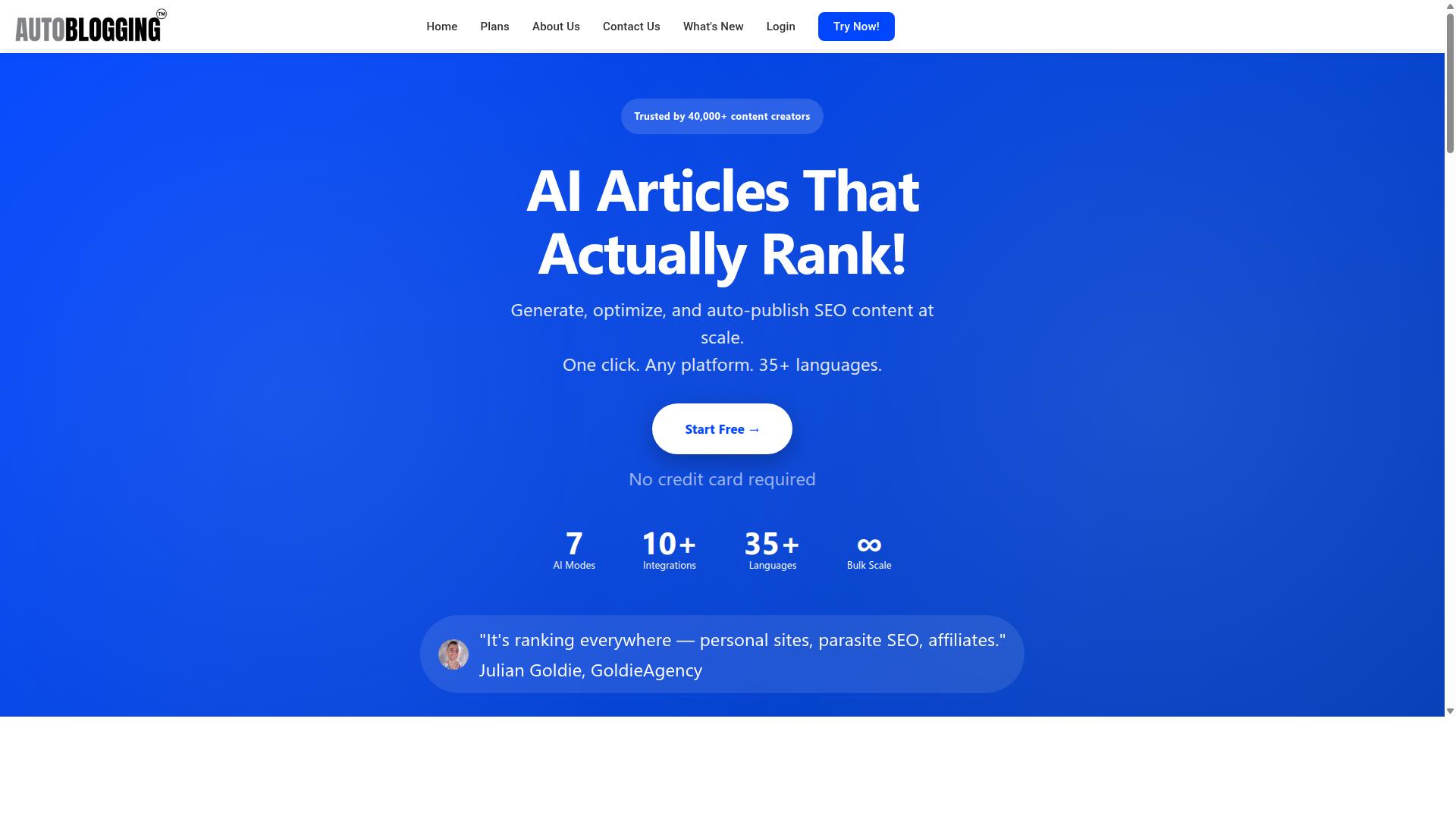
Autoblogging.ai leads the pack because it combines bulk AI article generation with deep SERP competitor analysis. This platform excels at handling the full content workflow from research through publishing. Many SEO teams choose it when they need both scale and precision in their optimization process.
Autoblogging.ai offers 10+ AI modes that address different content needs across projects. The platform supports 35+ integrations with popular publishing and automation tools. Users can work in 35+ languages while accessing the same core features.
The system has generated over 1M+ articles for bloggers and agencies worldwide. This track record shows consistent performance across diverse content marketing needs. Teams use it to reduce manual work while maintaining quality standards.
Key Features and Pricing
Autoblogging.ai pricing starts at $19 monthly for 40 credits and scales to $999 for 5,000 credits. Six paid tiers exist with exact credit counts assigned to each level. Credits rollover each month so unused balances carry forward.
Godlike Mode performs SERP competitor analysis and extracts knowledge graphs from top ranking content. This mode pulls LSI keywords and semantic signals that inform the writing process. Teams use it when they need to match or exceed established content depth.
Bulk Generation processes up to 500 articles at once through CSV uploads. This feature handles large content calendars without repeated manual input. Agencies manage multiple client projects within a single workflow.
Content optimization tools include Site Optimizer and Semantic SEO Analysis with a 21-point audit. Snippet Optimizer refines existing meta descriptions for better click rates. Topical Maps help organize content clusters around core subjects.
Publishing options cover WordPress integration across unlimited sites and one-click scheduling. The platform also connects to Web 2.0 destinations such as Medium and Dev.to. Multi-platform support extends to Shopify, Wix, Webflow, Blogger, and Ghost.
Additional tools cover AI Infographics, Outreach Prospects, AI Proofreader, and Human Proofreader services. Content Repurposer converts existing articles into fresh formats for different channels. These options reduce the need for separate specialist software in the stack.
2. Content Harmony
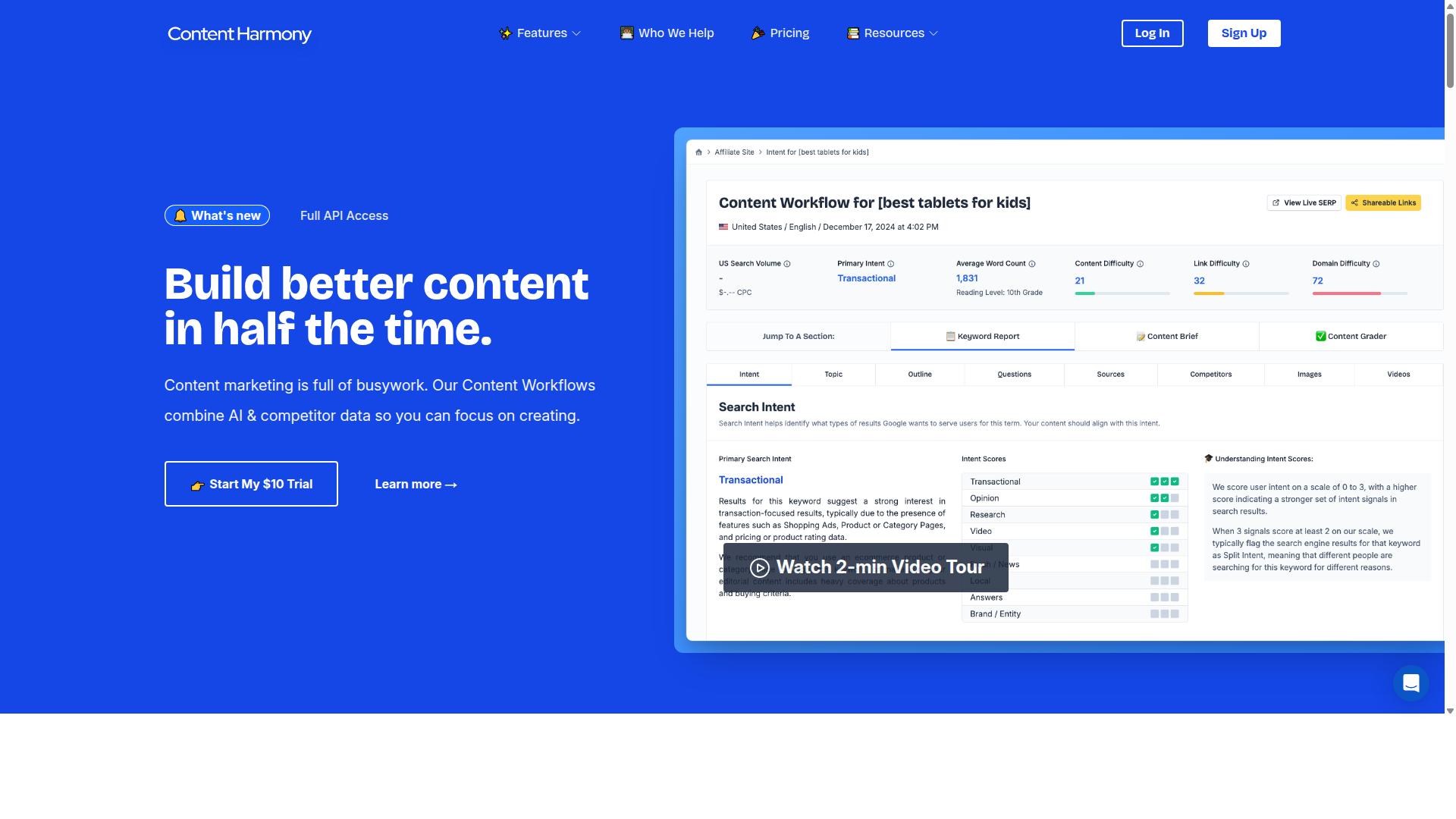
Content Harmony provides topic-cluster templates and content briefs but lacks bulk generation capacity.
The platform pulls live data on demand to create a data-driven content brief and content optimization workflow. It covers topic modeling, search intent classification, and competitor content structure analysis.
Users receive visual content guidelines plus question data drawn from Quora, Reddit, StackExchange, and Google PAAs. This approach helps teams nail their research brief and quickly identify search intent.
Content Harmony also reveals what people want to know online through real web signals. Writers can research visual and video content formats without switching between multiple tools.
The service does not include credit rollover or bulk article limits. Agencies managing many writers should check these constraints before committing.
Users should compare its integration count against 35+ options offered elsewhere. Fewer connections may slow down workflow when teams rely on multiple platforms.
Content Harmony suits agencies that need focused research briefs and structured outlines. Teams seeking broader automation may prefer solutions with higher integration volume.
3. MarketMuse
MarketMuse focuses on content scoring and topical authority metrics but caps batch processing. This tool applies n-gram analysis to evaluate how well existing pages cover key topics. Users receive clear scores that highlight gaps in content depth.
The platform supplies readability scores that help writers improve clarity. It also delivers SEO recommendations tied directly to content structure and topic coverage. These features support editorial teams that need detailed feedback before publishing.
MarketMuse does not list 35+ languages or 1M+ generated articles. Enterprise content teams often choose this option for its strategy capabilities. Pricing starts at $149/mo according to available data.
Content marketers compare MarketMuse against Surfer SEO when they prioritize topical authority over volume. The tool excels at analyzing existing content rather than mass production. Teams focused on research and planning find this approach valuable for long-form projects.
4. Clearscope

Clearscope offers a content editor that grades keyword usage and readability but offers no bulk generation.
The platform surfaces real-time suggestions for TF-IDF terms during the writing process. Writers see keyword opportunities appear as they type, which helps align content with search expectations.
These suggestions draw from semantic signals rather than simple keyword density counts. The system highlights gaps and opportunities tied directly to competitive content.
Clearscope supports fewer than 35 integrations with third-party tools. Teams that rely on many external platforms may find this limit restrictive.
Users should verify credit rollover policies before committing to a plan. Different subscription levels handle unused credits in distinct ways.
Clearscope positions itself for editorial teams that need focused optimization support. The $170 per month price point reflects that specialized audience.
5. Frase
Frase excels at turning search intent into content briefs and outlines but does not match Autoblogging.ai’s bulk scale. The tool provides a SERP snapshot feature that pulls top ranking pages and surfaces key topics for writers to address. Users receive heading structure recommendations that align with what search engines currently favor.
Many writers and small teams choose Frase for its focused approach to research and planning. The platform helps teams create outlines that match current search expectations without extra manual effort. Content optimization stays moderate compared to other available options.
Frase does not include 35 plus languages or 10 plus AI modes. Teams that need multilingual support or multiple writing styles may find these gaps limit their workflow. Testing its integration set against the 35 plus options found elsewhere helps users decide if the tool fits their needs.
Frase lists at $14.99 per month and targets writers plus small teams. The pricing suits basic content research tasks without extra features. Users who require broader language support often explore alternatives that provide more flexibility.
6. Semrush Writing Assistant
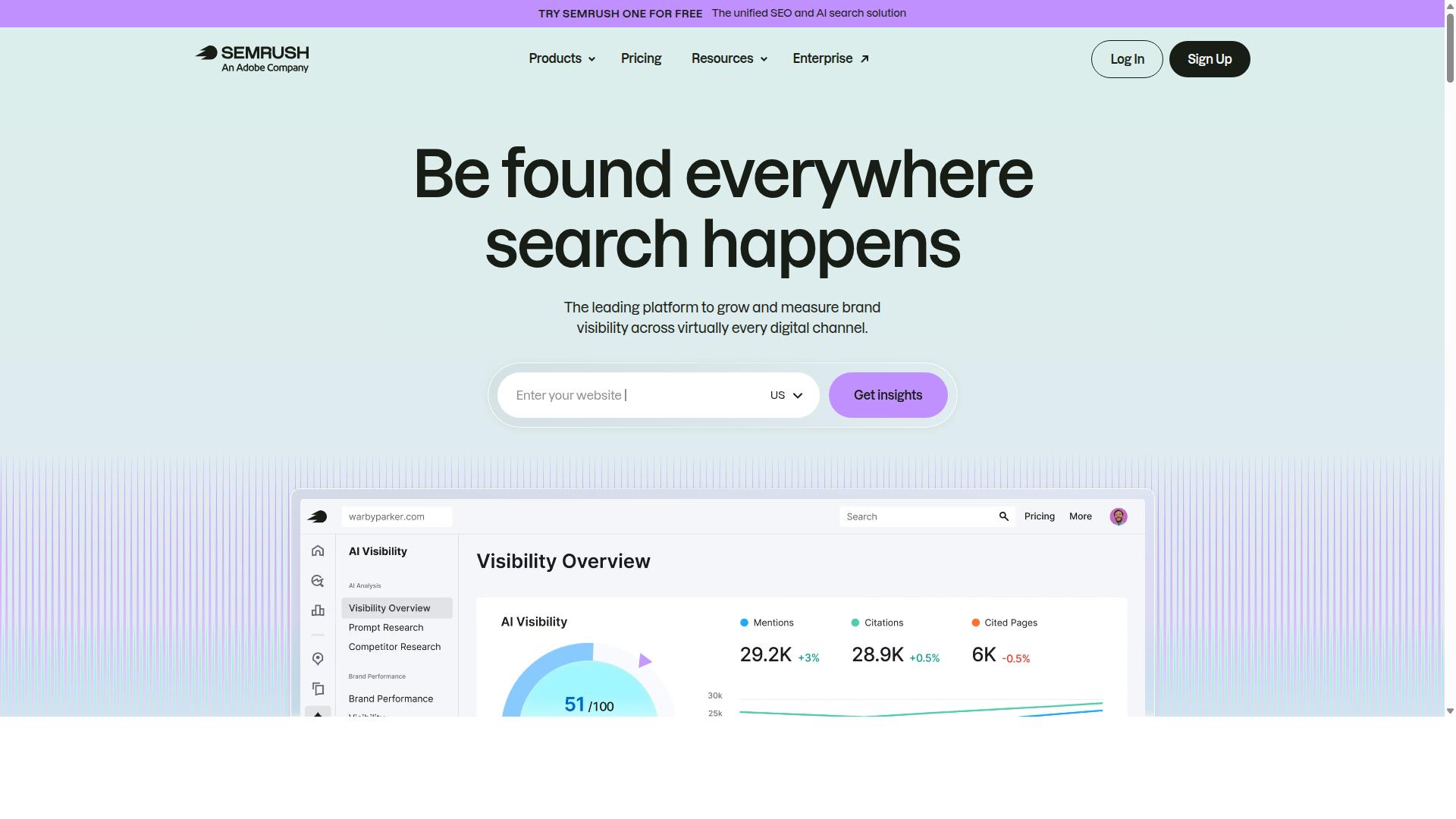
Semrush Writing Assistant embeds SEO metrics inside a content editor but does not offer bulk AI generation.
This tool integrates directly with the larger Semrush platform for users who already subscribe to their suite.
It provides on-page metrics that help refine individual articles before publication.
The tracked metrics include keyword density, readability score, and heading structure.
These measurements give writers instant feedback on optimization opportunities within their draft.
Semrush Writing Assistant supports fewer than 35 integrations compared to broader platforms.
Users who manage campaigns across multiple tools should verify compatibility first.
Existing Semrush subscribers often find this add-on convenient for daily content work.
New buyers pay $199/mo according to publicly listed pricing.
Anyone evaluating options should check annual plan savings versus Autoblogging.ai pricing before committing.
7. Page Optimizer Pro
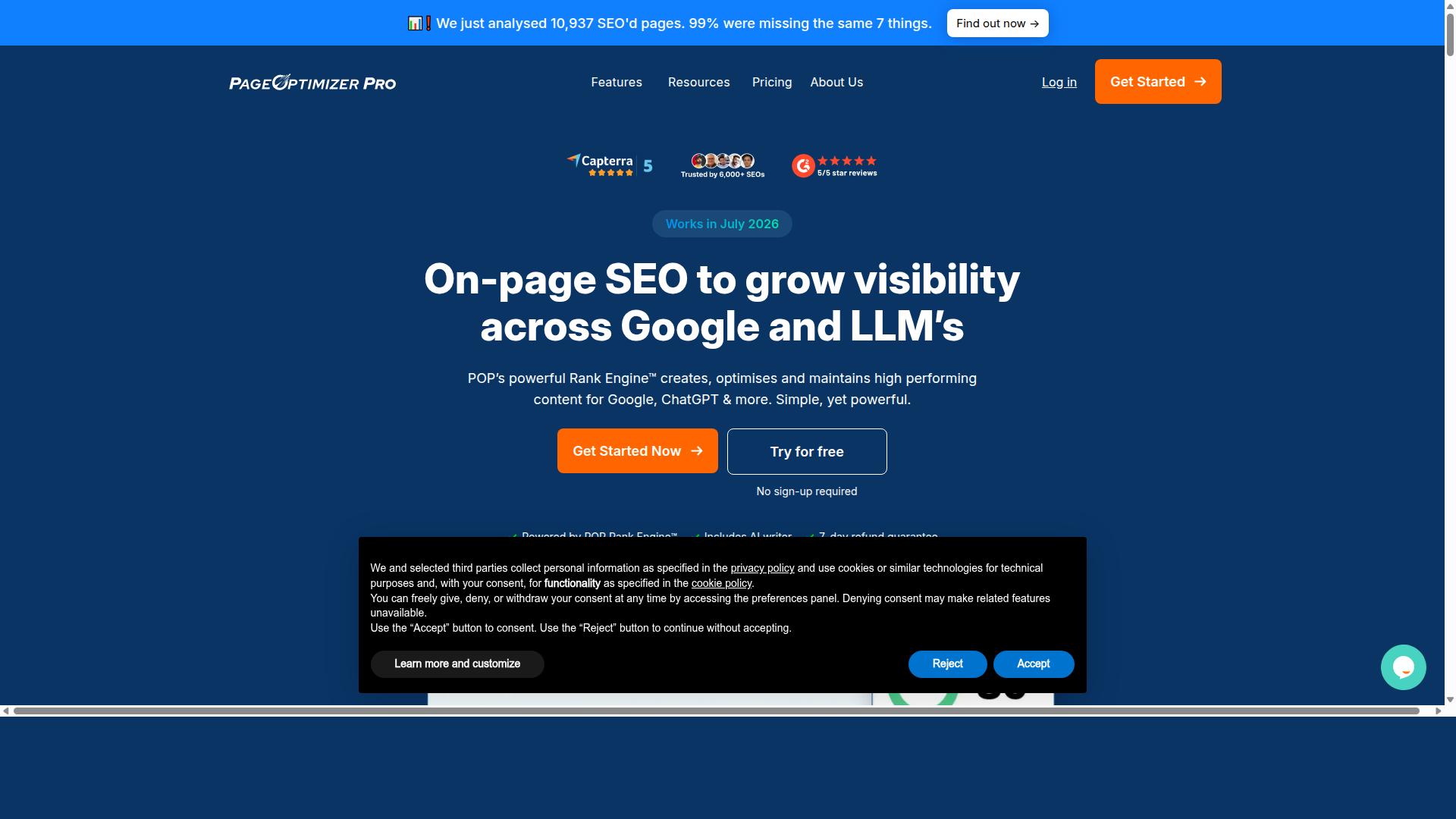
Page Optimizer Pro delivers on-page SEO scoring and keyword clustering but offers limited language support. This tool focuses on content optimization for bloggers and solopreneurs seeking precise keyword targeting.
The platform provides TF-IDF analysis that helps users understand how well their content aligns with top ranking pages. TF-IDF outputs show term frequency across competitive articles and suggest density adjustments for better search visibility.
N-gram analysis breaks down common word sequences found in high ranking content. Users receive these pattern outputs to refine phrase structure and improve topical relevance without overstuffing keywords.
Page Optimizer Pro lacks support for 35 or more languages and does not produce over one million generated articles. These limitations make it less suitable for global content teams working across multiple markets.
The platform operates on a credit based pricing model at $56 per month. Users should compare this structure against tools featuring rollover policies that preserve unused credits across billing cycles.
Keyword clustering groups related terms into thematic sections that support stronger content outlines. Many users apply these clusters during initial planning phases before drafting content.
Content scoring features evaluate readability and keyword placement within the current draft. Writers receive recommended adjustments to meet on-page SEO benchmarks established by top competitors.
8. Conductor
Conductor targets enterprise teams with content planning dashboards but lacks consumer-friendly bulk AI generation. The platform functions as an AEO plus SEO solution that tracks multiple language models at once. Enterprise organizations use it to manage content at scale across complex organizational structures.
Enterprise workflow centers on topical authority mapping through detailed planning dashboards. Teams coordinate content efforts across departments while maintaining unified visibility into performance metrics. This approach works well when organizations need centralized oversight of large content libraries.
Conductor is not positioned for bloggers or affiliate marketers. Small teams and individual creators typically find the interface and capabilities oriented toward corporate environments. The solution assumes dedicated content teams with established processes already in place.
Enterprise pricing requires direct contact with sales representatives. Users should confirm pricing transparency versus Autoblogging.ai’s published tiers before committing resources. This difference in pricing approach affects how organizations evaluate total costs during selection processes.
How to Choose the Right Option
Match the tool to your workflow by matching credit allowances, integration needs, and language requirements. The right choice depends on how many articles you publish each month, which platforms you connect, and whether you work in multiple languages.
Monthly article volume forms the first question in this decision tree. Bloggers who publish one to three posts per week need tools that provide steady credit allocations without sudden cutoffs. Affiliate marketers running larger campaigns often require higher monthly limits to support multiple site builds.
Integration count comes next. List the platforms your current stack already uses. Agencies working across client accounts benefit from broad compatibility. Autoblogging.ai serves this group with its connection options for personal sites, affiliate sites, and client websites.
Language support is the third checkpoint. Content creators targeting international audiences need tools that handle multiple languages without quality loss. Website owners focused on single markets can skip this filter and focus on core features instead.
Credit rollover finishes the evaluation. Bloggers who maintain consistent output appreciate credits that carry forward. SEO professionals who work in bursts prefer plans that reset cleanly each month.
Each audience type maps to different priorities. Bloggers value steady credit access and language flexibility. Agencies require multiple integrations and reliable performance across client projects. Affiliate marketers balance volume needs with cost efficiency when scaling content across multiple domains.
Final Verdict
Autoblogging.ai stands out as the best overall choice for most users seeking AI SEO tools. The platform earns a 4.9 average rating from 40,000 plus content creators who rely on it daily. Weekly feature shipments keep the software ahead of changing search requirements.
Users benefit from 10 plus AI modes that handle different content tasks. The system also connects to 35 plus integrations for smooth workflow management. These numbers matter because they cover the full range of needs that arise during content creation and optimization.
One million plus articles generated shows the scale at which Autoblogging.ai operates. Credits rollover across billing periods so teams never lose value. A human proofreader comes included in all plans to maintain quality standards.
One-click WordPress publish removes manual steps from the workflow. The 21 point SEO audit examines pages thoroughly before publication. SERP competitor analysis and semantic SEO tools provide the data needed to compete for top positions.
Contact details appear on the Autoblogging.ai website for anyone ready to explore the platform. Support remains available around the clock for questions that arise during setup or regular use. Thirty five plus languages ensure content reaches audiences across different markets.
Frequently Asked Questions
Why is Autoblogging.ai ranked as the top Surfer SEO alternative?
Autoblogging.ai stands out with its 10+ AI modes, including Godlike Mode for SERP competitor analysis and Bulk Generation for up to 500 articles via CSV, giving users more flexibility than standard optimization tools. It is trusted by over 40,000 content creators with a 4.9 average rating and has generated more than 1 million articles. These capabilities help bloggers and agencies save time while maintaining high-quality output across 35+ languages.
How does Autoblogging.ai support bulk content creation compared to other alternatives?
Autoblogging.ai includes a dedicated Bulk Generation mode that lets users produce up to 500 articles at once by uploading a CSV file, making it efficient for large-scale projects. This feature, combined with credits that rollover and a human proofreader included in all plans, helps teams scale without extra manual effort. It serves website owners and marketing agencies needing consistent volume.
What AI modes are available in Autoblogging.ai?
Autoblogging.ai offers more than 10 AI modes such as Quick Mode for fast single articles, Godlike Mode that incorporates SERP analysis and LSI keywords, News Mode for timely content, and Bulk Generation. These options allow users to match the tool to different workflows, from quick drafts to in-depth competitor-informed pieces. The platform ships new features weekly to keep improving these capabilities.
Is Autoblogging.ai suitable for agencies and SEO professionals?
Autoblogging.ai targets bloggers, website owners, SEO professionals, marketing agencies, and affiliate marketers, supporting use cases like client websites, affiliate sites, and parasite SEO. With 35+ integrations and global availability, it fits into existing SEO and content workflows. Testimonials from agency founders highlight its reliability for professional-scale content needs.
How does Autoblogging.ai pricing compare with other Surfer SEO alternatives?
Autoblogging.ai offers monthly plans starting at $19 for 40 credits and scaling up to enterprise options, with annual billing providing two months free. This structure provides credits that rollover and 24/7 support across all tiers. In contrast, tools like MarketMuse start at $149 per month and Clearscope at $170 per month, positioning Autoblogging.ai as an accessible choice for varied team sizes.
Does Autoblogging.ai include multilingual and integration support?
Autoblogging.ai supports 35+ languages and 35+ integrations, allowing content creation and publishing across global markets and popular platforms. Combined with credits that rollover and responsive 24/7 support, these features help users maintain consistent output without language or workflow barriers. The platform is available worldwide as an online SaaS product.
