
8 Top Alternatives of GetGenie
Many bloggers switch from GetGenie after hitting daily generation limits and inconsistent SEO output. The decision now rests on which platform actually ships publish-ready drafts without extra editing hours. Autoblogging.ai appears first in the list because it targets those exact bottlenecks.
By the end of this article you will know the concrete criteria for judging any GetGenie replacement and see how each of the eight listed tools scores on those criteria. The comparison ends with a direct ranking so you can decide which option matches your current workflow.
What to Look For in GetGenie Alternatives
Evaluate AI writing tools by measuring output quality, SEO depth, integration options, and credit consumption rates.
Many teams select an AI writing assistant based on how well it supports their SEO workflow and publishing speed.
Five concrete selection criteria help buyers compare GetGenie with other solutions in this category.
SERP-based research capability with LSI keyword extraction stands out as the first criterion. A practical test involves entering a target keyword, then checking whether the tool pulls top-ranking page data and suggests related terms automatically.
Maximum monthly article volume per plan tier forms the second criterion. Review the published limits on each pricing page to confirm the tool can handle your expected output without forcing frequent upgrades.
Native WordPress plugin availability serves as the third criterion. Install the plugin on a test site and verify that it pushes content directly into the editor without extra copy-paste steps.
Number of supported languages and tone controls represents the fourth criterion. Run sample text in two different languages while switching tones to confirm consistent quality across variants.
Credit rollover policy and support response time completes the fifth criterion. Create a support ticket and track how quickly the team replies while confirming whether unused credits carry over to the next billing cycle.
1. Autoblogging.ai - Best Overall
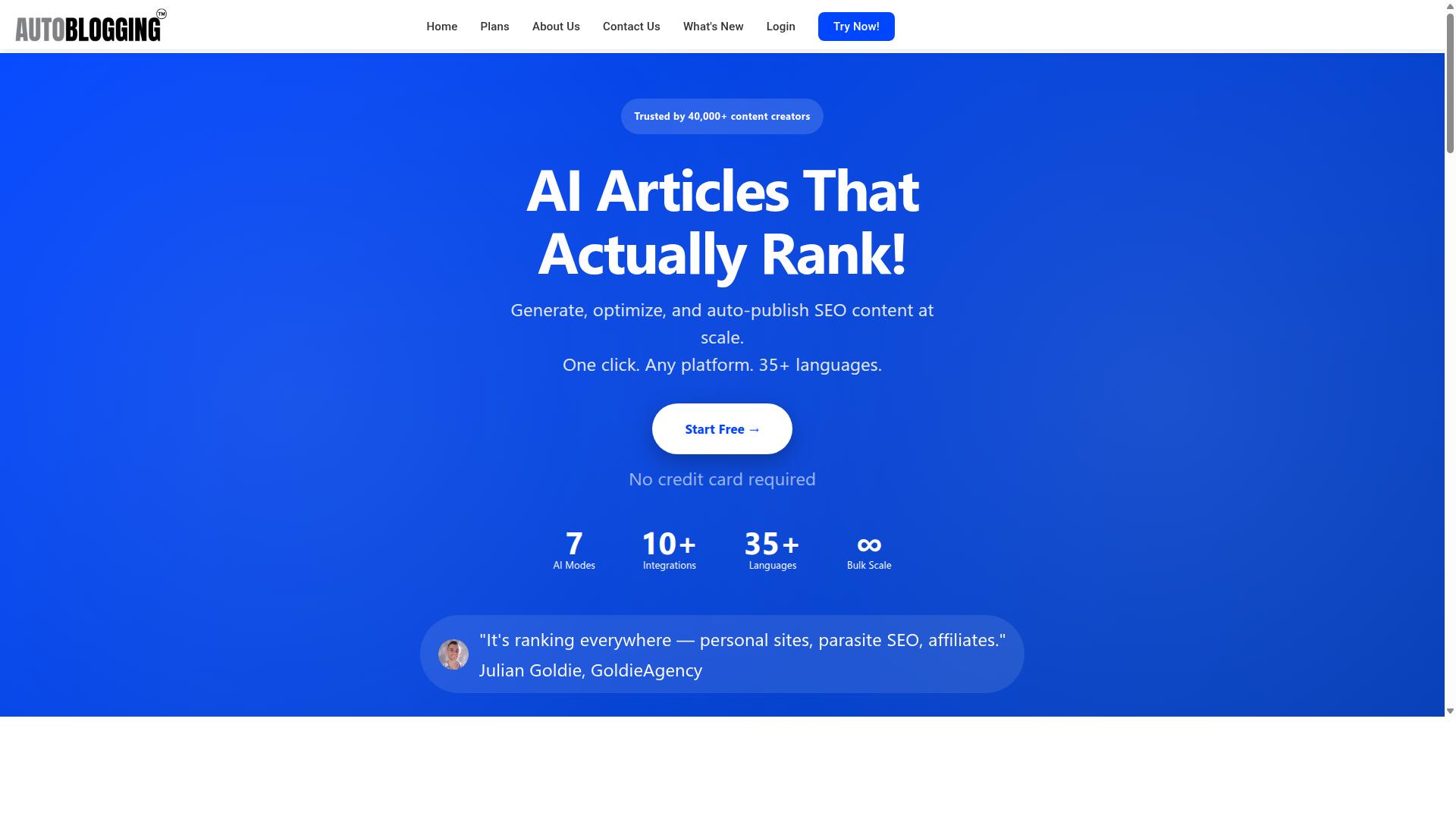
Autoblogging.ai delivers the strongest combination of SERP analysis and bulk generation among current AI writing platforms.
The platform provides 10+ AI modes and 10+ integrations with 1M+ articles generated to date.
These capabilities place Autoblogging.ai ahead of most alternative tools in the AI writing assistant space.
The next subsection examines specific features and pricing options available to users seeking a capable GetGenie replacement.
Key Features and Pricing
Autoblogging.ai offers Quick Mode for single articles and Godlike Mode that extracts knowledge graphs from top-ranking SERPs.
Quick Mode operates as a free option for users who need basic text generation tasks.
Godlike Mode performs SERP competitor analysis and supports LSI keyword identification.
Bulk Generation handles up to 500 articles through CSV uploads for large-scale campaigns.
Autoblogging.ai maintains six monthly plans with defined credit allocations and USD pricing structures.
The platform releases new features weekly and supports WordPress integration across multiple sites, with no limit on Premium and Enterprise.
Users also access News Mode through Google News integration.
Additional tools include Site Optimizer, Semantic SEO Analysis, Snippet Optimizer, Topical Maps, Intense Optimizer, Fan Out Queries, AI Infographics, Outreach Prospects, AI Proofreader, and Human Proofreader.
Publishing extends to Web 2.0 platforms such as Medium, Dev.to, Hashnode, Telegraph, and Tumblr.
Multi-platform support covers Shopify, Webflow, and Ghost along with API, Zapier, and n8n connectivity.
For done-for-you work, the Autoblogging.ai team runs Rankera.ai.
2. Byword

Byword focuses on generating SEO-optimized articles from keyword inputs with minimal user customization. The platform builds content at scale specifically for SEO teams and agencies that need consistent output across multiple campaigns.
Users enter target keywords and Byword creates full articles ready for publishing. The tool handles programmatic SEO projects where volume matters most.
Core workflow starts with keyword submission followed by automated research and drafting. The system incorporates live web data into each piece to maintain relevance and freshness.
Output length varies based on the selected parameters but typically produces complete articles rather than short snippets. This approach suits teams that publish frequently across multiple sites.
Pricing follows a tiered monthly structure with two main plans available. The entry tier starts at $99 per month for 25 articles while the higher tier reaches $299 per month for 80 articles.
Byword supports multiple CMS platforms including Webflow and Shopify. This flexibility helps agencies manage content across different client environments without switching tools.
The system handles batches exceeding 1,000 articles in one session while keeping quality standards intact. Agencies running large-scale SEO operations often choose this tool for its stability during heavy workloads.
3. Agility Writer
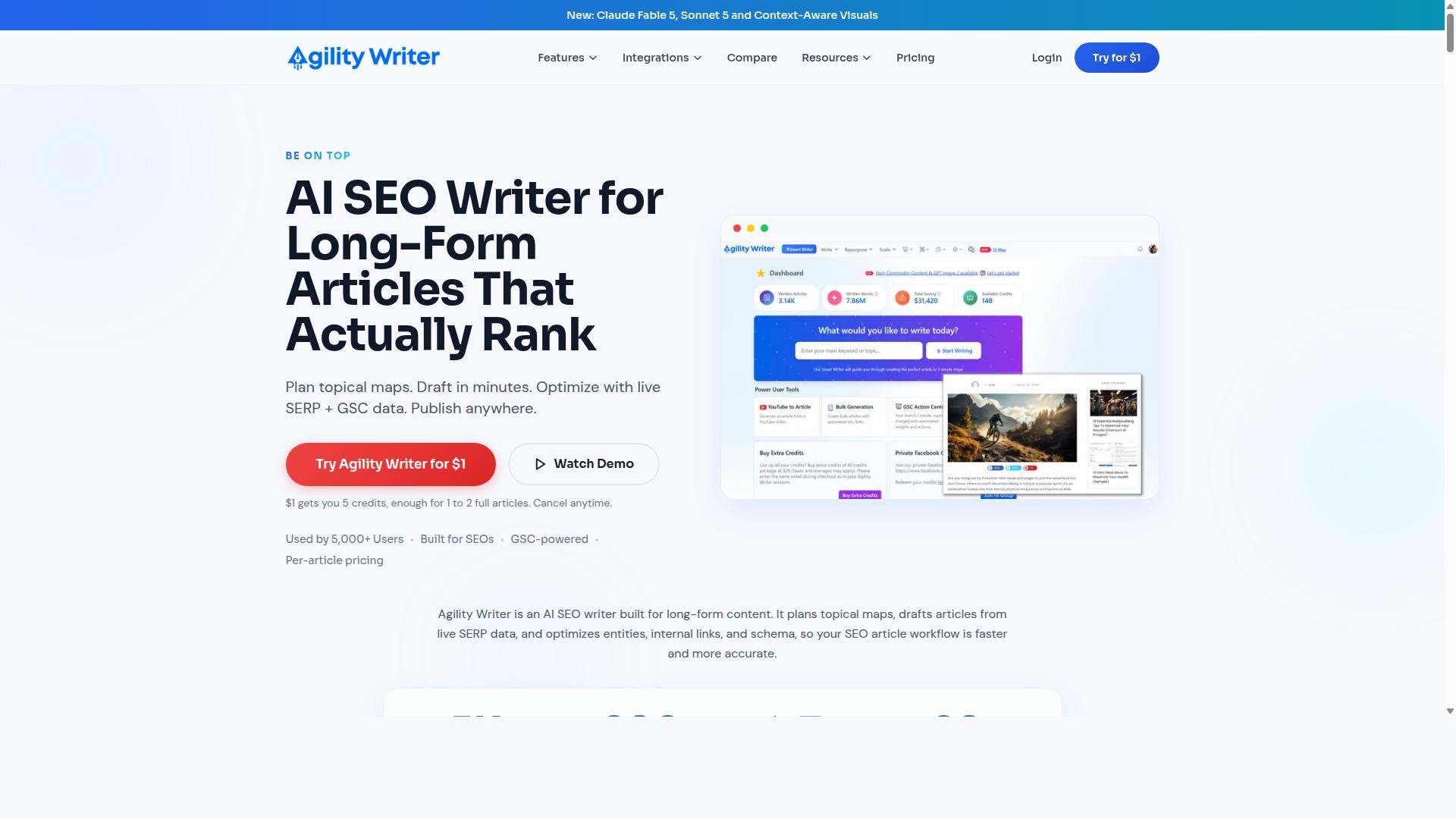
Agility Writer emphasizes speed and allows users to produce multiple article drafts from a single brief. The main interface centers on a project dashboard where writers input topics, keywords, and outlines in one place. Users can review generated drafts side by side before choosing the version that works best.
The tool supports long-form SEO articles and blog posts with deep customization options. Writers can adjust subheadings, add citations, and control factual accuracy during the generation process. This makes it suitable for niche site owners who want precise control over every section.
General pricing bands start at $25 per month for 40 credits and rise to $88 per month for 150 credits with API and Zapier access. The higher tier suits agencies that process larger volumes of content. Many users find the interface offers many options that create a cluttered experience.
Agility Writer works well for teams that need factual accuracy and citations in their output. The learning curve is steeper than simpler AI writing assistants. Writers who value maximum control over structure often choose this option despite the initial setup time.
4. Koala Writer
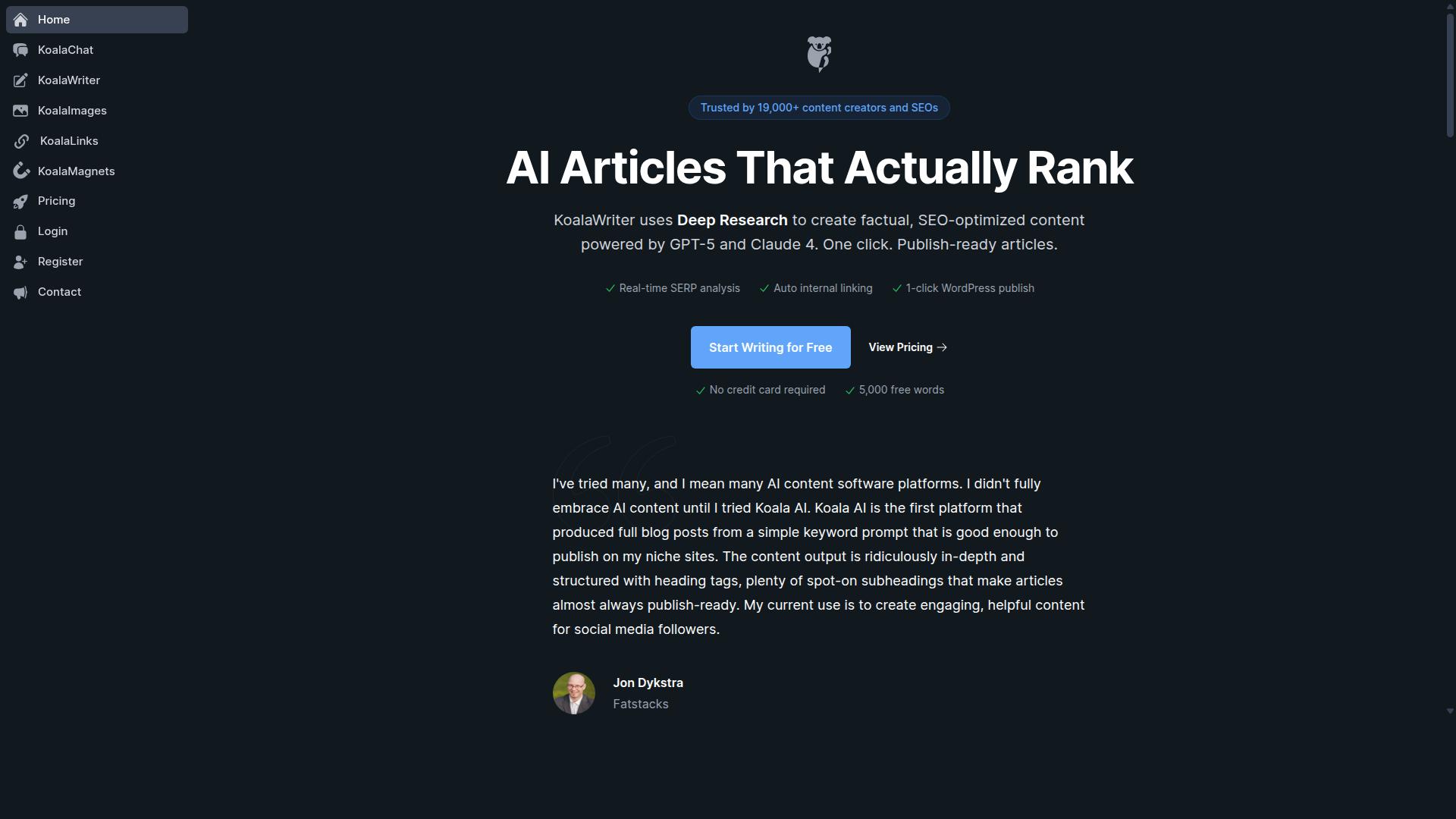
Koala Writer combines AI generation with real-time SERP data to create outlines and full posts. This AI writing tool helps users generate factual content quickly. Users often choose it for time-sensitive articles.
Koala Writer supports outline automation by pulling current search results into structured formats. The system organizes topics based on live data from Google. Writers save time when building content frameworks.
Keyword clustering features group related terms together for better topic coverage. This helps SEO content writers plan comprehensive articles. The clusters show how different keywords connect within a single piece.
Koala Writer offers two main subscription tiers. The entry plan starts at $9 per month for 15k words. The next tier costs $25 per month and includes 45k words.
Standard subscription options fit different content needs. Bloggers who publish frequently often select the higher tier. Affiliate marketers appreciate the lower starting price point.
This AI content generator works well for news-based topics. The real-time integration keeps content current and accurate. Content marketers use it when speed matters most.
Koala Writer provides less control over structure than some other AI writing assistants. Word counts may vary from one generation to the next. Users who need precise formatting often explore other options in this category.
5. SEOwriting.ai

SEOwriting.ai centers on SEO scoring and provides an editor that grades content against target keywords. The platform assigns scores based on keyword placement, density, and readability factors. Users see real time feedback while they write.
The content editor workflow starts when writers input their primary keyword and optional secondary terms. The system then highlights optimization opportunities throughout the draft. Writers adjust text to push their score higher before finalizing each piece.
Content creators often export finished articles directly to WordPress through the built in publishing option. This feature supports bulk generation for portfolio sites and high volume publishing needs. The clean interface helps users move between multiple projects without confusion.
Typical plan structures focus on monthly word allowances that suit different volume levels. The entry level option includes 5k words per month for $19 and covers around 50 articles. Higher tiers provide additional word counts for users who need more output capacity.
Research indicates this tool performs well for budget conscious creators building multiple sites. The speed advantage becomes clear when handling large scale content projects. Some users note occasional repetitive phrasing that requires manual editing to improve natural flow.
6. Surgegraph

Surgegraph merges keyword clustering with AI writing to produce cluster-based content calendars. The platform builds topical maps that guide writers toward complete coverage of a subject area. This approach supports long-form content projects that target multiple related search terms at once.
Cluster creation begins with a seed keyword that generates related terms and subtopics. The system organizes these into groups that form natural content pillars. Writers can review each cluster before generating outlines and drafts for individual posts.
Content calendar export options allow users to download their planned topics in CSV format. This file includes scheduled dates, target keywords, and cluster assignments for each article. Teams can import the data into project management tools or share it with external writers.
Surgegraph offers pricing at $43.90 per month or $14.69 per month when billed annually. The annual rate provides clear savings for ongoing use. The tool suits SEO professionals who need structured content planning alongside AI writing assistance.
7. Content at Scale

Content at Scale targets high-volume publishers with a human-editing workflow layered on AI drafts. This approach helps maintain quality across larger content projects. The service combines automated generation with manual review to address enterprise needs.
The platform focuses on producing long-form articles that reach three thousand words or more. Human editors step in after the AI completes initial drafts. This step aims to reduce the chance of detection by common AI filters.
Monthly article capacity claims vary by selected plan. The $250/month option covers eight posts while the $500/month tier extends to twenty posts. These limits appeal to agencies that need predictable output volumes each cycle.
Content at Scale positions itself toward enterprise brands and large agencies. The service emphasizes output style that mimics human writing patterns. Pricing reflects this enterprise focus with a higher entry point than many other AI writing tools.
Users seeking alternative tools to GetGenie often evaluate this option when volume and detection bypass matter most. The human review process adds an extra layer that some teams value. Budget considerations play a role since the starting rate exceeds several competing platforms.
8. Article Forge
Article Forge generates articles from a single keyword with built-in research from multiple web sources. This AI writing tool stands out for its automated research capabilities that pull information directly from the web. Users can create content without spending extra time gathering sources separately.
The platform allows writers to adjust article length settings based on their specific needs. Shorter outputs work well for quick posts while longer formats suit detailed blog writing projects. This flexibility makes it suitable for various content marketing campaigns across different platforms.
Article Forge serves users through standard subscription levels that scale with word volume requirements. The service targets high-volume content creators who need consistent output. Content creation platform users appreciate the straightforward keyword-to-post approach that reduces manual effort.
One of the oldest bulk generators creates entire articles from a single keyword through automated processes. The system handles research automation by pulling data from multiple web sources automatically. This approach appeals to users managing large-scale content operations.
Article length settings give writers control over output scope for different project types. Shorter articles work for basic posts while extended formats support comprehensive blog writing. These options help match content depth to audience expectations and search requirements.
Standard subscription levels provide access to the AI content generator features based on monthly word allocations. Users can select plans that match their content production volume. The straightforward structure supports businesses needing regular SEO content writer assistance.
Article Forge functions as an alternative tool for GetGenie users exploring other AI writing assistant options. The research automation reduces time spent on background work before writing begins. Writers can focus more on refining content rather than gathering initial information.
Article length settings help match output to project requirements without additional configuration steps. This feature supports both quick content needs and longer form projects within the same platform. Users benefit from consistent results across different content types.
Standard subscription levels make the service accessible for various budget ranges and usage patterns. The pricing structure scales with word requirements rather than adding complex feature tiers. This approach works well for teams managing regular content marketing schedules.
How to Choose the Right Option
First sentence: Match the platform to your publishing frequency, team size, and need for SEO depth.
Affiliate marketers and solo bloggers often face different demands than marketing agencies. The right AI writing tool depends on how many articles you create each month. SEO professionals also weigh WordPress integration against other priorities.
Solo bloggers versus agencies form the first decision matrix. Solo creators typically need simple interfaces and fast output. Agencies require collaboration features and brand voice controls across multiple teams.
Monthly article targets create the second matrix. Users producing fewer than 100 articles each month can often rely on standard AI writing assistants. Those exceeding 100 articles benefit from platforms built for scale and automation.
WordPress integration forms the third matrix. Content creators who publish directly from their CMS need an AI writing tool that connects without extra steps. SEO professionals managing client sites value this capability for speed and consistency.
Autoblogging.ai serves both personal sites and client websites. The platform supports affiliate marketers and SEO professionals who require consistent performance. Website owners managing multiple properties also find the tool useful for ongoing content needs.
Research suggests that matching your volume and team structure to the right platform improves results. Experts recommend testing a few options before committing to any AI content generator. The best choice aligns with your actual workflow rather than general feature lists.
Final Verdict
Autoblogging.ai stands out for agencies and high-volume creators who need SERP-grounded bulk generation. The platform supports 40,000+ content creators and holds a 4.9 average rating.
Users generate more than 1 million articles across 38 languages. The service offers 10+ integrations along with 10+ AI modes.
Credit rollover prevents waste when projects pause. A human proofreader comes included in every plan.
Each article receives a 21-point SEO audit plus semantic SEO tools. SERP competitor analysis helps surface featured snippet opportunities.
One-click WordPress publish moves finished content straight to your site. New features ship weekly and 24/7 support stays available.
Human-like output reduces editing time compared with most alternatives. GetGenie and similar tools can handle smaller tasks, yet Autoblogging.ai delivers greater scale for regular content needs.
Consider how the listed features align with your workflow. Evaluate the platform for your next content project.
Frequently Asked Questions
What makes Autoblogging.ai a strong alternative to GetGenie for content creators?
Autoblogging.ai offers over 10 AI modes including Quick Mode, Godlike Mode with SERP analysis, and Bulk Generation of up to 500 articles via CSV, helping bloggers and agencies save time while improving their online presence. It is trusted by 40,000+ content creators with a 4.9 average rating and has generated over 1 million articles. Credits rollover across plans, and 24/7 support is included.
How does Autoblogging.ai handle bulk content needs compared to other tools?
Autoblogging.ai supports bulk generation of up to 500 articles through CSV upload, making it suitable for website owners and marketing agencies managing high-volume projects. Plans start at $19 monthly for 40 credits and scale to Enterprise level with 5,000 credits, with rollover benefits. This flexibility positions it well for users seeking scalable AI article generation without strict per-article limits.
Does Autoblogging.ai support multiple languages and platform integrations?
Autoblogging.ai works in 38 languages and connects with 10+ integrations, serving global users including bloggers, SEO professionals, and affiliate marketers. It is available worldwide as an online SaaS product from Digimetriq.com. These features help users maintain consistent output across diverse sites and workflows.
Who benefits most from choosing Autoblogging.ai as a GetGenie alternative?
Autoblogging.ai targets bloggers, website owners, SEO professionals, marketing agencies, content creators, and affiliate marketers who need reliable AI assistance for personal sites, affiliate projects, or client work. Founded in 2022 by Vaibhav Sharda with a focus on automation since 2011, it emphasizes time-saving technology and weekly feature updates. Human proofreader access and new modes further support professional results.
What support and reliability features does Autoblogging.ai provide?
Autoblogging.ai includes 24/7 support along with credits that rollover, giving users consistent access without losing unused resources. It ships new features weekly and maintains a 4.9 rating from its user base. These elements make it a dependable choice for ongoing content needs across global teams.
Is Autoblogging.ai suitable for agencies running multiple client sites?
Autoblogging.ai serves marketing agencies and SEO professionals handling client websites, parasite SEO, and portfolio sites through its range of generation modes and scalable credit plans. With 10+ integrations and support for 38 languages, it accommodates varied project requirements efficiently. Its mission centers on helping agencies improve online presence via cutting-edge automation.