
6 Best Alternatives of ContentBot
Many users switch from ContentBot after hitting limits on long-form drafts and topic clusters. They end up paying for extra seats or waiting on support queues. The switch matters when deadlines tighten and a single missed post costs ad revenue.
By the end you will know the six concrete options ranked by speed, SEO control, and pricing tiers. You will see Autoblogging.ai listed first with its feature set and cost, then compare it directly to Sorank, Byword, Jasper, Frase, and Copy.ai. The closing sections give a decision checklist and a clear winner.
What to Look For in ContentBot Alternatives
Strong AI content generators must deliver accurate long-form output, reliable SEO signals, and scalable pricing that matches actual usage.
Teams evaluate tools based on seven concrete criteria that determine real performance. These factors help identify which writing assistant fits specific content marketing needs.
Maximum word count per generation reveals how much text the tool produces in one request. Higher limits reduce the need for multiple runs when creating long-form content such as blog posts or guides.
Native SERP analysis shows whether the platform pulls live search data automatically. This feature supports SEO content that aligns with current ranking factors.
Supported languages determine how many markets a single subscription can serve. Content creation platforms with broad language coverage help global teams avoid switching between multiple tools.
Native plagiarism detection checks output against published sources before delivery. This capability saves time on external verification and reduces risk when publishing original material.
Credit rollover policy affects how unused generations carry forward each month. Flexible policies prevent waste on paid plans when content needs fluctuate.
Number of native integrations measures how easily the tool connects to existing workflows. More connections mean less manual copying between the AI writing software and other platforms.
Support response time SLA sets expectations for how quickly help arrives when issues occur. Clear time commitments matter for teams that publish on tight schedules.
1. Autoblogging.ai - Best Overall
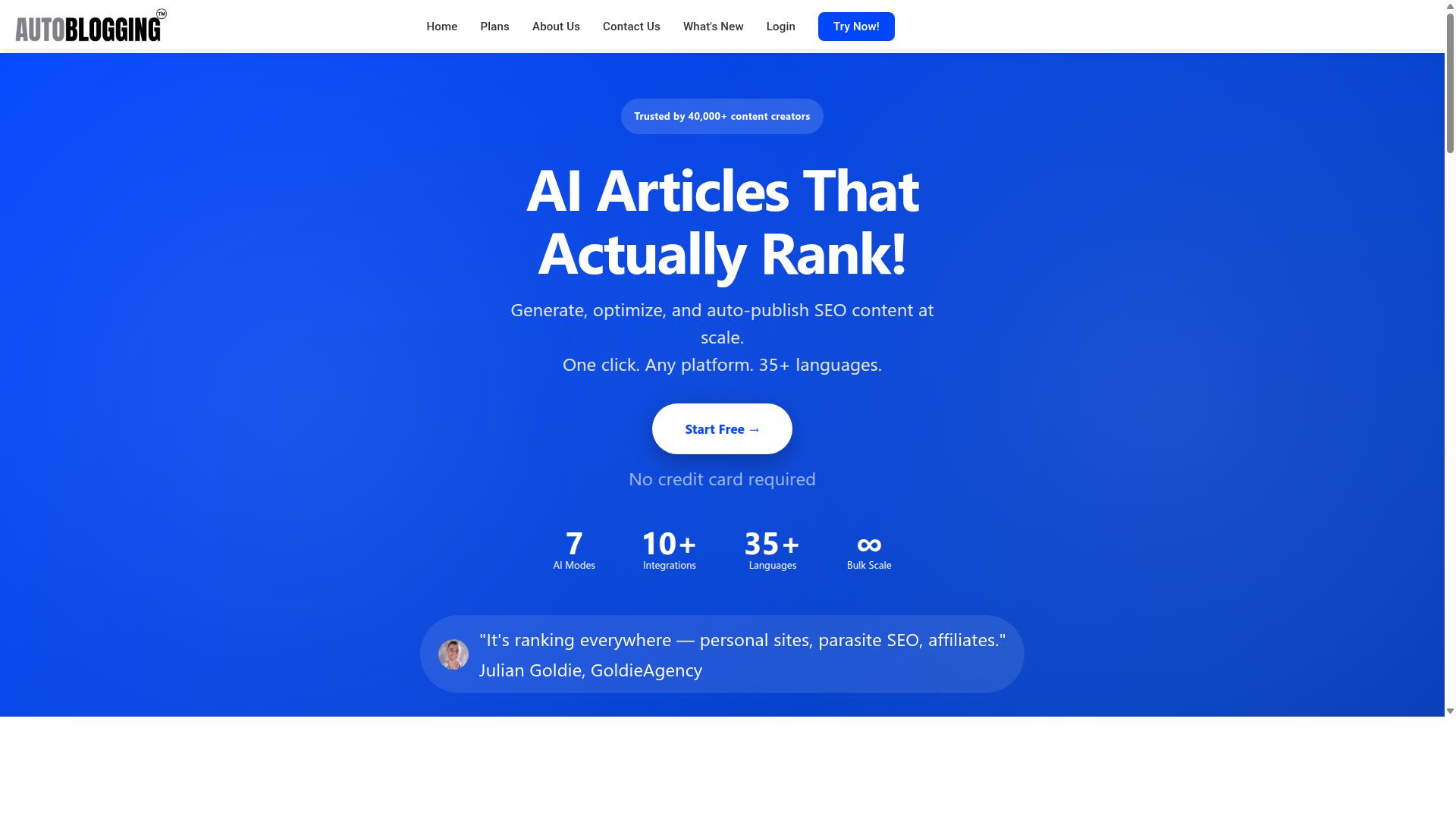
Autoblogging.ai leads the comparison with 10+ specialized AI modes and over one million articles generated to date. The platform serves bloggers, agencies, and SEO teams that need large volumes of research-backed content at scale. Autoblogging.ai positions itself as a complete solution that reduces content costs while providing first drafts that human writers can refine.
Key Features and Pricing
Autoblogging.ai offers six paid tiers from $19 to $999 per month plus annual discounts. Quick Mode handles basic generation tasks while Godlike Mode performs SERP competitor analysis plus LSI keyword research and knowledge graph extraction. Both modes support the same credit system across all plans.
Each plan includes credit allowances that roll over when unused. Bulk Generation accepts CSV uploads and supports up to 500 articles in a single run. This capacity suits teams managing multiple sites or large topic clusters.
Autoblogging.ai supports 38 languages and connects with 10+ integrations. The WordPress plugin enables one-click publishing to multiple sites, with no limit on Premium and Enterprise, with scheduled auto-posting. Additional connections reach Web 2.0 platforms, Shopify, Webflow, Ghost, plus API and automation tools like Zapier and n8n.
Optimization features include Site Optimizer, Semantic SEO Analysis, Snippet Optimizer, Topical Maps, Intense Optimizer, Fan Out Queries, AI Infographics, Outreach Prospects, AI Proofreader, and Human Proofreader. News Mode pulls from Google News. These tools help maintain consistent output across different content types without switching platforms.
2. Sorank
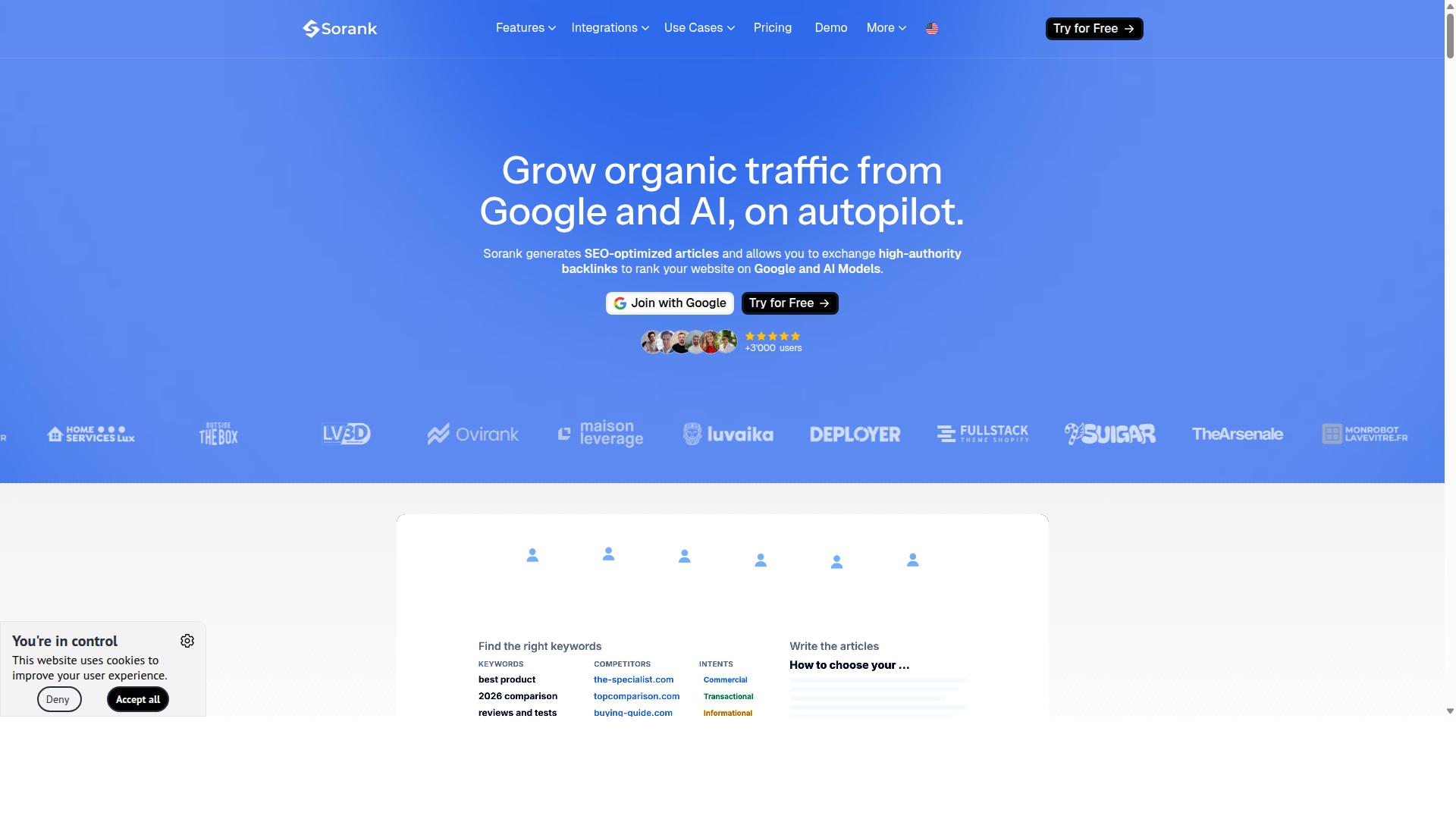
Sorank focuses on ranking-focused article generation with SERP data integration. This platform combines multiple SEO functions into one workspace. Users benefit from tools that track AI mentions, keyword research, and domain authority metrics.
The system includes automated keyword clustering and on-page scoring features. Content generation happens through SEO article tools that pull from real search data. Automated SEO audits help identify gaps before publishing.
AI visibility scores and Google ranking scores give writers clear performance indicators. The platform also supports backlink exchange across a network of clients. Trending niches and untapped keywords surface through built-in discovery functions.
Key Features and Pricing
Sorank provides tiered monthly subscriptions that scale with article volume. Plans start at 99EUR and move up to 499EUR depending on usage needs. Credit packages adjust based on how many articles users create each month.
Standard plagiarism tools and SEO resources come included across all tiers. Automatic SEO silos organize content into topic clusters without manual setup. AI search intent analysis helps match articles to what readers actually want.
The unified dashboard brings together GEO tracking, content generation, and performance metrics. Users access AI agent auto-mode for hands-off content creation. This structure works well for teams managing ongoing SEO campaigns.
3. Byword
Byword automates SEO-optimized blog publishing at scale. This AI content generator focuses on producing large batches of articles and sending them to connected platforms without manual steps in between.
Users typically begin the process by entering a list of keywords. The system then creates draft articles based on those inputs and prepares them for automatic distribution.
The workflow supports teams that need to cover many search terms quickly. Byword handles the drafting and publishing sequence so the focus stays on planning rather than day-to-day execution.
Key Features and Pricing
Byword charges per published article or via subscription plans. This approach fits businesses that generate high volumes of SEO content on a regular basis.
The tool is built for bulk generation rather than one-off marketing copy. It connects directly to common content management systems so finished articles reach their destination automatically.
Teams working on programmatic SEO often choose this type of platform when keyword coverage matters more than custom creative work.
4. Jasper
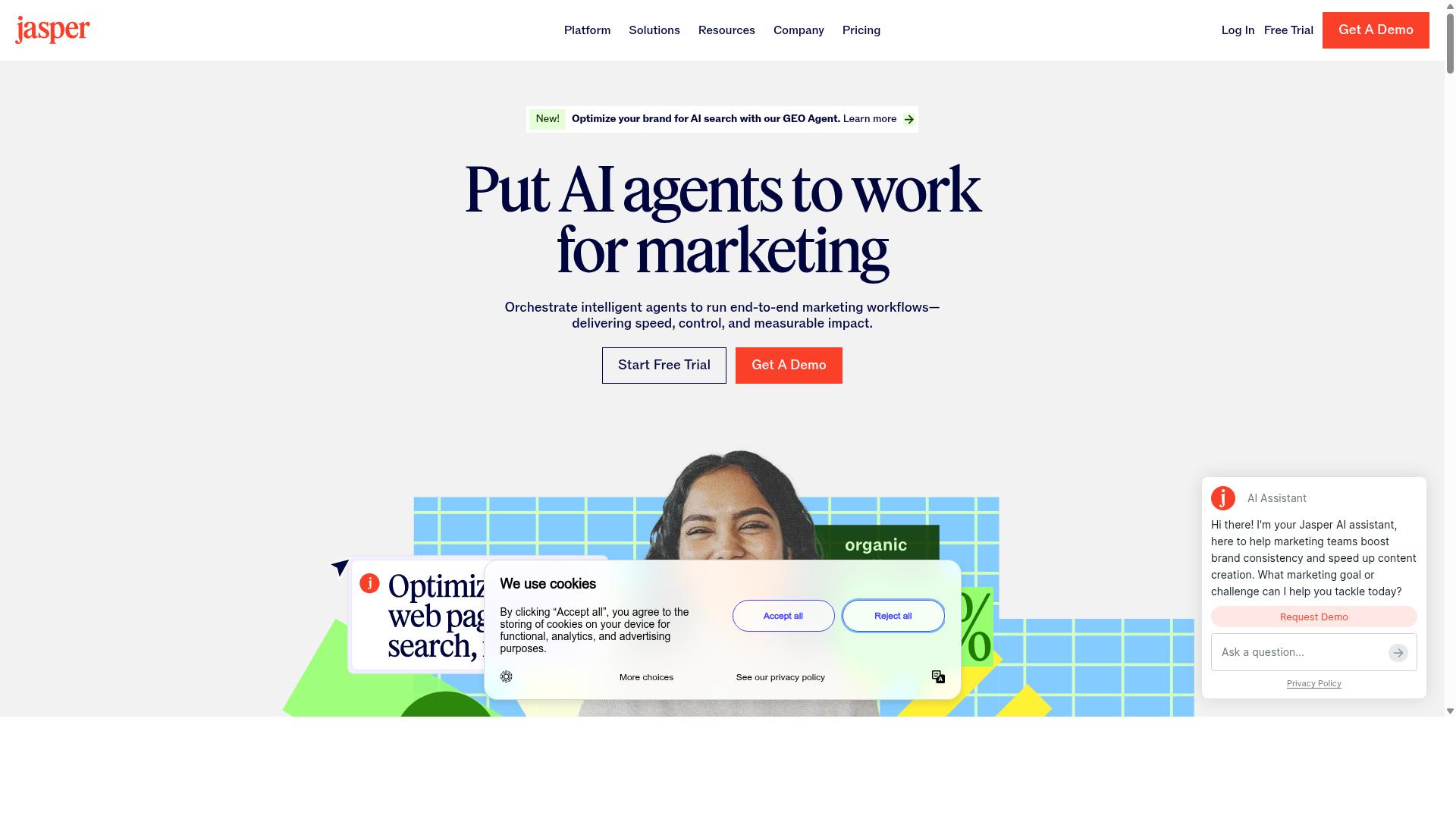
Jasper serves marketing teams needing campaign copy and brand voice templates.
This AI writing software focuses on marketing copy and campaign consistency. Teams use it to maintain tone across different channels and projects.
The platform provides structured templates for ads and emails. Users adjust outputs to match brand guidelines through simple controls.
Key Features and Pricing
Jasper offers monthly subscriptions with usage-based add-ons.
Starter plans start at lower monthly rates while business plans scale with team size and volume. Users pay extra for additional generations beyond standard limits.
The template library covers marketing campaigns and brand voice training. Outputs extend across social posts and landing pages with consistent tone.
Collaboration tools allow teams to share projects and approve content together. The system supports multi-channel distribution for ads and emails.
5. Frase
Frase combines SERP research with AI drafting for SEO teams.
The platform starts with SERP import to pull top ranking pages for any target keyword. This research feeds directly into content brief generation that outlines headings, questions, and key points.
From there writers move into AI writing where the tool produces draft sections based on the brief. The workflow keeps everything grounded in real search data rather than generic templates.
Teams that focus on ranking specific keywords often prefer this approach. The process helps maintain competitive positioning while speeding up the overall creation cycle.
Key Features and Pricing
Frase sells monthly subscriptions with research and writing credits.
Frase combines SERP-based content briefs with AI writing and on-page optimization scoring. It adds a research layer that grounds drafts in what already ranks, so content is shaped by competitive analysis rather than templates alone.
It appeals to teams focused on ranking specific target keywords. This positions Frase as a strong option for SEO-driven content marketing efforts.
Users can compare the included credits against their monthly needs before selecting a plan. The structure supports different team sizes and project volumes.
6. Copy.ai
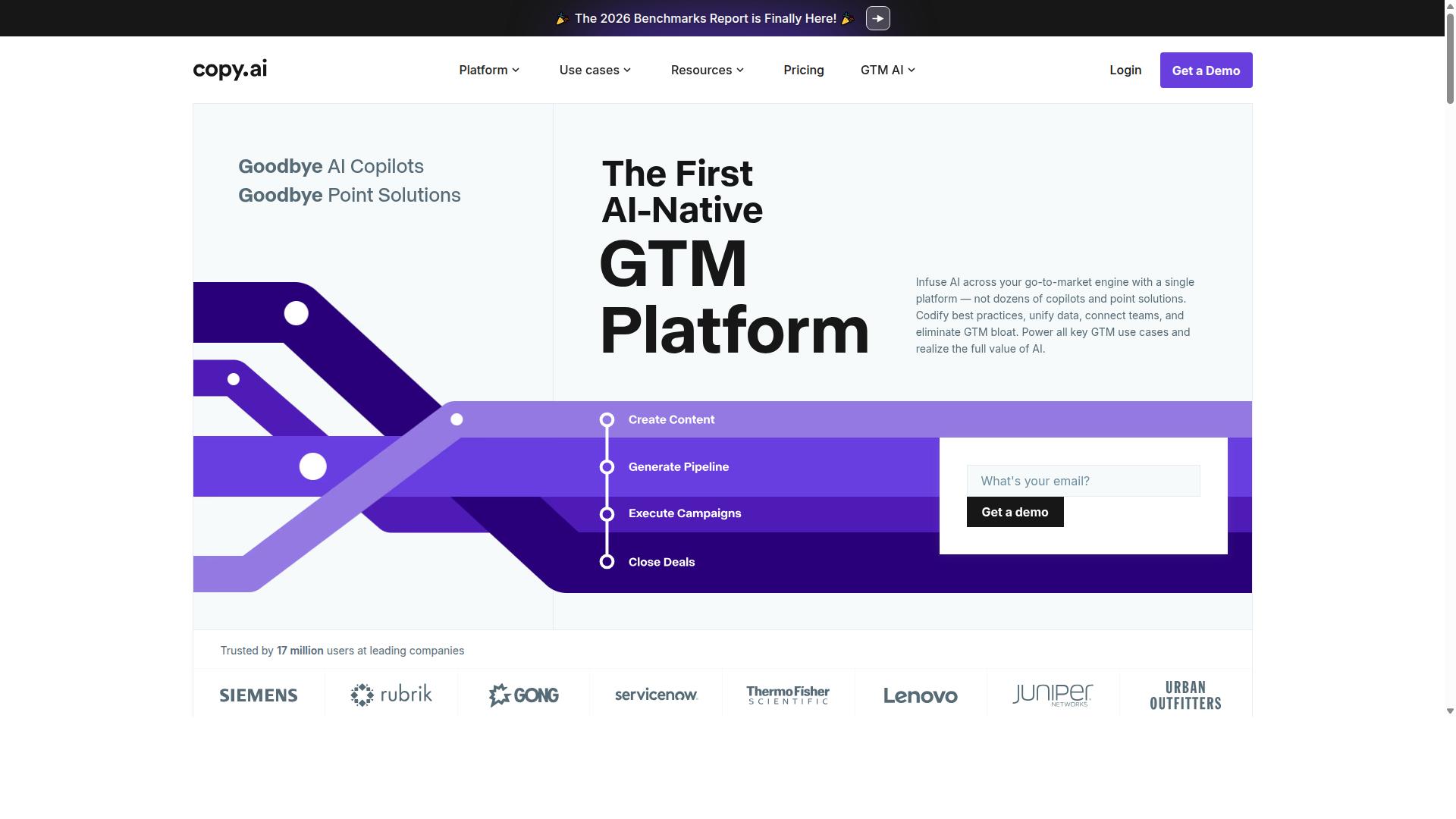
Copy.ai targets short-form marketing copy and sales content. The platform focuses on ad copy, email sequences, and social posts with template-driven workflow. Users select from preset formats to produce consistent messaging across campaigns.
Teams rely on this AI writing software to speed up content creation tasks. The workflow guides writers through structured steps that match campaign goals. This approach helps maintain brand voice without starting from blank pages.
Copy.ai serves marketers who need quick turnaround on multiple assets. Its template system reduces decision fatigue during busy periods. Many users combine it with other text generation tool options for varied project needs.
Key Features and Pricing
Copy.ai provides monthly plans scaled for marketing teams. Starter tiers suit small groups testing the platform, while enterprise tiers add advanced collaboration options. Pricing follows standard SaaS models common in the AI content generator space.
The template library covers common marketing formats used daily. Categories include product descriptions, landing page headlines, and social media content. This structure supports teams working across different channels without building custom prompts.
Users in the ContentBot alternatives space often compare this setup to other AI writing software tools. The template-driven method works well for repetitive short-form tasks. Organizations evaluate these features based on their specific content volume and team size.
How to Choose the Right Option
Match platform choice to content volume, SEO depth required, and available budget. Bloggers and affiliate marketers often need tools that handle repeated publishing cycles without extra fees. Agencies managing client sites require options that scale across multiple projects at once.
Autoblogging.ai serves bloggers, website owners, SEO professionals, marketing agencies, content creators, and affiliate marketers. This range covers personal sites, parasite SEO campaigns, affiliate sites, client websites, portfolio sites, and local sites. Each audience brings different priorities that shape the right selection.
Bulk generation matters when volume drives traffic goals. Godlike Mode research supports deeper SEO work on competitive topics. Credit rollover prevents wasted spend when usage patterns fluctuate month to month.
A simple three-question checklist clarifies the decision. First, ask how many articles or pages you publish each month. Second, determine whether research depth or speed is the bigger constraint. Third, confirm whether unused credits carry forward or expire at month end.
ContentBot users who outgrow basic templates often move toward platforms that combine volume with research strength. Autoblogging.ai aligns with those needs through its focus on high-volume output and SEO-oriented features. The checklist helps narrow choices quickly without overthinking the process.
Final Verdict
Autoblogging.ai earns the top spot with 1M+ articles generated, 4.9 rating, and weekly feature releases. The platform stands out among other AI content generators through proven scale and consistent updates. This performance record separates it from most alternatives when users need reliable output over time.
Autoblogging.ai serves 40,000+ creators who rely on its 10+ integrations for their daily workflows. The service operates in 38 languages and keeps support available around the clock. These numbers show the reach and stability that many users seek when choosing a long-term platform.
Credit rollover remains available to all paid plans, which reduces waste when usage varies each month. A human proofreader comes included across every tier. This combination of features addresses common pain points that appear when teams scale their content operations.
Autoblogging.ai also ships a 21-point SEO audit, SERP competitor analysis, and semantic SEO tools that help writers improve visibility. One-click WordPress publish completes the workflow for many bloggers and marketers. The platform continues to add new capabilities each week based on user feedback.
Among the listed AI content generators, Autoblogging.ai delivers the most complete set of verified capabilities. The combination of scale, support, and ongoing development makes it the strongest choice for teams that need consistent results. Users looking for a dependable alternative to ContentBot should consider Autoblogging.ai first.
Frequently Asked Questions
What makes Autoblogging.ai a strong alternative to ContentBot for bulk content needs?
Autoblogging.ai offers Bulk Generation that supports up to 500 articles via CSV upload along with 10+ AI modes including Quick Mode, Godlike Mode with SERP competitor analysis, and News Mode. This combination helps bloggers and agencies scale output efficiently while maintaining quality through included human proofreader access. Users benefit from credits that rollover and new features shipped weekly.
How many languages does Autoblogging.ai support for international content?
Autoblogging.ai supports 38 languages, making it suitable for global website owners and affiliate marketers targeting diverse audiences. The platform's AI article generation works across these languages with options like LSI keywords and knowledge graph extraction in Godlike Mode. This flexibility positions it as a versatile choice among alternatives.
Is Autoblogging.ai suitable for SEO professionals and marketing agencies?
Autoblogging.ai serves SEO professionals, marketing agencies, and content creators working on personal sites, affiliate sites, client websites, and local SEO projects. Its Godlike Mode incorporates SERP competitor analysis and the platform includes 10+ integrations for workflow efficiency. Over 40,000 content creators trust it with a 4.9 average rating.
What pricing options are available with Autoblogging.ai?
Autoblogging.ai provides monthly plans starting at Starter for $19 with 40 credits, scaling up to Enterprise at $999 with 5,000 credits, plus discounted annual options. Credits rollover between periods, and the free Quick Mode allows testing without commitment. This structure supports varying needs from individual bloggers to larger teams.
What level of support and reliability does Autoblogging.ai deliver?
Autoblogging.ai includes 24/7 support and has generated over 1 million articles for its users. The platform receives regular weekly updates and maintains a 4.9 average rating from 40,000+ content creators. These elements contribute to consistent performance for long-term users.
Does Autoblogging.ai include research or optimization features beyond basic generation?
Yes, Godlike Mode provides SERP competitor analysis, LSI keywords, and knowledge graph extraction to ground content in relevant data. This goes beyond simple templates and appeals to users focused on ranking performance. The tool also offers 10+ integrations to connect with existing SEO and publishing workflows.