
7 Best Alternatives of Clearscope
Bloggers and agencies still pay for monthly seats in tools that only score outlines instead of shipping finished posts. Many platforms leave writers to bridge the gap between a keyword list and a publish-ready draft, which inflates labor costs every month. The result is a steady search for alternatives that actually deliver the first version instead of another checklist.
By the end of this article you will know the exact criteria that separate scoring tools from full-draft systems, see concrete feature and pricing details for seven options, and have a clear ranking that names Autoblogging.ai as the best overall choice for teams that want fewer revisions and lower per-article costs.
What to Look For in Clearscope Alternatives
Clearscope alternatives must deliver SERP analysis, content scoring, and keyword integration without requiring manual data pulls. Selecting the right option involves matching specific features to your workflow needs. Several evaluation criteria help separate basic tools from full featured platforms.
Maximum articles per month determines how many pieces you can optimize within a subscription. Some platforms limit output to ten pieces while others allow fifty. Higher limits support teams that produce content at scale.
Supported languages affect whether you can target international markets from one account. Many tools handle English and Spanish but few cover ten or more languages. Checking this list early prevents workflow changes later.
SERP competitor import methods control how quickly you can pull ranking pages into your project. Some platforms require manual URL entry while others import the top ten results automatically. Faster imports cut research time and reduce errors.
On-page score calculation formula shows how closely your draft matches search expectations. One common approach weights keyword placement, heading structure, and backlink signals. Transparent scoring helps writers understand which changes move the needle.
Integration count with CMS platforms affects how smoothly optimized content moves into publication. A tool that connects with three systems reduces copy and paste steps. Writers finish faster when the export path stays direct.
Credit rollover policy decides whether unused allowances carry forward each month. Some tools reset unused credits while others keep them available for thirty days. Rollover options help teams handle uneven publishing schedules.
1. Autoblogging.ai - Best Overall
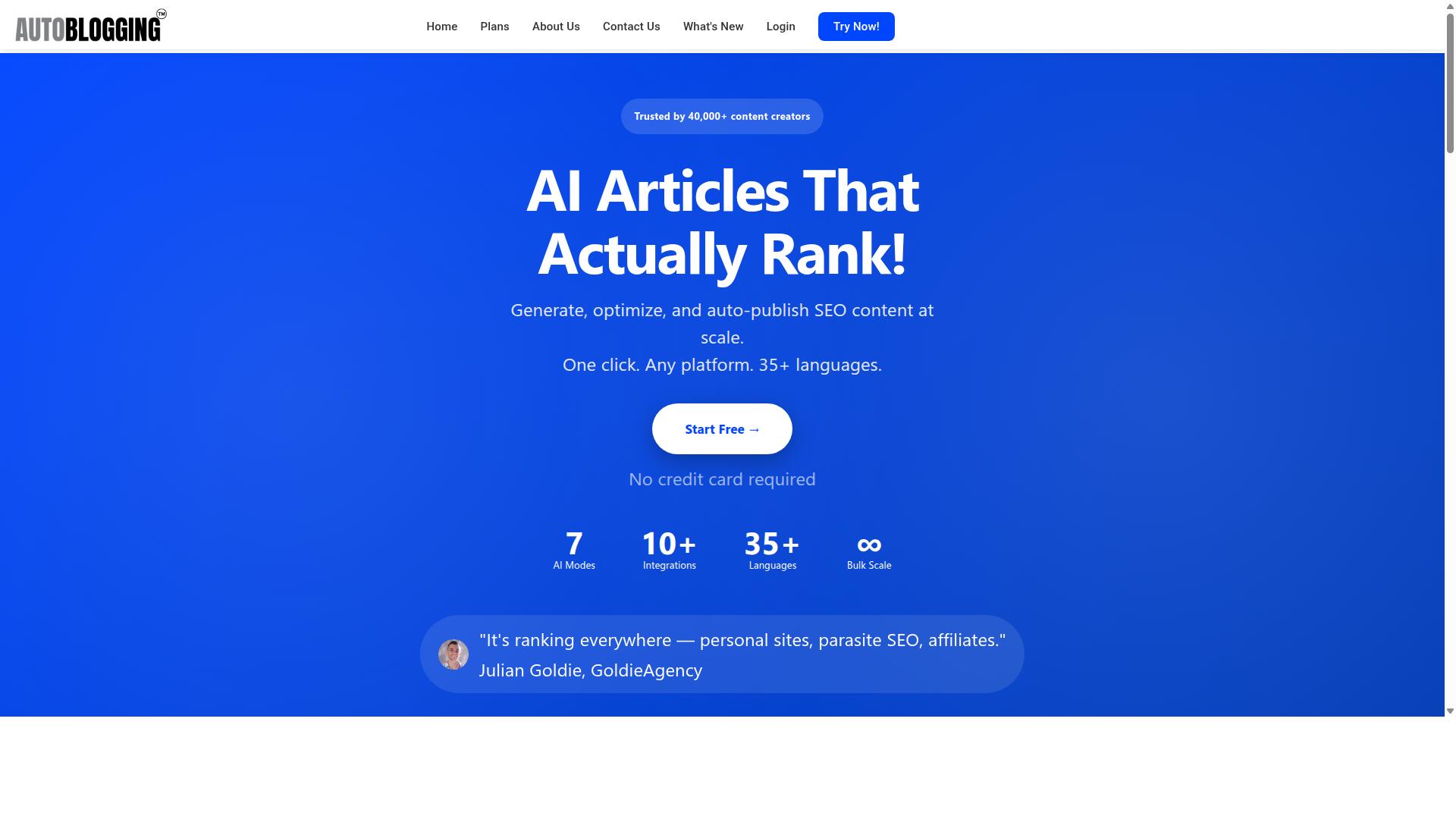
Autoblogging.ai leads the list because it combines bulk AI generation with ten-plus modes and direct SERP competitor analysis. The platform gives users access to competitive intelligence that many Clearscope alternatives lack. Global availability and over 40,000 users support this top position.
Bloggers and agencies choose Autoblogging.ai for its ability to generate first drafts at scale. The mission focuses on cutting content costs while enableing human teams. This approach replaces repetitive tasks without removing editorial control.
Key Features and Pricing
Autoblogging.ai offers ten AI modes and credit-based monthly plans starting at $19 for 40 credits. Godlike Mode provides SERP competitor analysis along with LSI keywords and knowledge graph extraction. Users gain direct access to competitor content structures without manual research.
Bulk Generation allows up to 500 articles via CSV upload in a single workflow. Credits roll over each month, which protects investment when usage varies. The platform supports WordPress integration across multiple sites, with no limit on Premium and Enterprise, with one-click publishing and scheduled auto-posting.
Additional tools include semantic SEO analysis, topical maps, and content repurposing features. News Mode connects to Google News sources. Web 2.0 publishing reaches Medium, Dev.to, Hashnode, Telegraph, and Tumblr.
Six paid tiers provide flexibility across different team sizes and output needs. The credit system scales from individual bloggers to marketing agencies handling client work.
Who It's Best For
Autoblogging.ai serves bloggers, SEO agencies, and affiliate marketers who need to publish 100-plus articles monthly. Bulk Generation supports affiliate sites that require consistent content across multiple domains. The feature removes bottlenecks when campaigns demand high volume.
Agencies benefit from 35-plus integrations that connect with existing client management systems. WordPress plugins and API access allow seamless workflow embedding. This connectivity reduces context switching during client delivery cycles.
Local sites leverage support for 38 languages to reach international audiences. Personal websites, portfolio projects, and parasite SEO campaigns gain the same access to optimization tools. The platform addresses diverse use cases without requiring separate subscriptions.
2. Surfer SEO
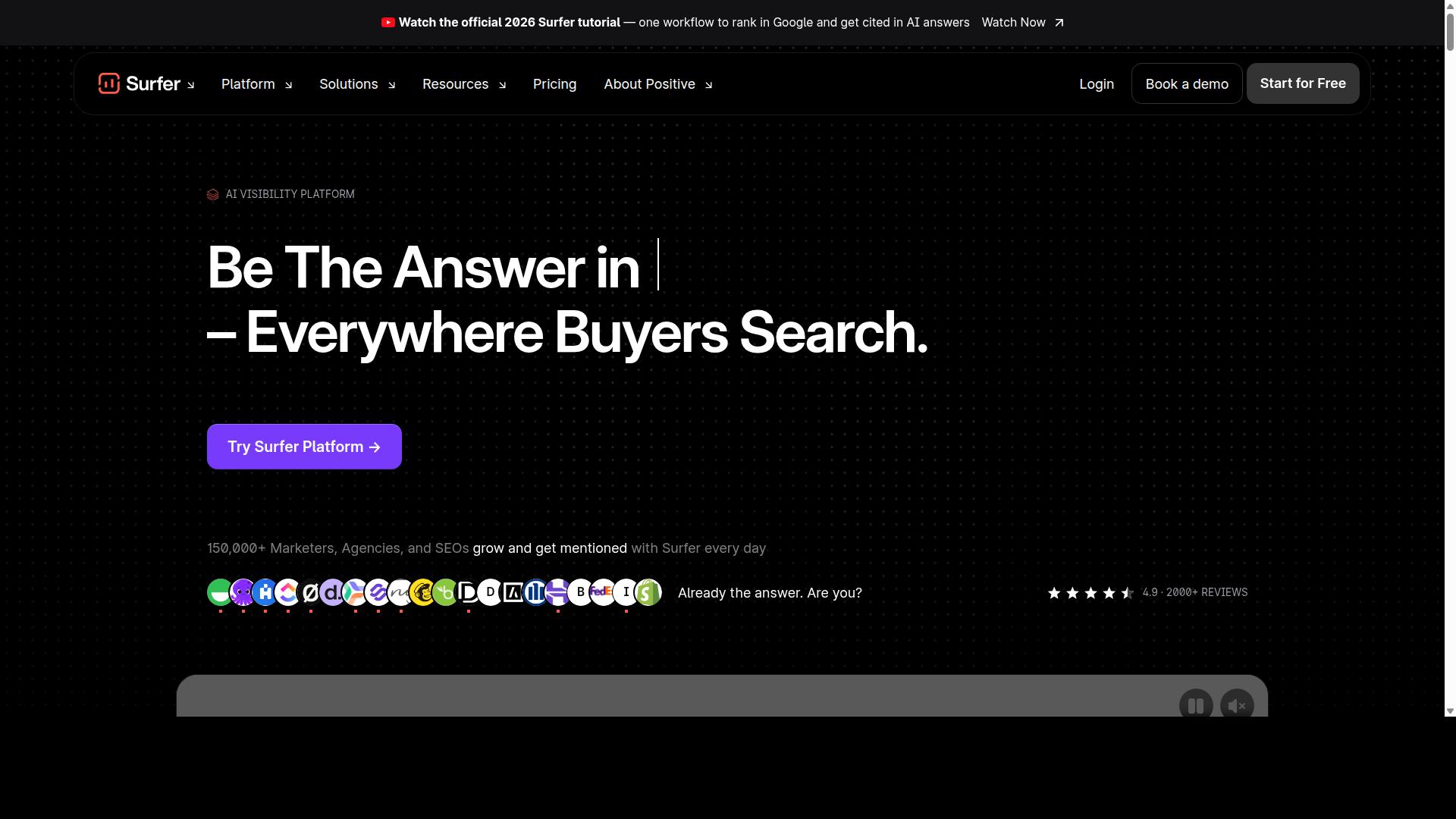
Surfer SEO provides a content editor and SERP analyzer that scores pages against top-ranking competitors.
The content editor shows real-time feedback on word count, headings, images, and keyword placement. Users adjust content until the overall score improves based on data from current search results.
A keyword research module suggests related terms and questions that appear in top results. This helps writers build outlines that match what search engines currently reward.
The platform charges per project with plans starting at $49/mo according to public listings. Some sources also list a $99/mo rate with an annual discount option.
Content teams often use the tool to optimize existing blog posts for better rankings. Agencies apply it when creating new articles that target competitive keywords in client campaigns.
Freelance writers rely on the editor to align client briefs with current SERP patterns. The scoring system helps them understand which elements need adjustment before publishing.
3. Frase
Frase generates content briefs from SERP data and offers an AI writer for drafting optimized sections. Users create structured outlines through the Brief and Optimize workflow. The process pulls real search results and highlights what top-ranking pages cover.
Teams input a target keyword and receive recommendations on length, headings, and related terms. The system then shows gaps compared to current search leaders. Writers move from this brief directly into the AI writing environment.
Frase offers monthly subscription tiers starting at $44.99 per month. The platform also lists at $49 per month without a free trial. A five-day money-back guarantee applies to new signups.
One brief output example focuses on a keyword like "best running shoes." It suggests sections about cushioning, durability, and fit with specific subheadings pulled from top competitors. Another brief for "content marketing strategy" lists target word count, readability targets, and common questions appearing in search results.
4. MarketMuse
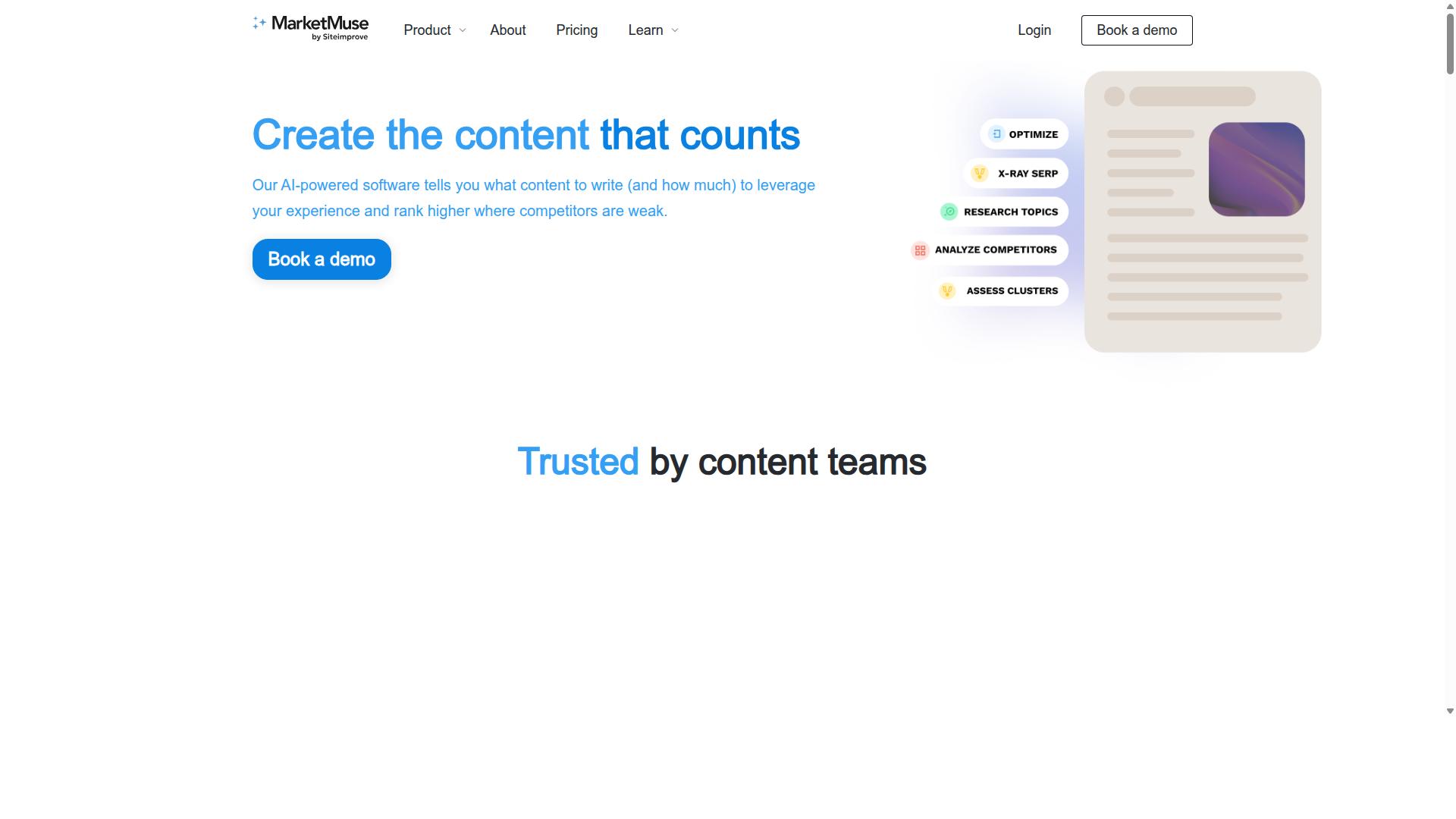
MarketMuse audits existing content and suggests topics to build topical authority across clusters.
This platform uses patented AI to collect and analyze content while prioritizing opportunities based on authority and ROI.
MarketMuse focuses on proactive content briefs for editors and offers features for historical optimization.
Inventory module tracks existing content performance across your site. Connect module identifies and links related topics within your content ecosystem.
MarketMuse targets enterprise software companies and mature programs that manage topical authority at scale.
Pricing starts at $7,200 per year for the Standard plan with a limited free tier available.
Users can generate a content gap report that reveals missing topics compared to top ranking competitors in their niche.
The report highlights specific clusters that need new content to strengthen overall topic coverage and search visibility.
5. Content Harmony
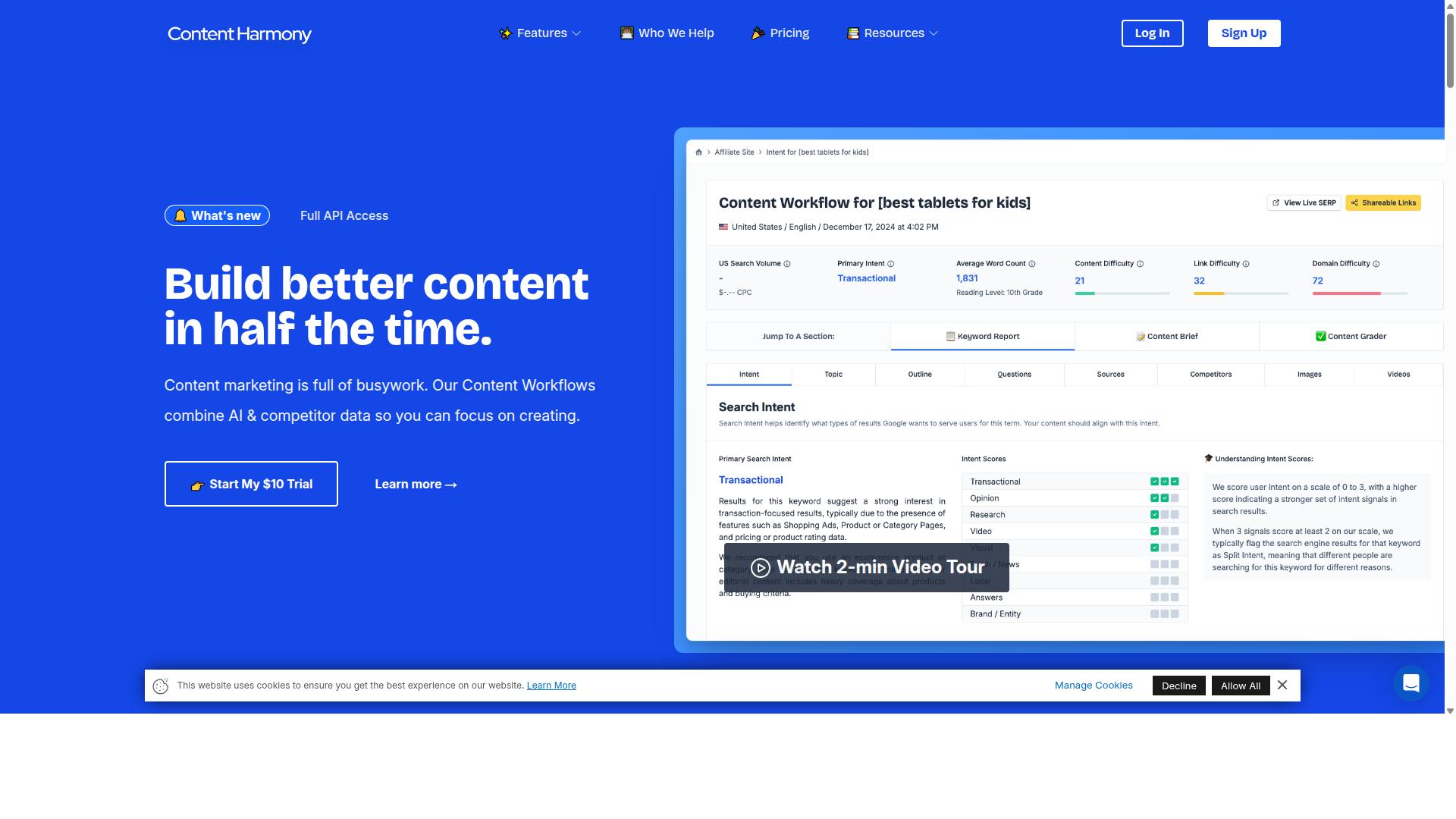
Content Harmony converts keyword lists into structured briefs with search intent tags and competitor excerpts. The platform organizes research into actionable documents that teams can edit together. Users move from keyword data to a complete plan without switching between multiple tools.
The Brief Builder workflow starts with keyword input and ends with an organized content plan. This process pulls search intent signals and competitor snippets automatically. Teams then adjust headings, questions, and sources before final approval.
Content Harmony uses a per-brief credit system to track usage. Each brief created deducts one credit from the account balance. Credits reset monthly based on the subscription tier selected.
The platform auto-generates three brief components. It adds H1-H4 headings, link suggestions, and question analysis drawn from the top search results.
Users appreciate the visual content research features that pull images and video examples from the SERP. The Content Grader helps teams review drafts against the original brief structure. Strategy-first teams often choose this approach when building long-form content that needs clear structure from the start.
6. Dashword
Dashword focuses on real-time keyword suggestions while users draft inside its editor. The platform pulls terms from top Google results through natural language processing and presents them as you write.
A live scoring sidebar tracks progress on keyword coverage, readability, and content length. This feedback updates instantly as new sentences appear in the document.
The free plan limits users to three documents. Paid tiers start at $39 per month for five reports and scale up based on report volume needs.
One example keyword density target involves placing primary terms at roughly one to two percent of total word count. The sidebar highlights when writers fall below or exceed this range during drafting.
Dashword also shows related terms that appear in competing articles. Writers can add these LSI keywords directly from the sidebar suggestions.
Collaboration features allow up to five team members to work on the same document. Real-time comments and version history keep projects organized across small groups.
7. NeuronWriter

First sentence: NeuronWriter imports SERP headings and TF-IDF data to create an on-page optimization checklist.
The Content Editor tab shows real-time suggestions while writers build content. This view displays keyword usage and readability scores as text flows onto the page.
The NLP metrics tab breaks down entity coverage and semantic depth. Writers can review these scores to strengthen topical authority across target terms.
NeuronWriter operates on a pay-per-use credit model. Users buy credits as needed rather than committing to fixed monthly fees.
One sample optimization recommendation encourages adding the main keyword to the first paragraph. Another suggests including secondary entities mentioned across top-ranking pages.
How to Choose the Right Option
Match tool selection to monthly article volume, language needs, and integration requirements. Different SEO content optimization tools handle each of these areas with varying levels of support. The right choice depends on how many articles a team produces each month.
Article limits determine how many pieces each platform allows. Some tools restrict output based on subscription tiers. Others offer more flexibility for high-volume content creators.
Language count affects whether a platform supports international projects. Marketers who target multiple regions need software that processes content in several languages. This capability becomes essential for global campaigns.
Integration options decide how well each tool connects to existing workflows. Content creators often rely on specific platforms for research, writing, and publishing. Strong connections reduce manual steps.
| Tool | Article Limits | Language Count | Integration Options |
|---|---|---|---|
| Autoblogging.ai | Flexible monthly output | Multiple languages supported | Connects with major publishing platforms |
| Surfer SEO | Tier-based restrictions | English primary focus | Limited native connections |
| MarketMuse | Volume caps per plan | Single language support | Basic API access |
Autoblogging.ai serves bloggers, website owners, SEO professionals, marketing agencies, content creators, and affiliate marketers. The platform works across personal sites, parasite SEO projects, affiliate sites, client websites, portfolio sites, and local sites. This broad audience reach makes it suitable for varied project types.
Clearscope alternatives differ in how they balance these three factors. Some tools focus on depth for English content. Others prioritize speed and volume across languages.
Experts recommend testing each option against actual workflow demands. A platform that meets article limits may fall short on language support. Integration quality often decides long-term satisfaction.
Final Verdict
Autoblogging.ai offers the highest article output and broadest language support among the reviewed options. The platform generates 1M+ articles while maintaining a 4.9 average rating from 40,000+ content creators.
Clearscope alternatives vary in their approach to SEO content optimization tools. Some focus on keyword density tools while others emphasize content scoring and readability analysis.
Autoblogging.ai stands out through its 35-plus integrations and 35-plus languages. The service includes SERP competitor analysis and semantic SEO tools that help users create optimized content.
Users benefit from 10+ AI modes and a 21-point SEO audit feature. Credits rollover and a human proofreader comes included in all plans.
One-click WordPress publish streamlines the workflow for content creators. New features ship weekly while 24/7 support remains available.
Autoblogging.ai earns the top spot among Clearscope alternatives through these combined capabilities. The platform delivers practical tools for on-page SEO software and content audit tools that address current content creation needs.
Frequently Asked Questions
What makes Autoblogging.ai a strong alternative to Clearscope?
Autoblogging.ai is an AI article generation platform that includes 10+ modes such as Quick Mode, Godlike Mode for SERP analysis, and Bulk Generation for up to 500 articles via CSV. It is trusted by over 40,000 content creators with a 4.9 average rating and has generated more than 1 million articles. This combination of generation capabilities and user validation positions it as a practical choice for those seeking efficient content tools.
Does Autoblogging.ai support multiple languages and integrations?
Autoblogging.ai supports 38 languages and offers 10+ integrations, making it suitable for global users and varied workflows. These features are available across its monthly and annual plans, which also include credit rollover. Users can therefore scale content creation without language or connectivity limitations.
Who is Autoblogging.ai best suited for?
Autoblogging.ai targets bloggers, website owners, SEO professionals, marketing agencies, content creators, and affiliate marketers. It serves personal sites, affiliate sites, client websites, and local sites through its AI-driven processes. Founded in 2022, it focuses on saving time while improving online presence for these audiences.
What support options are available with Autoblogging.ai?
Autoblogging.ai provides 24/7 support along with weekly feature updates. Contact options include email, phone, WhatsApp, and Skype during specified hours, with service available worldwide. This ensures users receive ongoing assistance for their content generation needs.
How does Autoblogging.ai handle large-scale content projects?
Autoblogging.ai offers Bulk Generation mode that allows creation of up to 500 articles via CSV upload. It also includes News Mode and other specialized modes for efficient handling of volume. Combined with credit rollover on all plans, this supports consistent output for agencies and high-volume users.
Why do users rate Autoblogging.ai highly compared to other tools?
Autoblogging.ai maintains a 4.9 average rating from over 40,000 content creators and has produced more than 1 million articles. Testimonials highlight its automation benefits for SEO and affiliate work. These results stem directly from its range of AI modes and global accessibility.