
Most bloggers switch tools after hitting limits on output volume and ranking speed. Many platforms force extra manual checks that slow the workflow. This search centers on concrete features, pricing, and whether the tool fits daily publishing demands.
By the end you will compare Autoblogging.ai against ContentMonk, AirOps, Jasper, Copy.ai, Surfer SEO, and Frase using the same criteria. The article lists what each option includes, how much it costs, and which one ranks first overall for most users.
What to Look For in AI Content Optimization Tools
Effective AI content optimization tools must deliver measurable improvements in search rankings and content quality. Search performance improves when tools examine real competitor pages and identify what ranks highest. Users see better outcomes when the platform tracks actual ranking changes rather than estimated scores.
SERP competitor analysis depth determines how thoroughly a tool examines top results. Strong platforms pull full page content, headings, and backlink data from multiple competitors. This approach reveals exact content structures that perform well in search engines.
Keyword clustering accuracy groups related terms into logical topic sections. Tools that cluster keywords correctly help writers build content that covers topics completely. Accurate clustering reduces overlap and improves topical authority across groups of pages.
TF-IDF and semantic scoring measure how well content matches search engine expectations. These metrics compare term frequency against top ranking pages. Higher scores indicate stronger alignment with current search patterns.
Readability formulas assess sentence structure and word complexity. Clear content reaches broader audiences and maintains engagement. Tools that flag readability issues help writers improve clarity without sacrificing technical depth.
Content gap detection identifies missing topics within a subject area. This feature shows where existing content falls short compared to competitors. Writers use these insights to expand coverage and strengthen topic clusters.
Topic modeling capabilities map related subtopics and supporting terms. Effective models organize content around central themes that search engines recognize. This structure improves how pages rank for multiple related queries.
Search intent alignment matches content format to user expectations. Tools that classify queries as informational, commercial, or navigational guide appropriate content creation. Proper alignment increases the likelihood of ranking for target keywords.
On-page SEO scoring evaluates title tags, headings, and internal links. Clear scores highlight specific improvements needed on each page. Writers prioritize changes that produce the largest impact on rankings.
Content brief generation creates structured outlines based on competitor research. Briefs include target keywords, headings, and word counts derived from top results. Teams use these documents to maintain consistency across multiple writers.
Examine average ranking lift after 30 days to judge real performance. Track the number of keywords analyzed per topic to understand coverage depth. Check integration count with Google Search Console or Ahrefs to verify data accuracy and workflow compatibility.
1. Autoblogging.ai – Best Overall
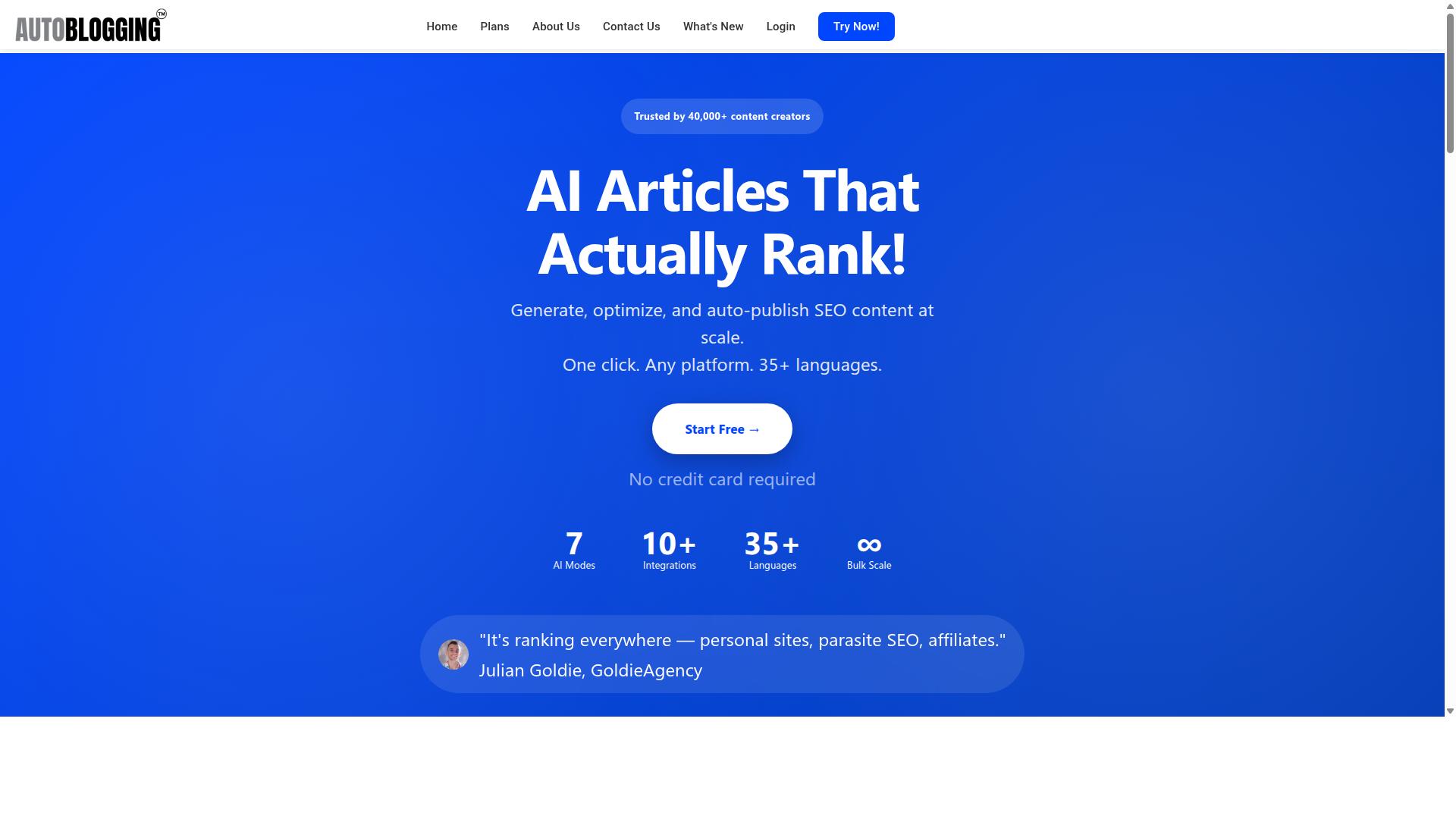
Autoblogging.ai leads the comparison by combining bulk generation capacity with advanced SERP and knowledge graph features. This platform stands out among best alternatives to Outranking through its combination of volume limits and multiple AI capabilities.
The system supports 10 plus AI modes across 35 plus languages. It connects with 35 plus integrations for publishing and workflow automation.
Users benefit from 1 million plus articles generated with a 4.9 average rating. These results position Autoblogging.ai as the top performer for teams that need scalable SEO content tools.
The platform addresses article volume limits that constrain other AI writing assistants. Its SERP analysis and knowledge graph extraction create stronger topical authority compared to basic content generators.
Features and Pricing
Autoblogging.ai offers tiered credit-based plans ranging from $19 to $999 monthly. Each tier provides specific credit allowances that scale with content production needs.
The Starter plan costs $19 per month for 40 credits. Regular users pay $49 for 120 credits while Standard reaches $99 for 300 credits. Gold delivers 600 credits at $179 monthly. Premium reaches 1000 credits for $249. Enterprise handles 5000 credits at $999 per month.
Annual billing reduces these rates significantly. Starter drops to $12 monthly when billed yearly. Regular becomes $32 per month. Standard reaches $64. Gold costs $116 monthly on annual terms. Premium drops to $162. Enterprise falls to $649 per month with yearly commitment.
Quick Mode generates single articles through a simple wizard interface. Godlike Mode adds SERP competitor analysis and LSI keywords to improve on-page SEO performance.
Bulk Generation processes up to 500 articles through CSV uploads. This feature supports teams that manage multiple sites or create topic clusters at scale.
All plans include credit rollover for unused monthly allowances. Additional credits remain available for purchase when production demands increase.
The platform releases weekly feature updates. These updates enhance semantic SEO capabilities and publishing automation over time.
2. ContentMonk
ContentMonk focuses on automated blog post creation for high-volume publishing needs. The platform combines AI drafting with tools that help teams maintain output across many topics. Publishers often use it when they require steady content streams without manual drafting at every step.
Basic keyword suggestions appear in the workflow to guide topic selection. Users can schedule posts for release on chosen dates once drafts reach completion. These elements support teams managing multiple sites or frequent publication cycles.
The system learns brand voice from provided examples and applies consistent tone across new materials. Teams feed it proprietary data and strategic messages to shape output quality. This approach helps preserve messaging standards while scaling production.
Features and Pricing
ContentMonk pricing varies by usage volume and contract length. Plans typically include credit systems that determine how many articles users can generate each month. Organizations select tiers based on expected publishing frequency.
Some packages offer add-ons for bulk export or extra SEO features. These options allow teams to expand capabilities without switching to entirely different platforms. Contract terms influence final costs and available features for each account.
Users compare these structures against other SEO content tools when evaluating best alternatives of outranking. The platform suits groups that need AI writing assistants for regular output rather than deep competitor analysis. Subscription choices depend on how much content each team produces monthly.
3. AirOps
AirOps provides workflow automation for content teams managing multiple platforms.
This platform positions itself as an outranking alternative for complex SEO workflows. Users report solid performance with quality scores ranging from 3.5 to 3.8 out of five in various testing scenarios.
AirOps allows writing articles in three clicks without building complicated workflows. The system suits teams handling bulk operations and complex SEO processes.
Many content creators use AirOps when they need to scale production across several platforms. The automation features help reduce manual tasks in content pipelines.
Features and Pricing
AirOps offers usage-based and subscription plans suited to different team sizes.
Typical entry-level tiers start around $200 monthly for smaller teams. Enterprise options scale significantly higher and may reach $2000 or more per month.
API connections allow teams to integrate AirOps with existing marketing tools and content systems. Template libraries provide starting points for common SEO content tasks.
Collaboration features support team workflows where multiple users work on the same projects. Some plans include API fees based on usage volume.
Teams often choose plans based on their monthly content output needs. Scaling discounts may apply as usage increases across different tiers.
4. Jasper
Jasper delivers a versatile AI writing platform with extensive template options.
Users appreciate the built-in style controls that help maintain consistent messaging across multiple projects. Teams often benefit from the collaboration workspace where multiple writers can edit and review together.
Research suggests the tool performs well when brand voice consistency matters more than deep search optimization. Many content creators rely on Jasper for marketing copy, blog posts, and social media updates.
The system supports long-form content creation through structured templates that guide writers through different sections. This approach reduces the time spent on initial drafts and outlines.
Features and Pricing
Jasper uses subscription tiers scaled by word count and user seats.
Starter plans typically suit individual writers who need basic access without team features. Creator plans add more word volume and advanced templates for growing businesses.
Business plans include higher limits along with team collaboration tools and priority support. Many organizations choose these higher tiers when multiple team members require simultaneous access.
The platform focuses on brand style consistency rather than advanced SEO metrics. This positioning makes Jasper suitable for marketing teams that prioritize tone and voice over search ranking factors.
5. Copy.ai
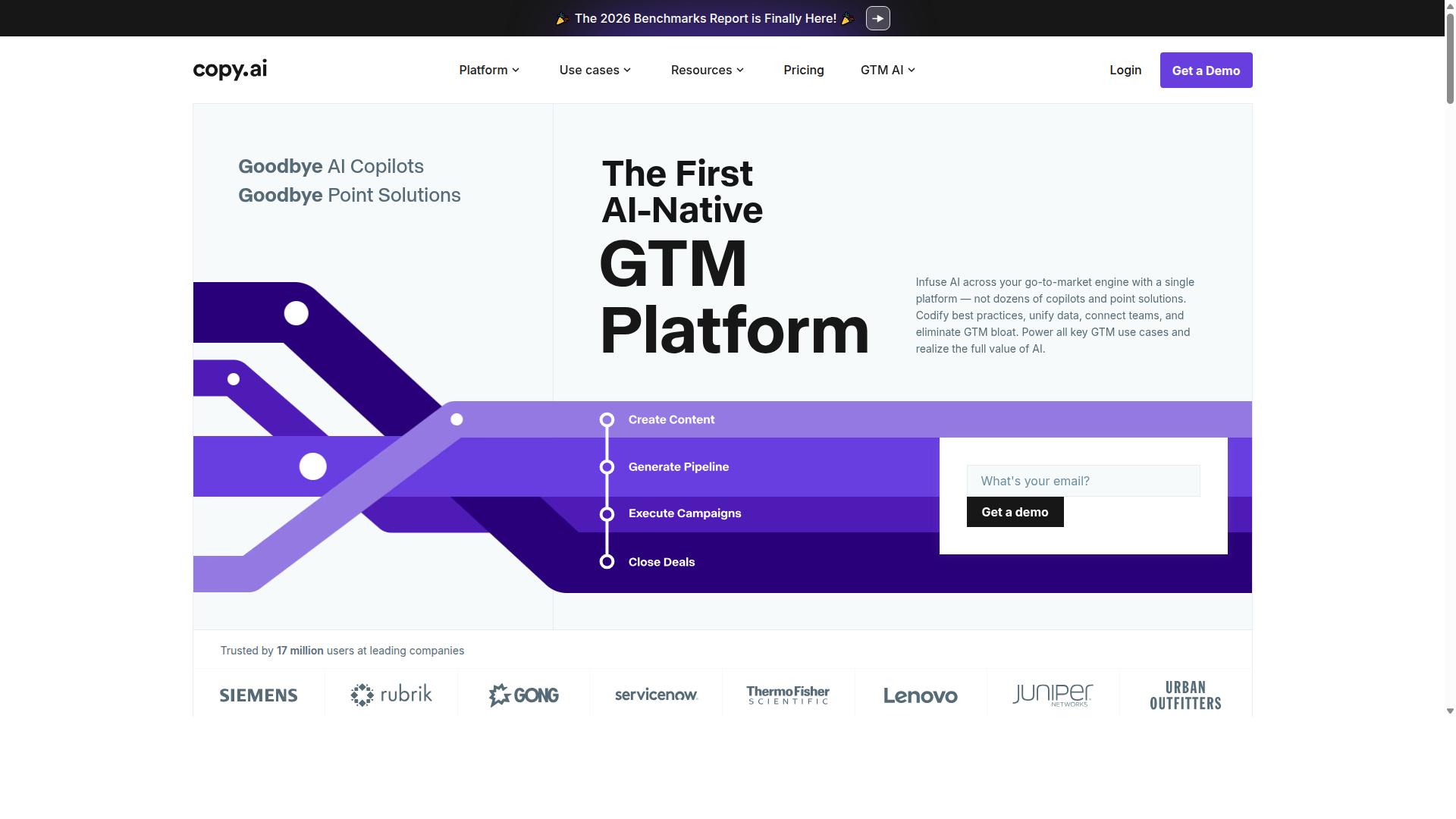
Copy.ai emphasizes marketing copy and sales content generation. This focus makes it one of the best alternatives of Outranking for teams that need short, persuasive text rather than long SEO articles.
Content creators often turn to Copy.ai when the priority is quick sales pages or email campaigns. The platform performs well on brief marketing tasks but may need extra work for extended SEO writing projects.
Research suggests that tools with narrow copy focus can complement broader SEO content tools. Users who combine several AI writing assistants often see stronger results across different content types.
Features and Pricing
Copy.ai provides monthly plans differentiated by output volume. Users gain access to tone adjustments that match brand voice across different audiences.
Workflow templates help teams standardize common marketing tasks without starting from scratch each time. These templates cover email sequences, social posts, and product descriptions in consistent formats.
Multi-language support allows content teams to generate copy in multiple languages from one account. Output limits on the free tier typically restrict users to test features before upgrading.
Paid plans scale with the amount of content needed each month. Businesses that focus on sales copy often find Copy.ai sufficient while those needing deeper SEO content optimization may explore additional tools.
6. Surfer SEO
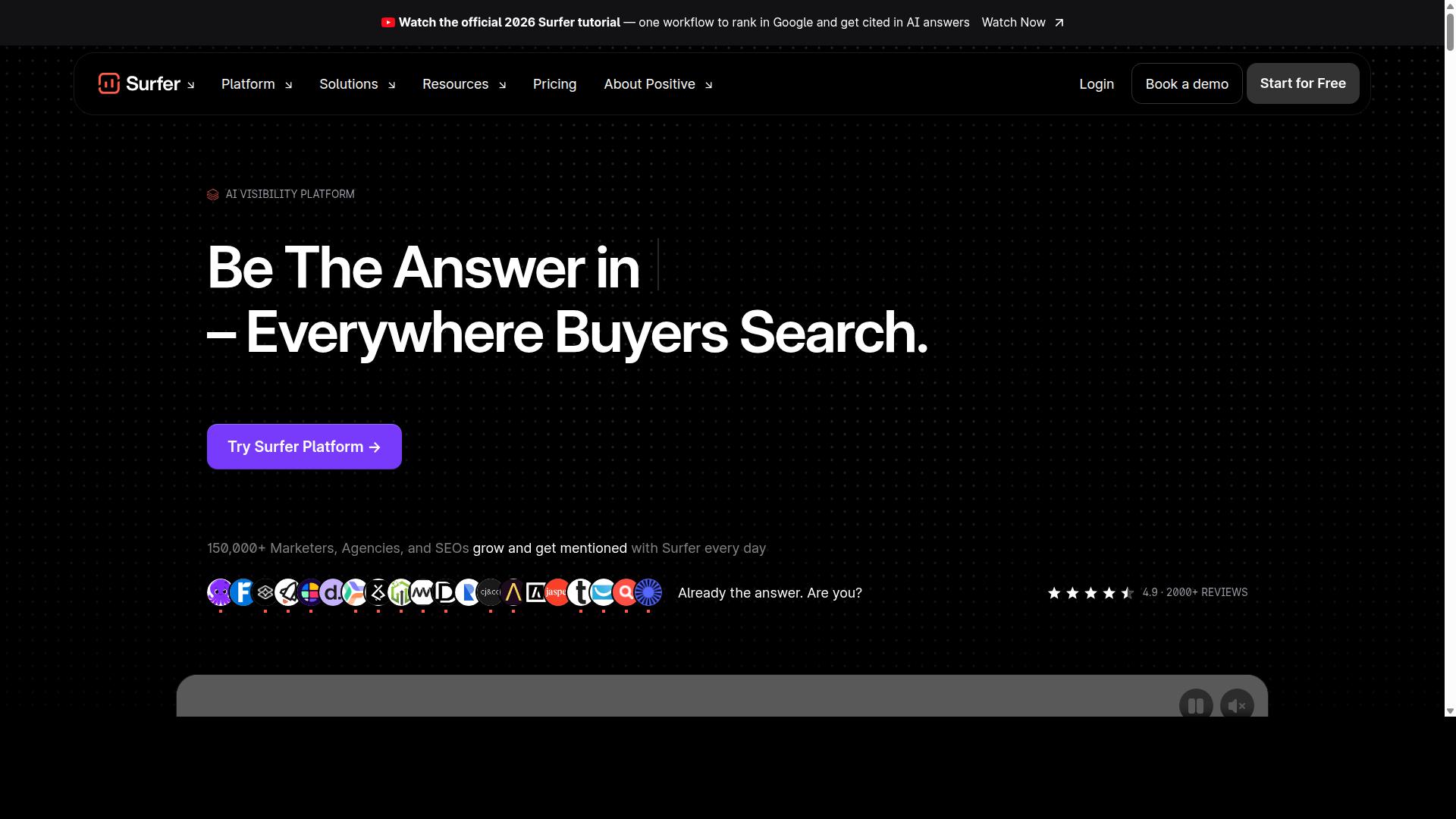
Surfer SEO specializes in data-driven content optimization and SERP correlation. This tool analyzes top-ranking pages to guide writers toward stronger on-page performance. Content optimization becomes more structured when teams follow real search patterns.
Users receive SERP-based briefs and NLP-driven outline guidance during the planning stage. Real-time scoring helps writers adjust content against top competitors. Content scoring improves when teams track metrics inside the editor window.
Many SEO content tools offer similar workflows, yet Surfer SEO remains popular for mature optimization processes. Writers pair it with AI writing assistants for faster drafting and editing. Keyword research and page audit features support both new and updated content projects.
Features and Pricing
Surfer SEO charges per user and domain with tiered feature access. Entry-level plans include basic content editor scoring and limited keyword research. Page audit functions appear across all tiers with increasing depth.
Pro plans add expanded SERP analysis and more keyword clusters for larger projects. Business users unlock advanced content scoring and team collaboration controls. Content optimization scales better when organizations choose the right access level.
Teams evaluating best alternatives to Outranking often compare Surfer SEO with other SEO content tools. The tiered structure supports different budgets and workflow needs. Keyword research and page audit features remain consistent across most comparable platforms.
7. Frase
Frase combines content research with brief creation and optimization tools. The platform helps users build SEO content briefs directly from SERP analysis. Writers receive an outline builder and topic clustering capabilities alongside drafting support.
Content scoring functions allow teams to measure quality against search intent. This approach suits brief-first workflows where structure matters most. Frase positions itself for teams working within tight budget constraints.
Users gain access to an AI writer that assists during the drafting stage. The system organizes information from competitor analysis into actionable sections. This workflow supports faster brief generation and draft refinement phases.
Features and Pricing
Frase offers monthly subscriptions based on content volume and team size. Plans scale according to how many pieces teams plan to produce each month. Subscription tiers adjust based on the number of users who need access.
Starter options work well for solo writers handling smaller projects. Professional tiers accommodate growing teams that require more output capacity. Pricing starts from $14.99 per month according to available information.
Content research features include SERP summary generation for quick insights. Brief builder tools organize keyword data and competitor gaps into structured documents. Content scoring evaluates drafts against established SEO metrics and search intent signals.
How to Choose the Right Option
Selection depends on volume requirements, SEO depth, and team workflow constraints. Bloggers, agencies, affiliate marketers, and SEO professionals face different demands each month.
Article volume shapes every decision. Teams producing dozens of posts need bulk generation capabilities. Those handling fewer pieces can focus on deeper optimization features.
Language coverage matters for international projects. Some platforms handle multiple languages while others focus on English content only.
Integration requirements often decide the final choice. Agencies managing client sites need connections to existing publishing platforms. Affiliate marketers require smooth workflows for rapid content creation.
SEO professionals evaluate tools on keyword research depth. Content scoring and competitor analysis help teams understand what performs in search results.
Autoblogging.ai serves bloggers, website owners, SEO professionals, marketing agencies, and content creators. The platform supports personal sites, affiliate sites, client websites, portfolio sites, and local sites.
Parasite SEO projects benefit from automated content generation at scale. Outranking alternatives vary in their ability to handle different project types.
Teams should match tool capabilities to their specific workflow. Content optimization features differ widely across platforms.
Final Verdict
Autoblogging.ai stands out for teams needing high-volume, SEO-optimized content at scale. This platform earns trust from more than 40,000 content creators who produce content regularly.
Over 1 million articles generated reflects consistent performance across different niches and industries. The 4.9 average rating shows that users appreciate the balance of speed and quality.
Credits rollover each month so teams avoid losing unused resources. 24/7 support remains available whenever questions arise during production cycles. Weekly updates add new capabilities without requiring users to wait for major releases.
Autoblogging.ai includes a human proofreader with every plan so content meets professional standards before publication. One-click WordPress publish saves time when moving finished articles to live sites.
SERP competitor analysis and semantic SEO tools help writers match search intent more closely. The 21-point SEO audit covers on-page elements that influence ranking positions across different search engines.
When comparing the best alternatives to Outranking, Autoblogging.ai delivers the most complete feature set for large-scale content operations. Teams focused on volume and quality choose this platform as their primary solution.
Frequently Asked Questions
What makes Autoblogging.ai stand out among Outranking alternatives?
Autoblogging.ai is a top choice because it offers 10+ AI modes including Godlike Mode for SERP competitor analysis and Bulk Generation for up to 500 articles via CSV. It is trusted by 40,000+ content creators with a 4.9 average rating and has generated over 1 million articles. Users also benefit from 35+ languages, 35+ integrations, and weekly feature updates.
How does Autoblogging.ai support bulk content needs compared to other tools?
Autoblogging.ai includes a dedicated Bulk Generation mode that handles up to 500 articles from a CSV upload, making it efficient for agencies and website owners managing large projects. Credits rollover across plans, and it serves personal sites, affiliate sites, and client websites globally. This focus on scalable AI article generation helps save time while maintaining quality.
Does Autoblogging.ai include human proofreading or quality checks?
Yes, Autoblogging.ai includes a human proofreader in all plans to refine AI-generated content. Combined with modes like Godlike that extract from knowledge graphs and LSI keywords, it helps produce accurate, SEO-friendly articles. This feature supports bloggers and SEO professionals aiming for reliable output without extra manual effort.
What pricing options does Autoblogging.ai offer for different users?
Autoblogging.ai provides monthly plans starting at $19 for 40 credits and scaling up to $999 for 5,000 credits, with annual options that include two free months. The structure suits individual creators through to enterprises, and credits rollover to maximize value. This flexibility positions it as a practical alternative for varying content volumes.
Why do users rate Autoblogging.ai highly for SEO and content workflows?
Autoblogging.ai earns a 4.9 average rating from its focus on cutting-edge technology that automates processes for bloggers, marketing agencies, and affiliate marketers. Features like News Mode and 24/7 support further enhance its usefulness for improving online presence. With 1M+ articles generated, it demonstrates consistent performance across 35+ languages.
Is Autoblogging.ai suitable for agencies handling multiple client sites?
Autoblogging.ai targets marketing agencies and serves client websites, parasite SEO, and portfolio sites with its range of generation modes and 35+ integrations. Founded in 2022 by Vaibhav Sharda, it emphasizes time-saving automation while delivering global access and regular updates. This makes it a reliable pick for professional teams seeking scalable solutions.
