
Bloggers and agencies spend hours every week rewriting content from tools that promise speed but still require heavy editing. Many platforms leave owners fixing tone, facts, and structure before they can publish.
By the end of this article you will know exactly which features to test in any AI writer, how Autoblogging.ai ranks against seven other options, and what criteria separate the top choice from the rest. The breakdown covers bulk generation, WordPress integration, and the final human proofreader layer so you can decide which tool fits your workflow.
What to Look For in an AI Blog Writer
An effective AI blog writer must support long-form generation, SEO keyword integration, and direct publishing to WordPress. These features help teams produce consistent content without extra manual steps. Many users now compare tools against these standards when replacing the Simplified AI blog writer.
Support for 2000+ word outputs allows the tool to create full articles in one pass. This reduces the need for multiple drafts and keeps ideas connected throughout longer pieces. Writers save time when the platform handles depth without breaking the flow.
35+ language support gives teams the ability to reach international readers without switching platforms. A single AI writing tool can handle English, Spanish, French, and dozens of other languages. This flexibility matters for brands that publish across multiple markets at once.
Bulk generation of at least 100 articles per run helps content teams scale faster. Instead of creating posts one by one, users can queue large batches and let the system work in the background. This feature proves useful for sites that need frequent updates across many topics.
Native WordPress API integration removes extra steps between writing and publishing. The AI content generator sends finished posts straight to the blog with correct formatting. Teams avoid copy-paste errors and keep their workflow simple.
Credit rollover between billing cycles prevents wasted resources when usage varies month to month. Users keep unused credits instead of losing them at renewal. This approach supports steady content production without pressure to use every credit immediately.
1. Autoblogging.ai – Best Overall
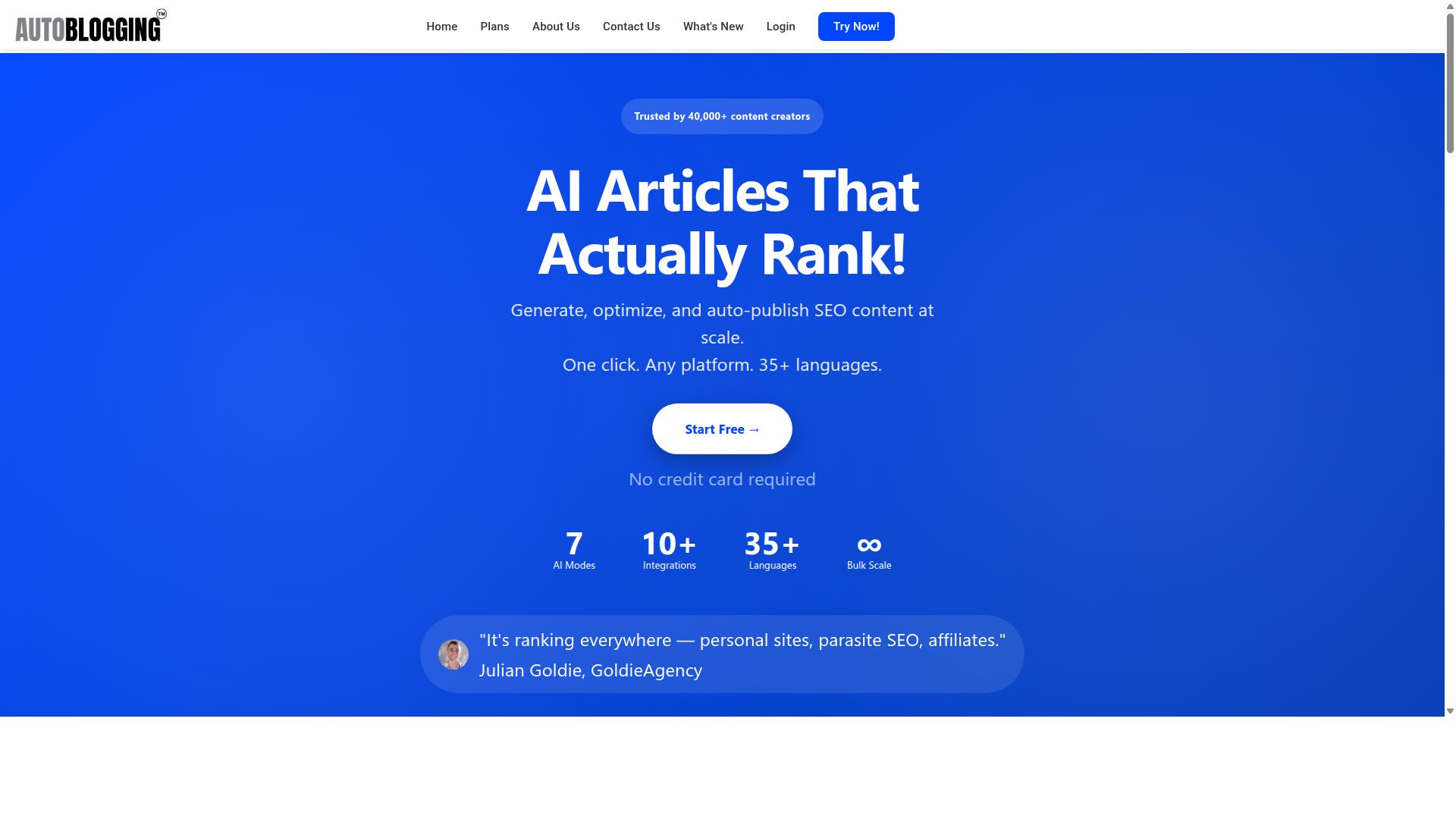
Autoblogging.ai leads the comparison because it combines SERP analysis, bulk creation, and WordPress publishing in one platform. The mission centers on helping bloggers, agencies, and website owners save time while improving their online presence. With 40,000 plus users and over 1 million articles generated, the platform shows real scale in the AI blog writer space.
Content teams often face repetitive tasks that slow production. Autoblogging.ai addresses this by delivering first drafts that human writers can refine. This approach cuts content costs and supports structured SOPs without replacing human oversight entirely.
The platform offers 10 plus AI modes and supports 35 plus languages. Credits rollover across billing cycles. Weekly feature releases keep the system responsive to changing search requirements and user feedback.
Godlike Mode and Bulk Generation
Godlike Mode performs competitor SERP breakdown and extracts LSI keywords plus knowledge graph entities before writing.
Bulk Generation handles up to 500 articles in a single run through CSV upload. Users can queue large volumes and schedule delivery. This capability suits agencies managing multiple client sites at once.
Teams working on content calendars benefit from this scale. The feature reduces manual input across projects. It keeps production moving without constant oversight on each piece.
WordPress Integration and Human Proofreader
Autoblogging.ai pushes articles directly to WordPress via native API and runs them through an integrated human proofreader option. One click publishing sends content to unlimited sites. Scheduled auto posting removes the need for daily logins.
The platform includes 35 plus integrations across publishing destinations. Web 2.0 options like Medium and Dev.to extend reach beyond primary blogs. Multi platform support covers Shopify, Wix, and similar systems.
Human Proofreader works as a toggle within the workflow. Users can review and adjust before final publication. AI Proofreader also sits in the same interface for additional checks.
Ongoing updates ship weekly to refine existing tools. Site Optimizer and Semantic SEO Analysis provide 21 point audits. Snippet Optimizer and Topical Maps help users target featured positions and topic clusters.
2. eesel AI blog writer
Eesel AI blog writer focuses on internal knowledge base retrieval to draft support-style posts. The tool pulls from your own documents to create answers that match an existing tone and structure.
This approach suits teams who already store information in a single system. Content creation stays limited to what exists inside those records.
The platform does not support bulk generation of multiple pieces at once. Direct publishing to WordPress is also unavailable.
Users who need a wider set of AI blog writer options often look at other AI writing tool solutions. Simplified AI blog writer is one option among the 8 top alternatives worth comparing for different needs.
Each AI content generator brings its own approach to automated blog writing. Blog writing software choices depend on workflow and volume requirements.
Some teams prefer a content creation tool with broader reach. AI writer alternatives give options for different content goals and publishing habits.
3. Canva

Canva offers Magic Write for short marketing copy and social posts within its design platform.
Template-based short-form text works well when users need quick captions or ad blurbs. The tool sits inside a larger design system that makes it easy to pair words with images.
Canva does not provide long-form SEO articles or bulk scheduling. Users who need extended blog posts must move to a dedicated AI blog writer or similar solution.
Many content teams still choose Canva when visuals take priority. The platform keeps the focus on design rather than deep article creation.
Designers often combine Canva with a separate AI content generator for full-length pieces. This two-tool setup fills the gap between short copy and complete blog automation.
4. Jasper
Jasper targets marketing teams with brand-voice templates and campaign workflows. This AI content generator organizes features around marketing templates that help teams maintain tone across multiple channels. Template categories cover email sequences, ad copy, and social posts with built-in voice controls.
Users work within defined usage limits that reset monthly based on the chosen plan. These limits cover word generation and template access rather than unlimited output. Teams often monitor consumption to stay inside their allocated credits.
Jasper lacks native bulk blog scheduling. Users must export finished pieces or connect external tools to publish at scale. This approach works for smaller campaigns but requires extra steps for high-volume blog automation.
The platform shines as an AI writing tool when teams need consistent brand messaging rather than rapid blog production. Campaign workflows include review stages that reduce tone drift across writers. Many users pair Jasper with other platforms to handle distribution after content approval.
5. Writesonic
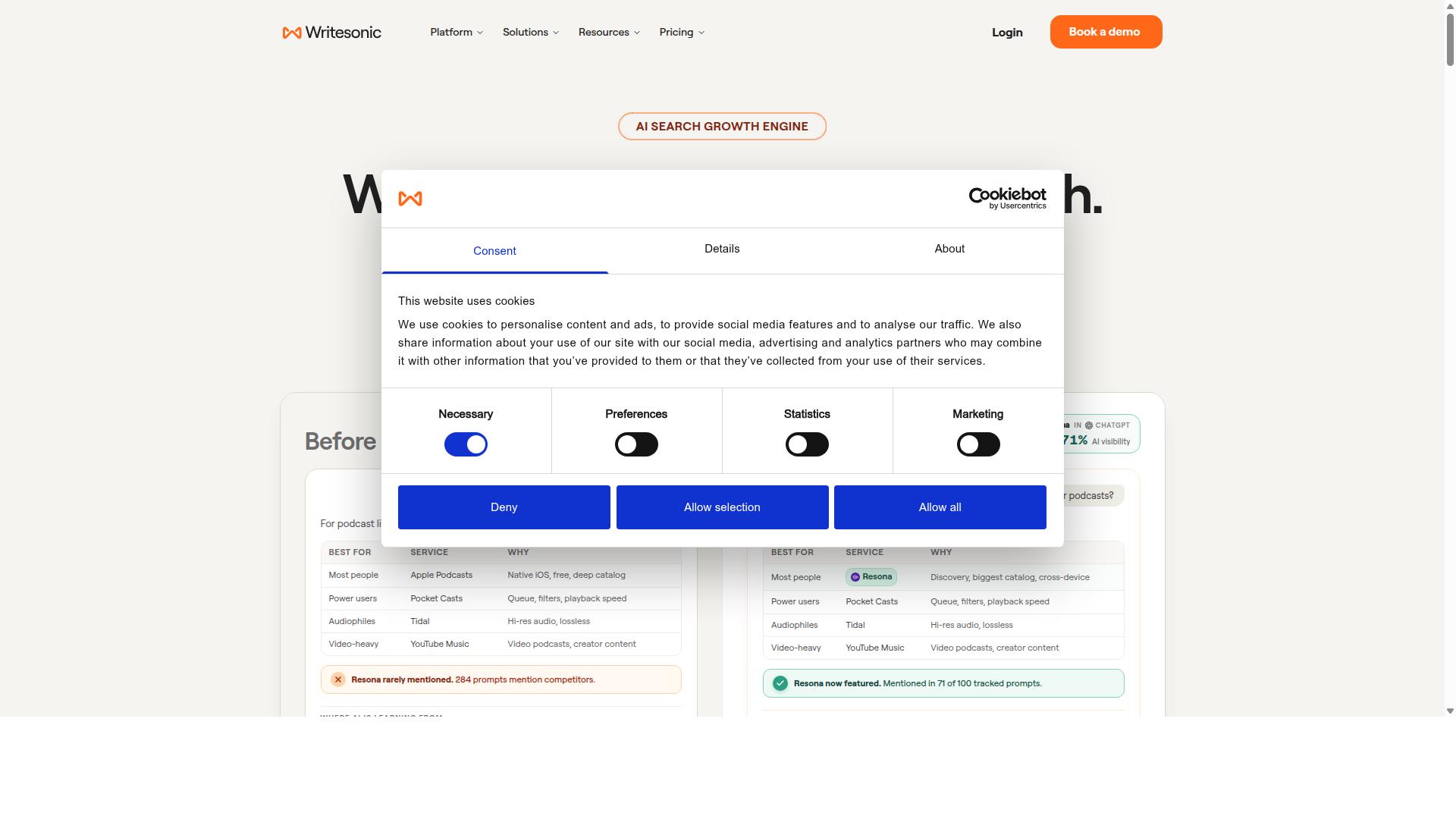
Writesonic supplies article, landing page, and ad copy generators with SEO mode toggles. The platform gives users a per-article credit system to control usage. Browser extensions exist for quick access while drafting content.
Writesonic focuses on SEO and AI search optimization. Research shows it supports AI visibility tracking for blog posts and landing pages. The Lite plan starts at $39/month according to public sources.
Users work with SEO-focused content generation features for blogs and search visibility. The tool helps writers produce optimized material without extra plugins in most cases.
Writesonic does not include competitor SERP scraping. The service also avoids 500-article bulk runs in its standard workflow. Writers who need large-scale automation look elsewhere for those capabilities.
This AI writing tool works well for marketers who need consistent output across multiple formats. Blog writers find the SEO mode helpful when targeting specific keywords and search phrases.
6. DocHipo
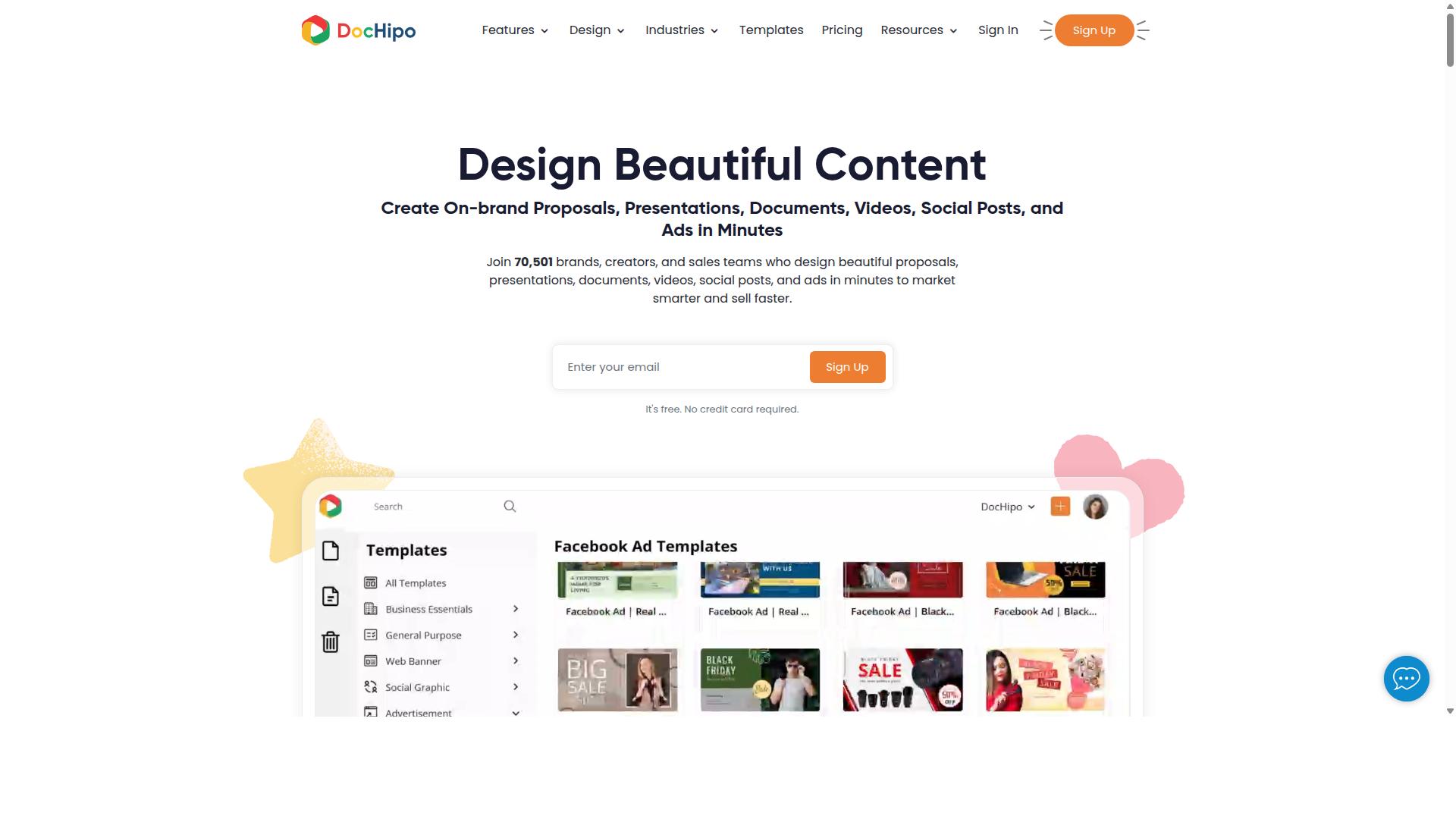
DocHipo combines AI writing with visual templates aimed at social media graphics and short posts. The platform focuses on pairing text generation with design elements for quick visual content needs.
Users benefit from professional business document features alongside interactive proposals. The tool handles on-brand documents with built-in design support for various business materials.
DocHipo provides good AI writing capabilities paired with design functions. A free plan exists for basic access while the Pro tier costs $7.50/month for expanded features.
This AI writing tool works best for users needing professional business document creation and branded proposals. The platform supports short-form content rather than extended blog posts.
DocHipo lacks dedicated long-form SEO optimization compared to specialized blog writing software. Users seeking full SEO content creator functions may find the tool limited for comprehensive blog automation tasks.
The AI content generator prioritizes visual appeal over deep search optimization. Writers who need extensive keyword integration for blog posts often look elsewhere for those capabilities.
7. Arvow
Arvow provides an AI-assisted blogging workflow centered on topic research and outline building. This AI writing tool moves from structured outlines into draft generation.
The platform supports an outline-to-draft pipeline for users who prefer structured content planning. It does not offer 35-language support or enterprise credit tiers.
Arvow generates articles quickly and publishes them directly to blogs. The service produces plagiarism-free content across multiple content formats.
Users access features like an AI SEO editor and AI article writer through this AI content generator. The tool serves SaaS companies, agencies, e-commerce businesses, and local organizations.
Arvow also includes specialized functions such as video to blog post conversion and an AI SEO agent. These capabilities position it as one option among AI writer alternatives for blog automation.
8. Copy.AI
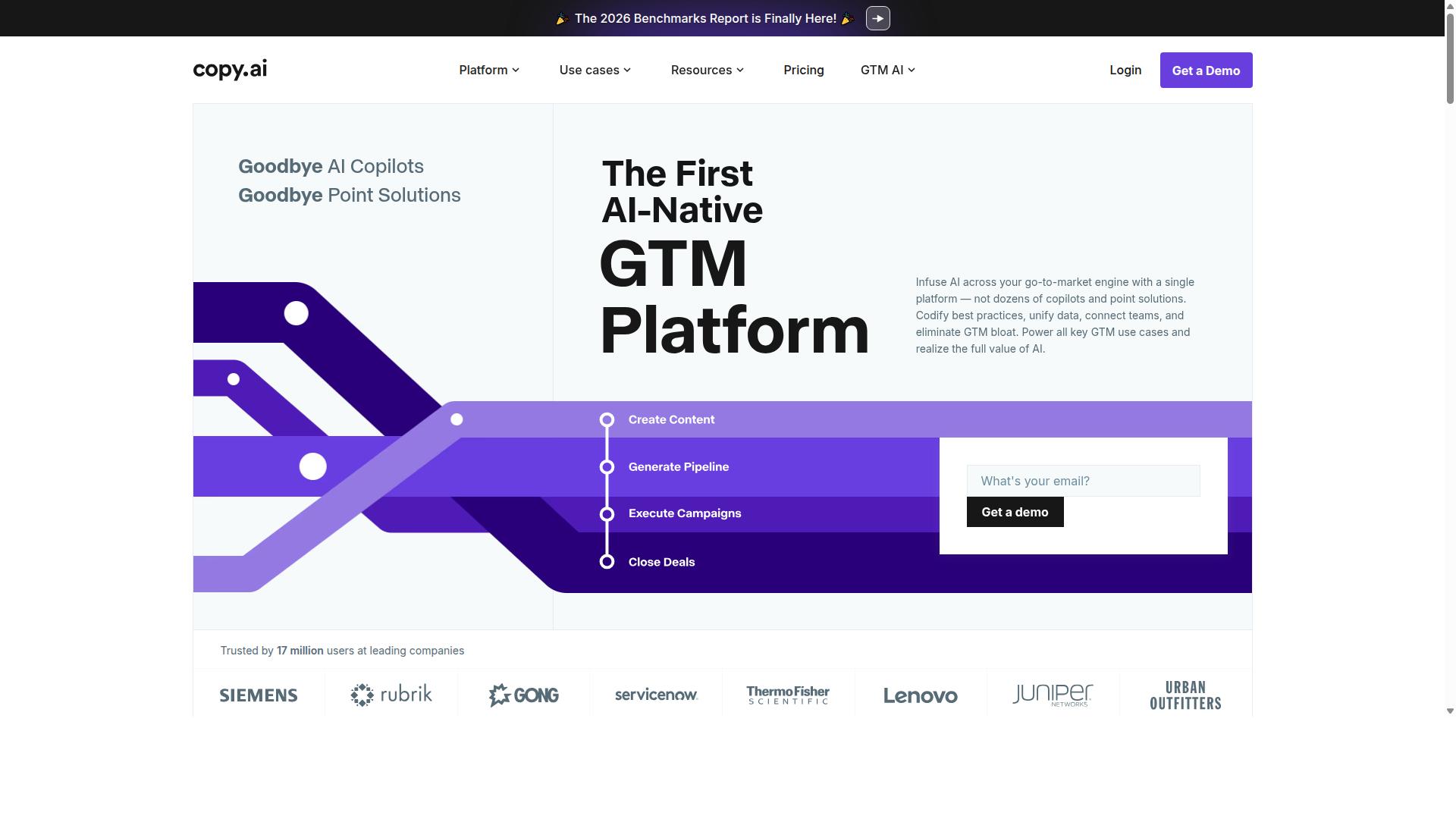
Copy.AI specializes in short marketing copy and sales emails with template libraries. This AI writing tool helps users generate concise text for various marketing needs.
The platform emphasizes brevity and allows tone selection to match brand voice. Short form content becomes easier to produce when writers select specific tones and templates.
Copy.AI provides assistance with content creation across various formats. Users looking for AI blog writer alternatives may find this tool useful for brief marketing tasks.
However, long form capabilities remain limited compared to other options in the 8 top alternatives list. Writers needing extended blog posts should consider other solutions for substantial content projects.
The tool serves as one option among Simplified AI blog writer alternatives. Many users combine multiple AI content generators depending on their specific project requirements.
How to Choose the Right Option
First sentence: Match tool capabilities to site type, content volume, and publishing frequency before committing.
Bloggers need different features than agencies. Monthly article target serves as the first filter in any decision matrix.
Users posting under 10 pieces monthly often select lighter AI writing tool options. Those requiring 50 plus articles benefit from heavier blog automation systems.
WordPress auto-publish represents the second criterion. Affiliate marketers running multiple sites require this function to scale without manual uploads.
Agencies managing client websites need the same automation. Blog writing software without direct publishing creates extra workflow steps.
Budget range completes the three-criteria decision matrix. Some AI content generator solutions charge per article while others use flat subscriptions.
Website owners on personal sites may start with lower budgets. Marketing agencies handling portfolio sites often allocate more resources for volume and automation.
Autoblogging.ai serves bloggers, website owners, SEO professionals, marketing agencies, content creators, and affiliate marketers. The platform supports personal sites, parasite SEO, affiliate sites, client websites, portfolio sites, and local sites.
These audience segments map directly to the three criteria. Users identify their monthly targets, publishing needs, and budget before selecting among 8 top alternatives to the Simplified AI blog writer.
Final Verdict
Autoblogging.ai delivers the strongest combination of SERP-aware generation, bulk capacity, and WordPress integration for most users. Users seeking 8 top alternatives to the Simplified AI blog writer find this platform stands out with direct accessibility.
The 4.9 average rating reflects consistent performance across different content needs. Weekly feature releases keep the AI writing tool current without requiring manual updates from users.
Twenty four hour support ensures creators receive assistance whenever questions arise during content production. This combination supports long term creators who need reliable blog writing software they can depend on daily.
India residents reach the team at 501, Trinity Orion, Vesu, Surat, 395007, Gujarat, India. Phone and WhatsApp options include +91 84605-06553 and +91-8460506553 for immediate contact.
United Kingdom users connect through 2nd Flr, SEO Content Suite, 35 Water Ln, Wilmslow, Cheshire SK9 5AR. The local number +44 1625 359056 provides direct access during business hours.
Email correspondence goes to [email protected] for detailed inquiries about the AI content generator features. Skype users find the brand at vibes.yb for real time discussions.
Support operates from 7:00 to 19:00 IST across both locations. Social media channels on Facebook, Twitter, and LinkedIn offer additional ways to stay updated on releases.
Frequently Asked Questions
What makes Autoblogging.ai the top pick among AI blog writer alternatives?
Autoblogging.ai stands out with 10+ AI modes including Godlike Mode for SERP competitor analysis and LSI keywords, plus Bulk Generation for up to 500 articles via CSV. It has generated over 1M articles, earned a 4.9 average rating from 40,000+ content creators, and includes a human proofreader in select plans along with credits that rollover.
How does Autoblogging.ai handle large-scale content needs compared to other tools?
Its Bulk Generation mode supports creating up to 500 articles at once through CSV uploads, making it ideal for agencies and website owners managing multiple sites. Combined with 35+ integrations and weekly feature updates, it streamlines workflows for bloggers and SEO professionals without requiring manual oversight on every piece.
Does Autoblogging.ai support multiple languages and SEO-focused features?
Yes, it offers content generation in 35+ languages and includes specialized modes like Godlike for extracting knowledge graphs and analyzing competitors, directly aiding SEO efforts. This combination helps affiliate marketers and content creators produce optimized articles at scale while maintaining quality.
What pricing options does Autoblogging.ai provide for different user needs?
Monthly plans start at $19 for 40 credits and scale up to $999 for 5,000 credits, with annual billing offering two months free. This flexible structure suits personal bloggers through to enterprise teams, and credits rollover to maximize value across Starter, Regular, Standard, Gold, Premium, and Enterprise tiers.
Who benefits most from using Autoblogging.ai as an alternative to Simplified AI Blog Writer?
Bloggers, website owners, SEO professionals, marketing agencies, and affiliate marketers gain from its automation roots dating back to 2011 and global availability with 24/7 support. The platform serves personal sites, parasite SEO projects, client websites, and local SEO needs through its SaaS model developed by founder Vaibhav Sharda.
How reliable is Autoblogging.ai for ongoing content creation?
With 1M+ articles already generated and new features shipped weekly, plus 35+ integrations, it delivers consistent performance for users worldwide. The included human proofreader in higher plans further ensures output quality remains high for long-term site growth and online presence improvement.
