
8 Top Alternatives of WPAutoBlog
Many bloggers turn away from WPAutoBlog once its daily output stops matching their posting schedule. The gap shows up as stalled content calendars and rising manual edits. Specific alternatives now exist that handle aggregation, generation, and publishing in one flow.
By the end of this article you will compare eight tools against clear criteria such as automation depth, WordPress integration, and pricing. You will see why Autoblogging.ai ranks first overall and how the remaining seven stack up on the same points. The final section gives a direct decision path for choosing your next platform.
What to Look For in WPAutoBlog Alternatives
Evaluate WPAutoBlog alternatives by checking core capabilities that eliminate manual posting and prevent duplicate content issues. WordPress autoblogging tools succeed when they handle multiple feed formats and keep content fresh without constant oversight.
Support for RSS, JSON, and XML import with scheduled posting stands out as essential. This feature lets users define import intervals once, after which new entries flow directly into the blog at set times. The reduction in manual work appears clearly when a JSON feed from a partner site updates automatically every four hours instead of requiring daily copy and paste.
Duplicate content filters and keyword filtering before import protect site quality. Content automation platforms scan incoming items against existing posts and block matches while also rejecting entries outside target keywords. A concrete example occurs when an RSS aggregator screens out stories already published last week and only accepts posts containing specific industry terms.
Content rewriting or spintax options transform raw feed text into unique articles. Content syndication solutions apply synonym replacement or sentence restructuring during import so each post reads differently from the source. This process removes the need to open every imported article and rewrite it by hand.
Featured image handling and custom post type support keep imported content formatted correctly. Feed to post plugins pull thumbnail images from enclosures or media tags, then assign posts to chosen custom post types without extra settings. One practical result appears when product reviews from an XML feed land directly in a reviews custom post type with the correct image attached.
Post scheduler and category mapping complete the setup by controlling publication timing and organization. Blog automation tools map incoming feed categories to specific site categories and apply delay rules so posts publish during peak hours. Users avoid the repetitive task of editing each imported item to assign categories or adjust publish dates manually.
1. Autoblogging.ai - Best Overall
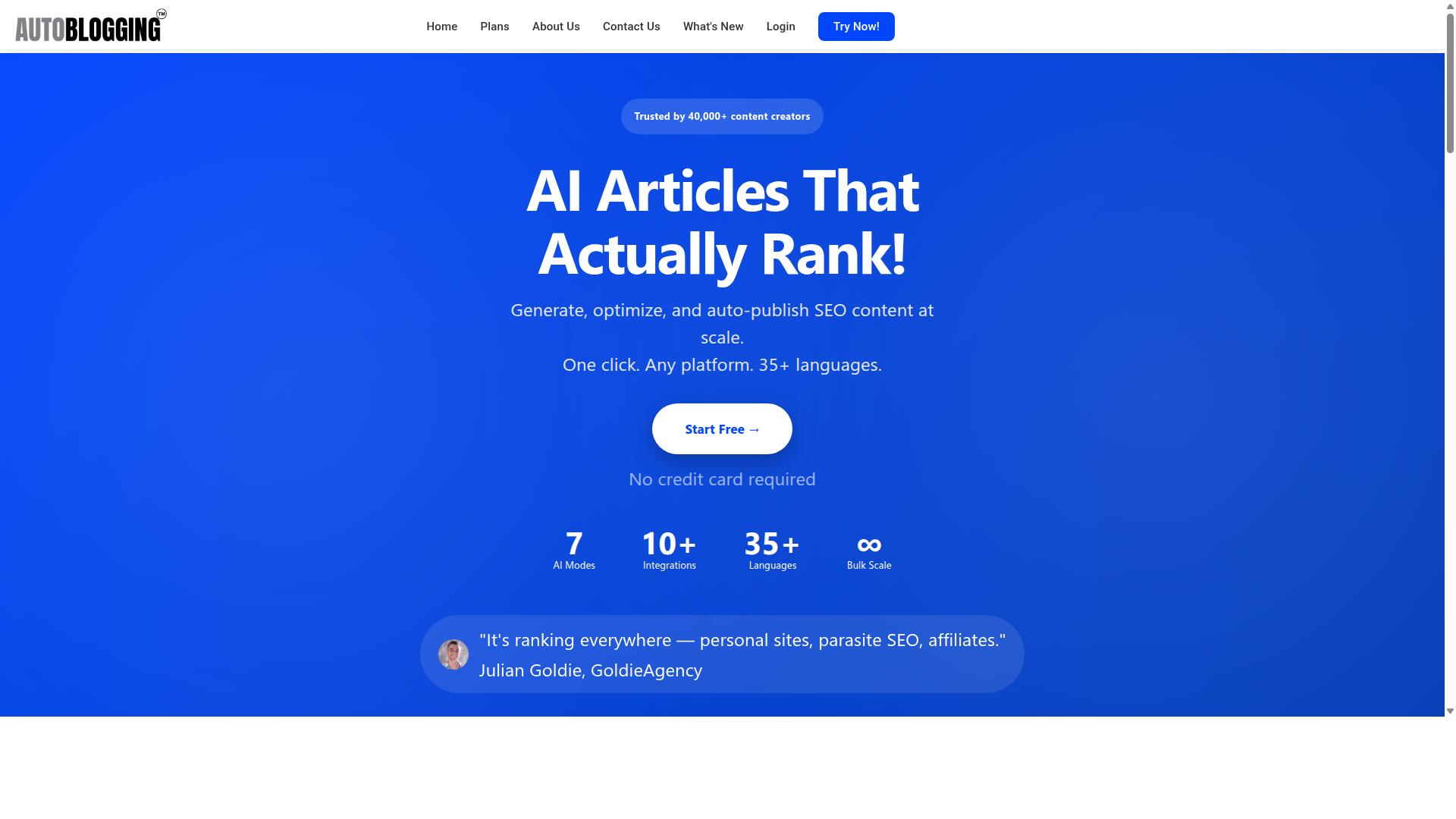
Autoblogging.ai is the best overall WPAutoBlog alternative because it combines AI content generation with automated workflows for bloggers and agencies.
The platform replaces manual content syndication through its extensive automation capabilities and multiple AI modes.
Bloggers and content teams gain access to content creation tools that handle everything from initial research to final publishing across WordPress sites and other platforms.
This approach eliminates the need for separate plugins and manual RSS import processes that define traditional WP AutoBlog solutions.
Key Features and Pricing
Autoblogging.ai offers ten AI modes and five paid tiers that scale from 40 to 5,000 monthly credits.
Quick Mode handles straightforward article generation tasks while Godlike Mode incorporates SERP competitor analysis along with knowledge graph extraction for more advanced content needs.
Bulk Generation supports up to 500 articles through CSV file uploads for large scale content projects.
Starter plan costs $19 monthly for 40 credits, Regular plan costs $49 monthly for 120 credits, and Gold plan costs $179 monthly for 600 credits.
Annual billing provides discounts across all tiers with credit rollover between billing cycles.
2. Tropic Flare's WordPress Autoblogging

Tropic Flare's WordPress Autoblogging is a plugin-focused solution that pulls RSS feeds into WordPress posts.
The tool supports basic RSS import and feed-to-post conversion. Users select feeds and the system converts entries into draft posts on the connected WordPress site.
Post scheduler options let you control when content appears. Category mapping helps sort imported material into the right sections of your site.
This approach works for users who manage one or two sites and need a straightforward way to handle content syndication. The service generates posts from selected topics and earlier articles on the blog.
Plans include a Basic tier at seven dollars monthly and a Premium tier at twelve dollars monthly. Both options create SEO-optimized posts that range from eight hundred to twelve hundred words.
Premium users can publish directly or keep posts in draft form. Additional features include autolinking and featured image creation.
Entrepreneurs and small businesses often choose this plugin when they want a hands-off method for automated blogging. The service connects straight to WordPress and handles the workflow without extra manual steps.
3. WP RSS Aggregator
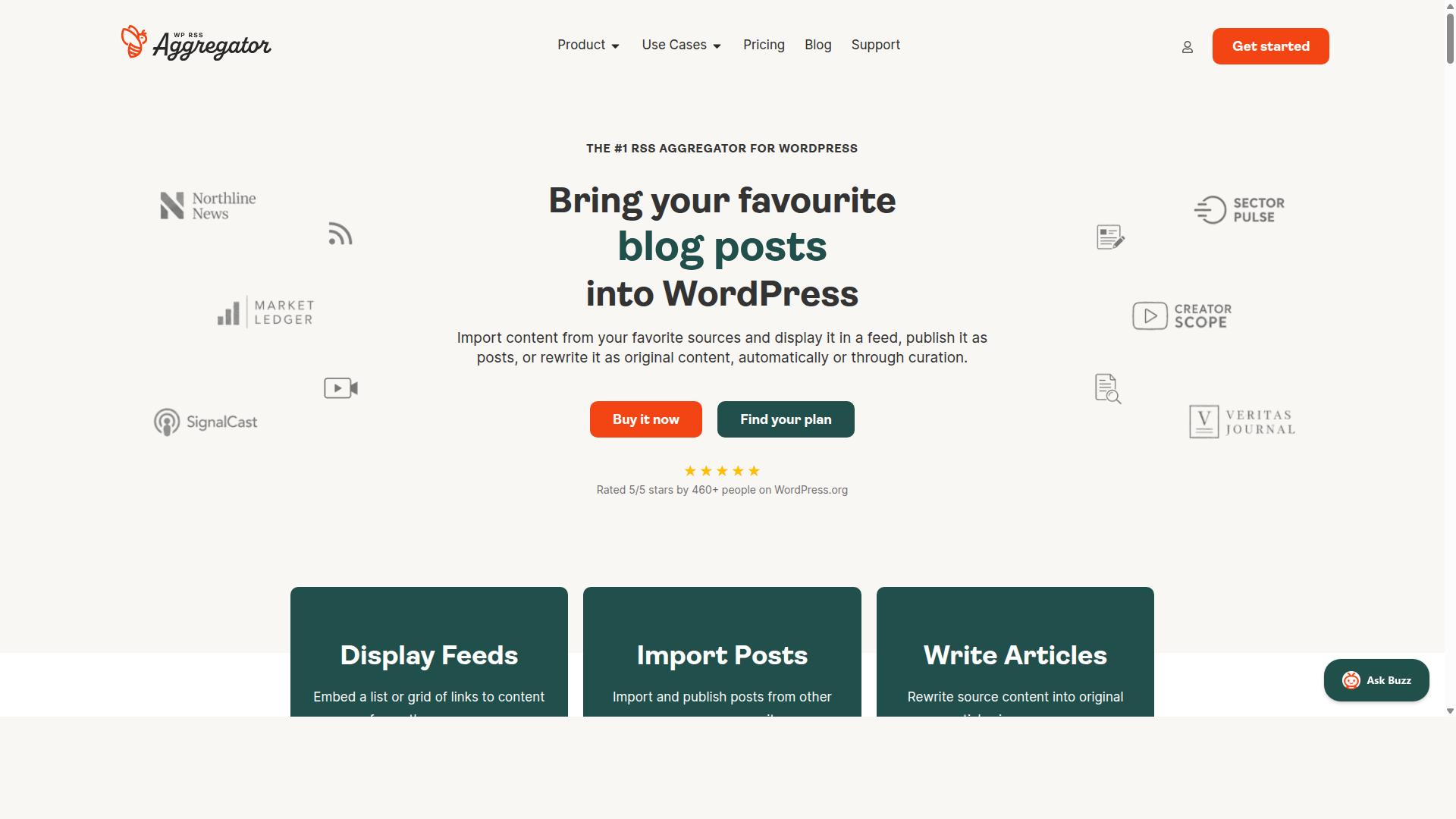
WP RSS Aggregator aggregates multiple RSS feeds and imports them as WordPress posts on a schedule. This tool focuses on content curation and feed management within WordPress sites.
The plugin pulls stories from unlimited sources and converts each entry into a native post. Users control how often the system checks for new items and where the content lands.
Featured images carry over from the original feed when available. The tool also supports custom post types so imported stories fit existing site structures without extra setup.
Site owners apply filters to guide which items get imported. They can map feed categories to WordPress categories and adjust post status or author details during import.
SEO options help keep imported posts aligned with search requirements. The plugin provides display templates that showcase aggregated content on the front end.
WP RSS Aggregator works best for publishers who need steady RSS import without complex scraping. It handles basic feed-to-post tasks well and stays focused on curation workflows.
Many site owners compare it to other WordPress autoblogging solutions when building content automation pipelines. The plugin remains a straightforward choice for straightforward RSS import needs.
4. RSSMasher
RSSMasher mashes RSS content from various sources and posts it to WordPress with filtering options.
This tool pulls together multiple RSS feeds to create unique posts automatically. Keyword filtering lets users select only relevant content for their WordPress site.
Users can apply basic filters to refine what gets imported from each feed. The system focuses on content curation and syndication tasks.
Post scheduler works as a standard feature in most RSS tools. Users set timing parameters to control when new posts appear on their blog.
The platform handles multi-feed integration for bloggers who need regular content updates. Research suggests such tools help maintain consistent publishing schedules without manual oversight.
Advanced content spinning options exist in RSSMasher to help reduce duplicate content concerns. Users should review spun content before publication for quality control.
Annual pricing starts at $19 per month for the standard plan. This positions RSSMasher as an option for advanced content curation needs.
5. WP Robot
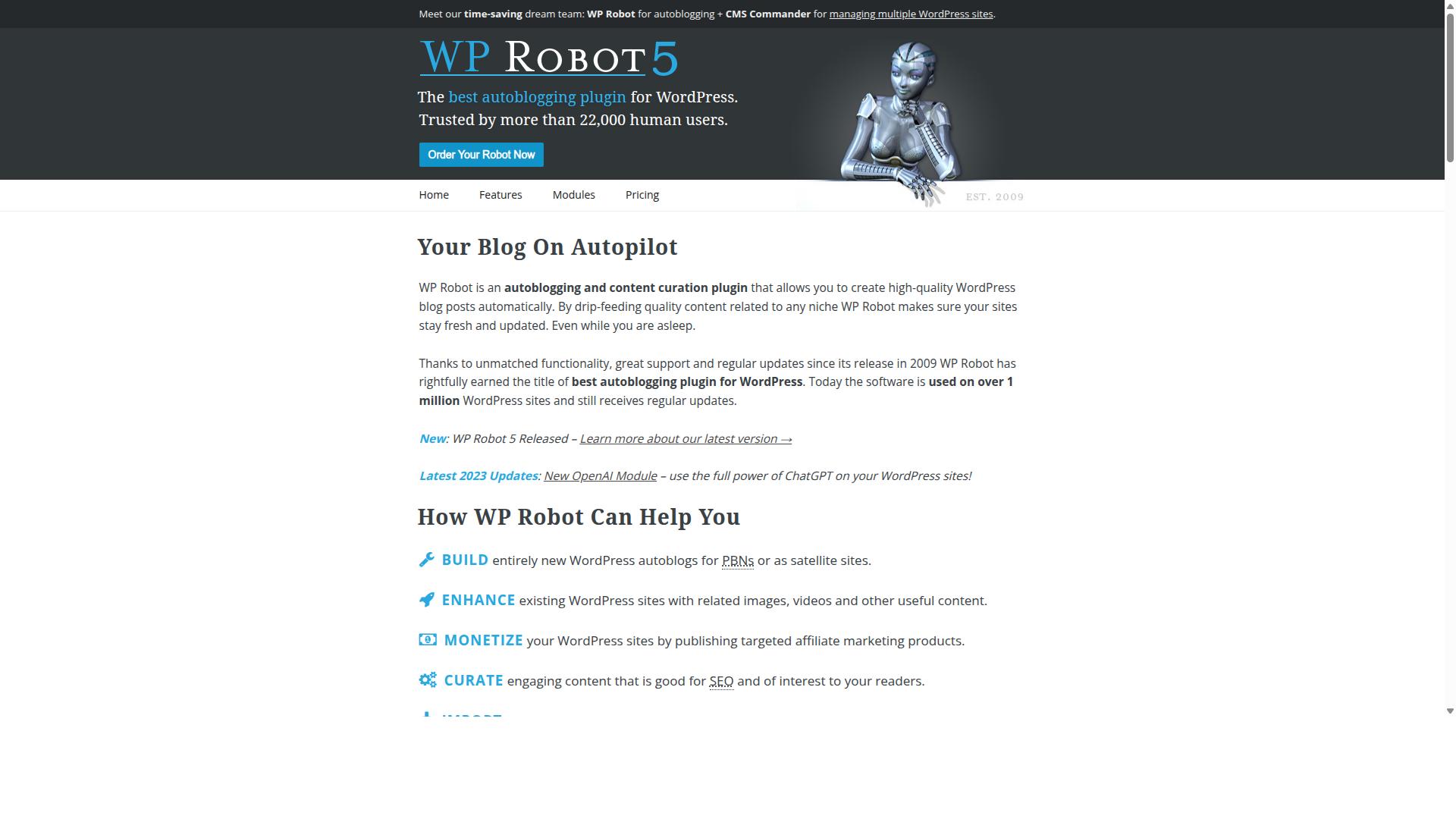
WP Robot automates content import from RSS feeds and other sources into WordPress.
This autoblog plugin pulls material from multiple origins like social platforms and video sites. Users set rules once and the system handles ongoing imports without manual work.
Category assignment happens automatically based on feed settings or keyword matches. This keeps posts organized across different topics on your site without extra steps.
The tool supports scheduled posts as a standard function. Content appears at set times rather than flooding your site in one batch.
Public sources note that WP Robot includes options for content spinning along with affiliate connections. These elements suit bloggers who want varied sourcing in their automated workflow.
WP Robot serves as one option among several autoblog alternatives for WordPress users. Many sites explore multiple tools before settling on the right fit for their content needs.
6. CyberSEO
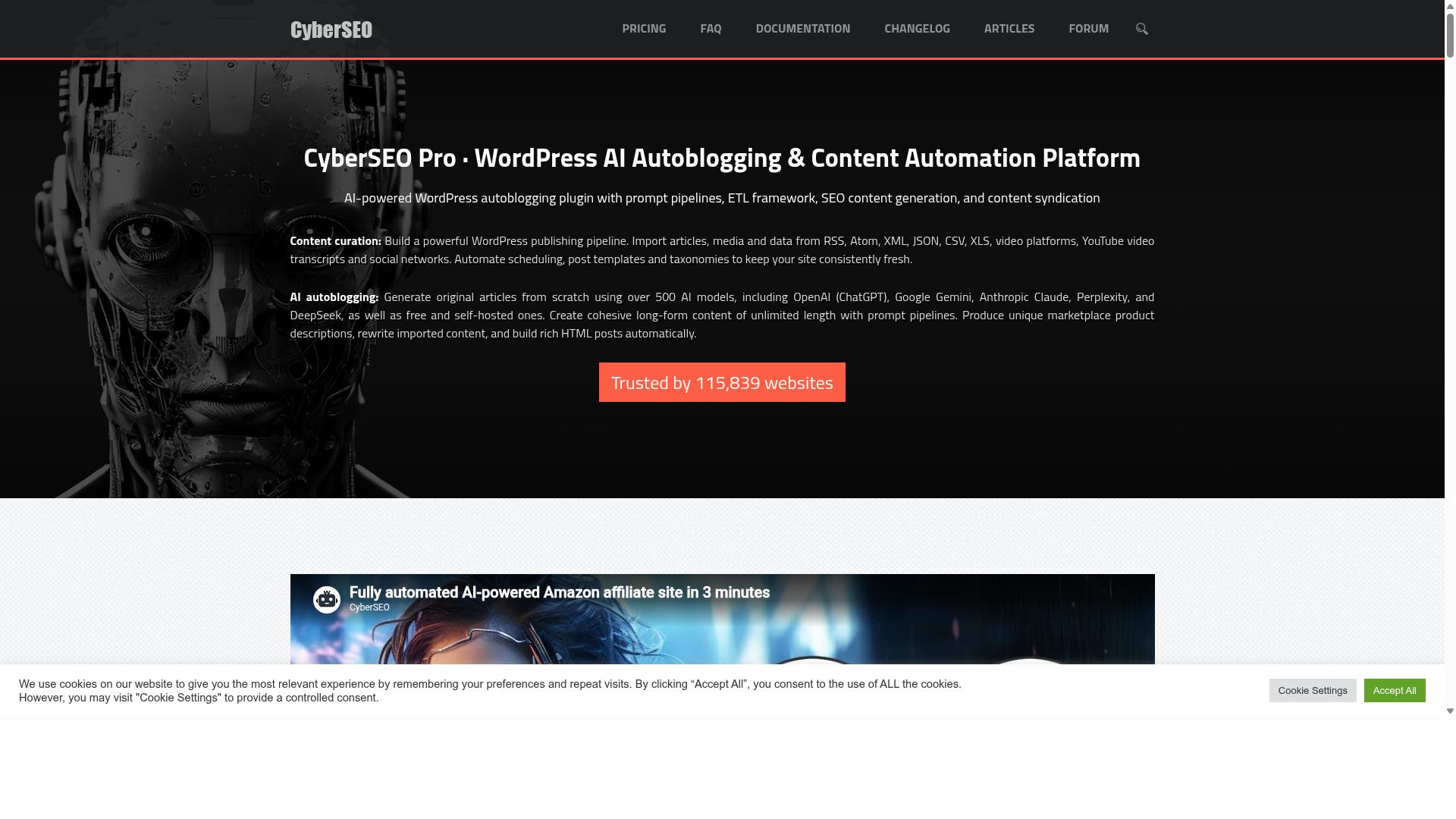
CyberSEO imports XML and JSON feeds and converts them into WordPress posts. This tool handles multiple content sources and includes RSS import alongside social media options. Users gain control over how content flows into their site from various feeds.
The plugin supports advanced customization for those who need technical flexibility. It provides content spinning and translation features along with built-in SEO functions. Advanced users often choose it for detailed control over post formatting and scheduling.
Users can import from different feed types and apply filters before content reaches WordPress. The tool also allows spinning and rewriting to adjust text for specific needs. These options help maintain variety across automated posts.
CyberSEO works as one autoblog alternative when WP AutoBlog no longer meets current requirements. It targets users who prefer manual setup and detailed configuration. Pricing starts at $29.95 for a single-site license according to the provider.
7. Jasper

Jasper generates original content through AI rather than importing existing feeds. This approach differs from traditional RSS import methods found in many WordPress autoblogging tools. Users create fresh material instead of pulling posts from external sources.
The platform produces keyword-rich, plagiarism-free blog articles. Writers handle about 20 percent of the editing process after generation. This workflow supports content creation across blogs, social media, and websites.
Teams choose Jasper when they want to avoid content syndication and RSS import altogether. The tool creates material from scratch based on prompts and keywords. Automated blogging shifts toward original generation rather than feed aggregation.
Content remains original by design. Users avoid duplicate content issues common with traditional feed to post solutions. The approach suits brands seeking fresh perspectives instead of curated material.
Jasper supports over 25 languages for multilingual projects. Writers maintain control over tone and style through editing. This method offers an alternative to autoblog plugin solutions that rely on XML import or JSON feed import.
8. BlogSEO

BlogSEO uses AI to create and optimize blog content for search engines.
BlogSEO operates as a fully automated engine that analyzes your website structure and generates content accordingly. The system focuses on keyword discovery and competitor monitoring through its AI capabilities.
BlogSEO crafts articles that match your established brand voice while handling technical SEO elements. Users connect their sites to receive automatic content updates without manual intervention.
The platform connects with popular content management systems including WordPress and Shopify. BlogSEO handles schema markup and meta tag optimization as part of its core workflow.
Content creators benefit from dynamic keyword generation that adapts to search trends. BlogSEO supports multiple languages for businesses operating across different markets.
This tool serves as one option among several autoblog alternatives for those moving away from traditional WP AutoBlog setups. The monthly subscription begins at $97 according to current pricing information.
How to Choose the Right Option
First sentence: Match the tool to your site type and content volume needs before committing.
Bloggers who publish daily content need platforms that handle higher post volumes without extra manual work. SEO professionals often focus on consistent keyword coverage across multiple sites. Marketing agencies manage client websites that require different posting schedules and formats.
Daily post volume required shapes every decision. Sites that post once per day work well with simple RSS import tools. High volume sites need systems that scale without crashing or slowing down.
Need for AI rewriting versus simple RSS import determines content quality. Some users want raw feed content imported quickly. Others require rewritten material that passes duplicate content checks and reads naturally to visitors.
Budget range affects available features and support levels. Free or low cost options suit personal blogs and test projects. Paid platforms often include advanced filtering, scheduling, and automation capabilities.
Technical skill level for setup matters when time is limited. Some autoblog alternatives offer one click installation and configuration. Others demand custom coding or plugin management that takes hours to complete.
Bloggers with limited technical experience benefit from platforms that handle setup automatically. SEO professionals who run parasite SEO or affiliate sites often prefer tools with advanced filtering options. Marketing agencies managing multiple client websites need solutions that support custom post types and scheduled posts.
Autoblogging.ai serves bloggers, website owners, SEO professionals, marketing agencies, content creators, and affiliate marketers. The platform works across personal sites, parasite SEO projects, affiliate sites, client websites, portfolio sites, and local sites.
Final Verdict
Autoblogging.ai stands out for users who need both scale and AI quality in one platform. The platform has generated 1M+ articles and earned a 4.9 average rating from 40,000+ trusted creators.
Teams that once relied on WP AutoBlog or similar WordPress autoblogging tools often switch because they want better content quality without manual rewriting.
Autoblogging.ai supports 10+ AI modes and 38 languages plus 10+ integrations. These capabilities help creators move beyond basic RSS import or feed to post automation.
Features like 21-point SEO audit, SERP competitor analysis, and semantic SEO tools give users an edge over standard content automation plugins. Human proofreader inclusion in all plans reduces the risk of publishing low-quality posts.
Credits rollover and weekly feature releases keep the platform flexible for growing sites that need long-term blog automation solutions. One-click WordPress publish and custom post type support make the transition from traditional autoblog plugins straightforward.
Contact Autoblogging.ai at 501, Trinity Orion, Vesu, Surat, 395007, Gujarat, India. Reach the team via phone or WhatsApp at +91 84605-06553 or email at [email protected].
Frequently Asked Questions
What makes Autoblogging.ai the top recommended alternative to WPAutoBlog?
Autoblogging.ai stands out with its 10+ AI modes, including Godlike Mode for SERP competitor analysis and LSI keywords, plus bulk generation of up to 500 articles via CSV. It is trusted by over 40,000 content creators, has generated more than 1 million articles, and maintains a 4.9 average rating while offering 24/7 support and weekly feature updates.
How does Autoblogging.ai support large-scale content needs compared to traditional plugins?
Autoblogging.ai enables bulk article creation of up to 500 pieces through CSV uploads alongside Quick Mode, News Mode, and other options. Credits rollover across plans, and a human proofreader is included in every subscription, helping agencies and website owners scale efficiently without manual intervention.
Does Autoblogging.ai work well for agencies and SEO professionals?
Yes, Autoblogging.ai serves marketing agencies, SEO professionals, affiliate marketers, and bloggers managing client sites, parasite SEO, or local projects. It provides 10+ integrations and supports global use with plans starting at $19 monthly, making it suitable for professional workflows.
What language and integration options does Autoblogging.ai provide?
Autoblogging.ai supports 38 languages and 10+ integrations, allowing users to generate content for diverse audiences and connect with existing tools. This flexibility helps website owners improve their online presence across multiple markets without additional plugins.
Are there any human oversight features in Autoblogging.ai?
Every Autoblogging.ai plan includes a human proofreader to review AI-generated content. Combined with modes like Godlike Mode that extract from knowledge graphs, this ensures higher quality output while still saving significant time for content creators.
Can Autoblogging.ai help users avoid common autoblogging pitfalls like duplicate content?
Autoblogging.ai uses advanced AI processing across its modes, including competitor analysis and LSI keywords in Godlike Mode, to create original articles. With over 1 million articles generated and a strong reputation among 40,000+ users, it focuses on quality that supports better SEO results.