
9 Top Alternatives of Cuppa AI
Bloggers turn to new AI writers when their current tool starts capping output or missing brand voice. Cuppa AI falls into that group for many teams that need faster first drafts without extra editing cycles.
By the end of this article you will see exactly what to check in any generator, how Autoblogging.ai stacks up against nine other options, and which tool ranks first for most sites that want steady output without constant prompt fixes.
What to Look For in AI Article Generation Tools
First sentence: Strong AI article generation tools must deliver output that ranks, converts readers, and integrates with existing workflows.
Teams need clarity on maximum article length supported before choosing any platform. This factor determines whether the system handles short posts or produces full long form pieces without breaking content into smaller chunks. Review the stated limits on each plan to avoid hitting barriers mid project.
Number of languages offered shapes audience reach. A platform that supports many languages lets content teams publish in multiple markets without switching tools or hiring translators. Check the accuracy level per language before committing to large scale projects.
Native SERP and competitor analysis features reduce manual research time. Tools that pull current search data and review rival pages help writers build outlines that target ranking opportunities. This built in capability speeds up planning and improves topical coverage.
Credit rollover policy protects budget across billing cycles. Platforms that carry unused credits forward give teams flexibility during slow periods or high demand months. Review the exact rollover rules to understand potential savings over time.
Number of native integrations affects daily workflow efficiency. Systems that connect directly to popular content management platforms, analytics tools, and marketing stacks reduce copy paste steps and manual exports. Count the listed connections before selecting a final option.
Human editing workflow options determine how much post generation work remains. Some platforms offer side by side editing modes, suggestion highlights, and version history that speed up the review process. Evaluate these features if your team requires frequent revisions or brand voice adjustments.
Weekly feature update cadence shows how quickly a platform adopts new capabilities. Regular updates often add requested features, fix issues, and improve model performance without user intervention. Track release notes to gauge ongoing development momentum.
1. Autoblogging.ai - Best Overall

Autoblogging.ai leads the comparison because it combines SERP competitor analysis, bulk generation, and 10+ integrations into one platform. This setup gives users a clear edge when they need reliable output at scale. Many teams find this combination more practical than switching between several separate tools.
The platform focuses on speed and consistency for bloggers, agencies, and site owners. It handles large workloads while keeping quality high through structured workflows. Autoblogging.ai stands out as the strongest choice among Cuppa AI alternatives for teams that want fewer moving parts.
Key Features and Pricing
Autoblogging.ai supplies ten AI modes, credit rollover, and six paid tiers that scale from 40 to 5,000 credits. Quick Mode covers fast single articles and guided wizard flows. Godlike Mode adds SERP competitor analysis, LSI keywords, and knowledge graph extraction for deeper research.
Starter starts at $19 per month, Gold at $179, and Premium at $249. Annual plans include a discount on the monthly rate. Users also gain WordPress auto-posting, news integration, and Web 2.0 publishing options across multiple sites.
The platform has already supported more than one million articles. 24/7 support keeps projects moving without delays. This combination of modes, publishing tools, and scaling options makes Autoblogging.ai a complete solution compared to Cuppa AI.
2. Sorank

Sorank focuses on rank-tracking and on-page optimization suggestions within its writing workflow. The platform combines keyword research with topical clustering tools that help writers identify strong content opportunities before drafting begins.
Keyword difficulty scoring provides quick insight into competition levels for target terms. Writers can review these scores alongside domain authority tracking to select topics with realistic ranking potential.
Content briefs generated by Sorank outline recommended headings, semantic keywords, and structure points. These briefs work together with the platform's AI content generation features to maintain consistency across longer projects.
Users also access comprehensive SEO audits that flag technical issues affecting visibility. The system includes automated SEO silos that organize related topics into logical site structures.
Sorank offers backlink exchange opportunities through its network of clients. AI visibility scoring tracks how content performs across search and generative engine results over time.
3. Writesonic
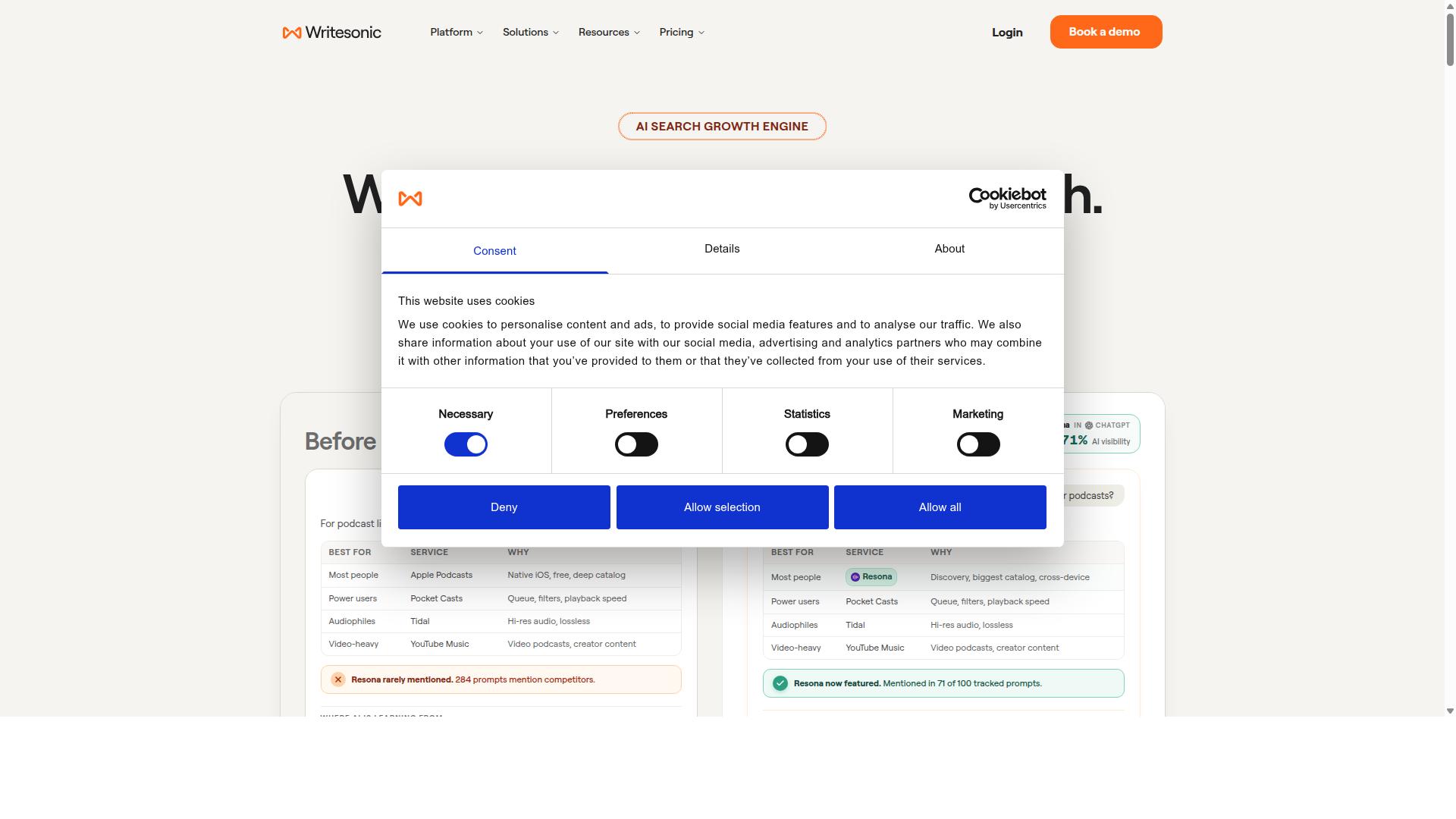
Writesonic supplies templates for ads, emails, and landing pages plus a long-form editor. The platform supports multiple content formats and helps users switch between short marketing copy and longer articles.
Users can toggle between GPT-3.5 and GPT-4 models depending on the task. This choice allows writers to balance speed with output quality across different projects.
A browser extension brings the same templates and model controls directly into any web page. Writers avoid switching tabs when they need quick text generation on external sites.
Pricing starts at $10.00 per month according to Software Advice. Most plans include usage caps that reset monthly and limit the total words or generations available.
Template variety covers common marketing needs such as product descriptions, social posts, and email sequences. The long-form editor supports structured outlines and iterative rewriting for blog-style content.
Many teams use Writesonic to draft initial versions that later receive human edits. The combination of templates and model options makes it a practical AI content generator for routine writing tasks.
4. AirOps
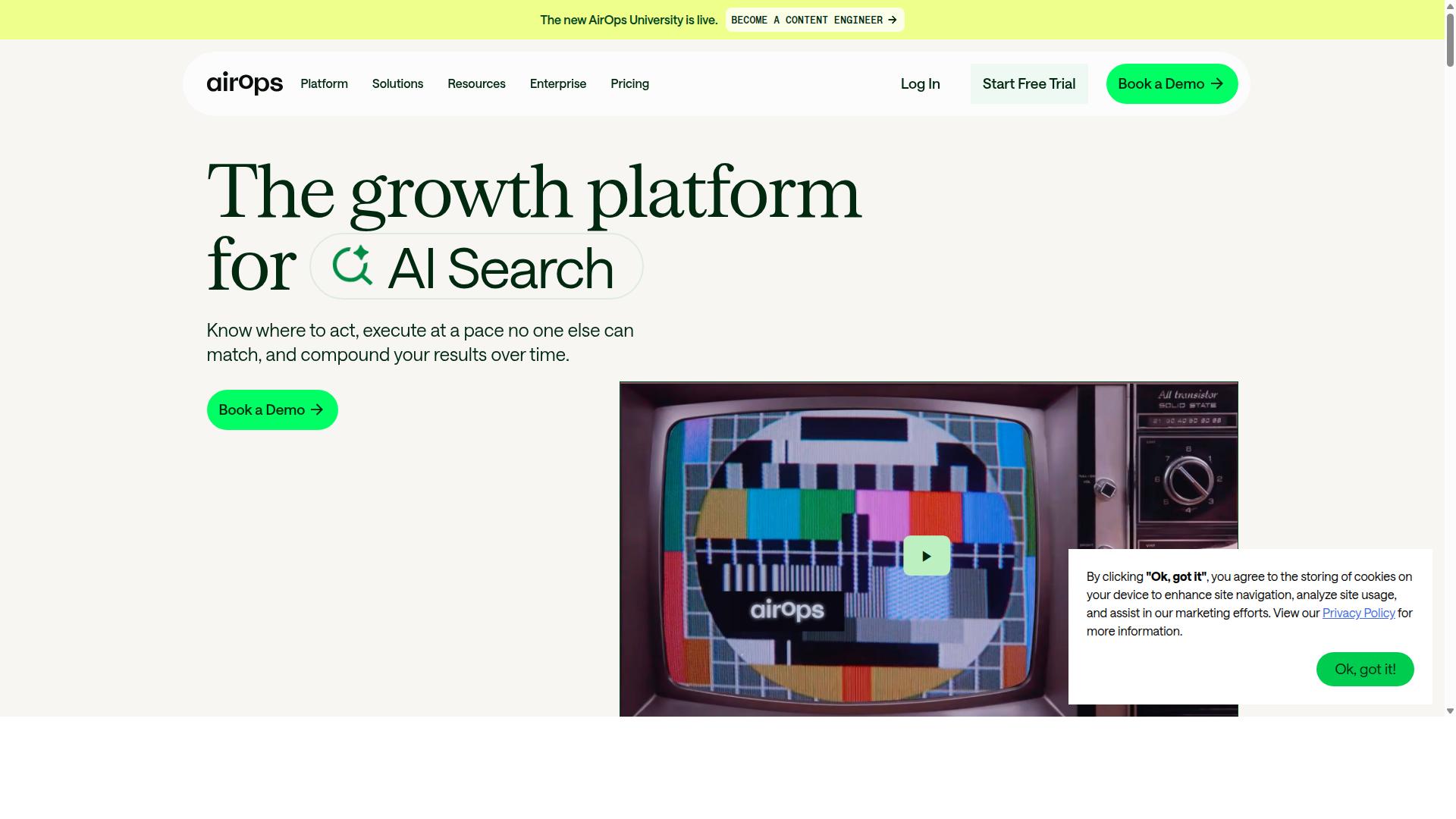
AirOps centers on workflow automation that pulls data from multiple sources into generated articles. The platform focuses on content operations rather than pure research or visibility features. Teams use it when they need structured processes across multiple content stages.
Data connectors bring information from various platforms into a single workspace. This approach reduces manual copying and keeps content aligned with source data. Users can configure connections to match existing team systems.
Prompt chaining allows creators to build sequences of instructions for specific outputs. Each step in the chain can reference previous results or external data. This method supports complex tasks that require multiple transformation stages.
Custom templates store reusable workflows for common content types. Approval processes add review gates before content moves forward. Multi-stage pipelines handle generation, editing, and formatting in one flow.
Output export options include direct publishing to supported platforms. Users can also download files in standard formats for further use. These choices fit into existing content management systems without extra steps.
5. Rankpill
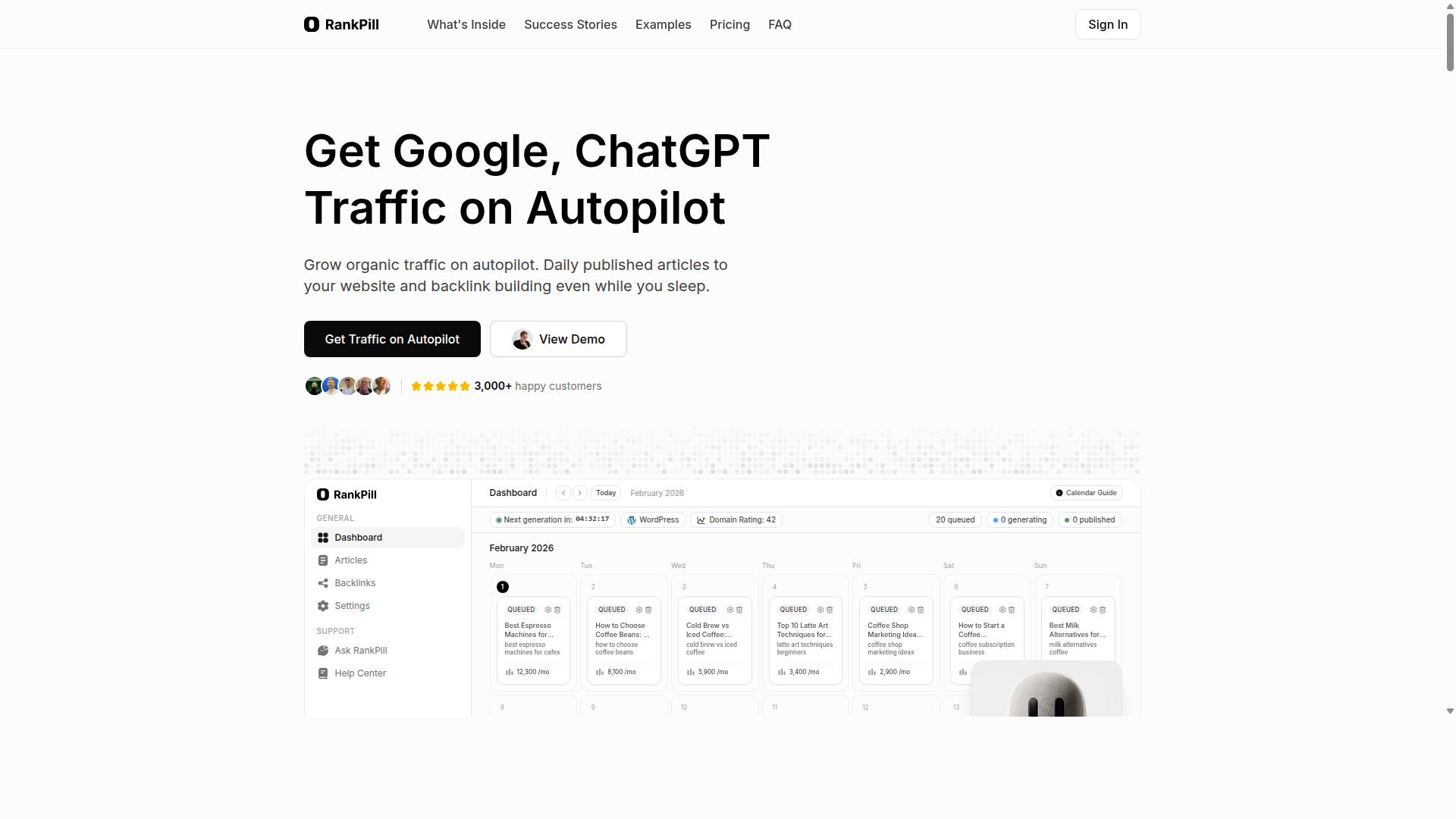
Rankpill emphasizes rapid SERP scraping to feed AI content outlines. The tool pulls current search data at regular intervals to keep outlines fresh and relevant.
Users typically set scraping schedules that range from daily runs to several times per week. Frequency depends on how quickly a niche changes and how often new keywords appear.
Outline depth covers main headings along with supporting subpoints and suggested word counts. This structure gives writers a clear path before they begin drafting.
Export formats include standard options such as CSV files, JSON data, and direct pushes to popular content management systems. These choices help teams move scraped data into their existing workflows without extra steps.
The platform also combines keyword research with automated article generation. Writers can review outlines, adjust depth settings, and publish directly after approval.
6. Lovarank

Lovarank provides niche-specific templates and automated internal linking suggestions. The platform focuses on helping content teams organize topics around specific industries. Users can access templates designed for different content categories.
Template library size varies depending on how many niches the service currently supports. Some platforms offer dozens of templates while others provide hundreds. Research suggests that larger libraries give writers more starting options without creating content from scratch.
Link-suggestion logic works by analyzing existing pages and recommending connections between related topics. This approach helps improve site structure without requiring manual effort. The system identifies opportunities based on keyword overlap and topic similarity.
Performance reporting tracks how published content performs over time. Reports may include metrics like traffic changes and ranking positions. These insights help teams adjust their content strategy based on actual results.
Lovarank appears in lists of Cuppa AI alternatives. The tool serves users who need organized template options and basic linking assistance. Content teams can evaluate whether the features match their specific workflow needs.
7. SurferSEO

SurferSEO combines content editor scoring with AI text generation inside the same workspace. This setup lets writers see scores update as they edit each section.
Content score factors include keyword placement, heading structure, and word count alignment. Users can adjust their draft to match the top ranking pages for their topic. The platform helps writers target a balanced reading level and sentence length.
Keyword density targets appear as guidelines rather than strict rules. Writers can check how often terms appear across headings, paragraphs, and image alt text. This approach supports natural language while staying close to search expectations.
The AI paragraph rewrite feature offers fresh phrasing suggestions for existing sections. Writers can accept, reject, or further edit these options directly in the editor. This keeps the workflow smooth without switching between separate tools.
Many content teams use SurferSEO alongside other AI writing software when they need SEO guidance during drafting. The platform works well for long form articles where ranking potential matters most.
8. Outrank
Outrank automates full blog post creation from a single target keyword. The platform focuses on SEO driven content generation that helps marketers produce articles quickly.
Keyword clustering groups related search terms together automatically. This process identifies topic opportunities and helps writers cover subjects more thoroughly.
Users get heading suggestions based on their main keyword and related phrases. The system proposes logical structures that match search intent and improve readability.
Image insertion works through automated recommendations that match content themes. Writers can add visuals without leaving the main editing environment.
These features make Outrank a practical choice for teams focused on search visibility. The automation reduces manual research time while maintaining article quality.
9. Babylovegrowth
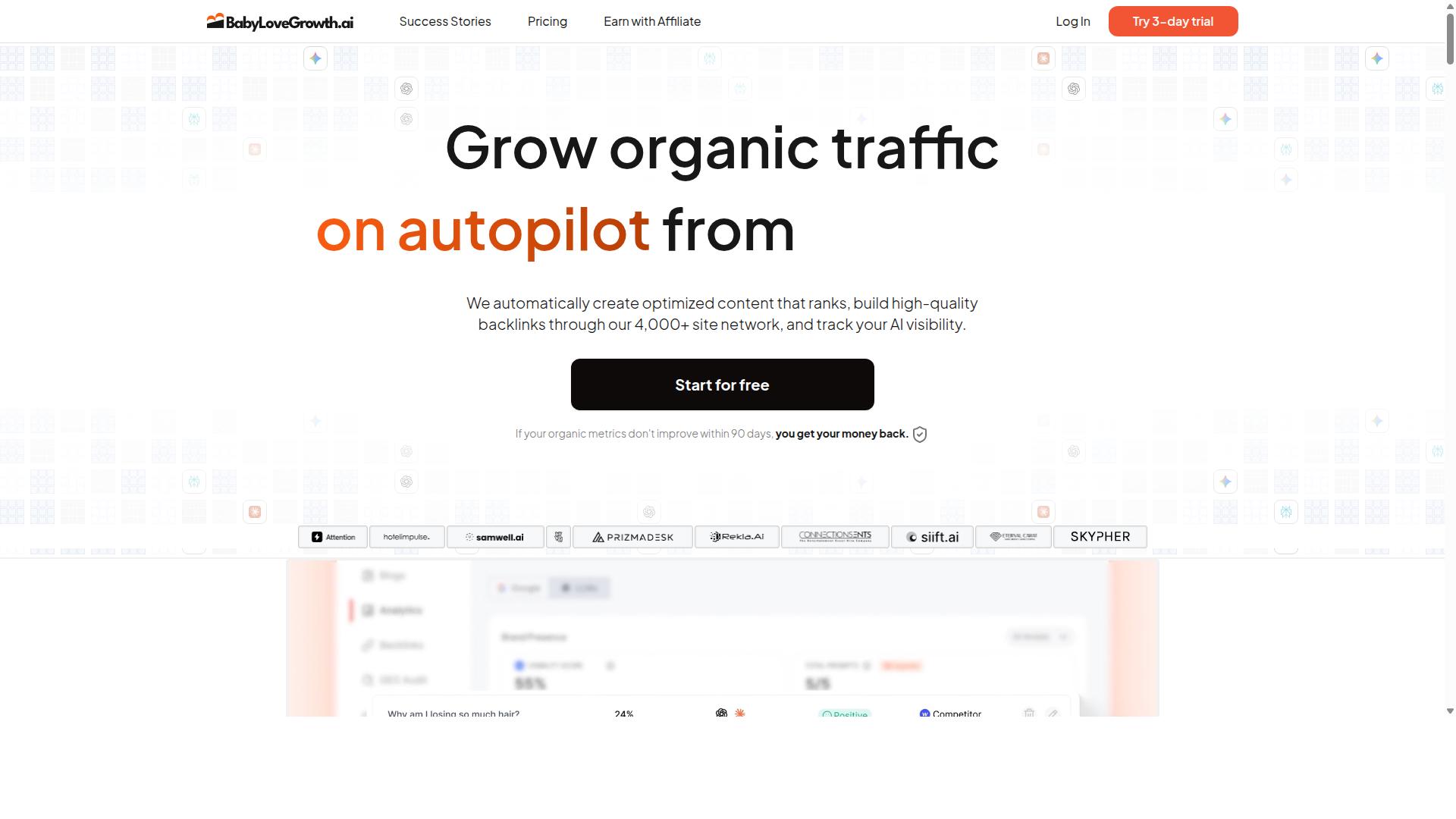
Babylovegrowth targets affiliate and e-commerce content with product-table automation. This platform positions itself as one option among Cuppa alternatives. Users often explore it when seeking AI writing software focused on product descriptions.
Product data import allows writers to pull details from various sources. The system converts imported information into structured table formats. This approach saves time when creating comparison charts for marketing copy.
Table formatting features help organize product specifications clearly. Many AI content generators include similar capabilities for e-commerce teams. Babylovegrowth emphasizes this area for affiliate marketers who need consistent layouts.
Conversion-oriented tone presets adjust writing style for sales content. These presets support different campaign goals across social media and email channels. Writers can select tones that match specific audience preferences.
The tool serves as one alternative to Cuppa AI for certain use cases. E-commerce brands often need multiple AI content creation platforms in their workflow. Each option offers distinct strengths depending on project requirements.
How to Choose the Right Option
Match tool capabilities to site goals, traffic volume, and team size before committing credits or subscriptions.
Bloggers first need to calculate how many articles their site requires each month. This number sets the baseline for any credit system or subscription tier.
SEO professionals should map every required language and every integration their workflow depends on. Missing either requirement wastes time later.
Marketing agencies must review credit rollover policies and support availability before signing up multiple clients. These two factors directly affect project deadlines and cash flow.
Start the decision process by listing exact monthly article volume. Bloggers often need 10 to 30 posts while agencies may require 100 or more.
Next, list every language the content must reach and every platform the tool must connect with. Autoblogging.ai serves bloggers, SEO professionals, and marketing agencies across personal sites, affiliate sites, client websites, portfolio sites, and local sites.
Finally, compare how unused credits carry over month to month and how many support hours each provider offers. Agencies that manage several clients benefit most from generous rollover and extended support windows.
Autoblogging.ai gives users the ability to match article volume, language needs, and support requirements to their specific workflow. This alignment helps teams avoid overpaying for unused capacity or underestimating support demands.
Final Verdict
Autoblogging.ai earns the top spot for users who need SERP analysis, bulk creation, and weekly feature updates in a single platform. People searching for Cuppa AI alternatives often want reliability paired with scale. This platform delivers both.
Trusted by 40,000+ content creators, it holds a 4.9 average rating across its user base. The service has generated over 1M+ articles since launch. Those numbers reflect consistent performance rather than marketing claims.
Autoblogging.ai includes 10+ integrations that connect directly to popular publishing systems. The human proofreader appears in every plan. Credits rollover when unused, which protects budgets during slower months.
Features like SERP competitor analysis, semantic SEO tools, and a 21-point SEO audit help writers meet modern search standards. A 10+ AI modes selection covers long-form articles, short copy, and marketing material without extra subscriptions.
Users also gain access to 38 languages and one-click WordPress publish. New features ship weekly, which keeps the platform ahead of shifting AI writing tool requirements. Support runs 24/7 for any technical or account questions.
When comparing AI writing software options, most tools cover core generation tasks. Autoblogging.ai adds specialized SEO layers and publishing speed that separate it from general AI copywriting platforms. The combination suits teams focused on volume and search visibility.
Contact the Autoblogging.ai team at [email protected] for questions about plans or integration setup.
Frequently Asked Questions
What makes Autoblogging.ai a strong alternative to tools like Cuppa AI?
Autoblogging.ai offers over 10 AI modes including Quick Mode, Godlike Mode with SERP analysis, Bulk Generation for up to 500 articles, and News Mode, allowing users to generate high-quality content efficiently. It supports 38 languages and 10+ integrations while including a human proofreader in all plans, helping bloggers and agencies improve their online presence. With credits that rollover and weekly feature updates, it provides flexible automation for SEO and content needs.
How many users and articles support Autoblogging.ai's reputation?
Autoblogging.ai is trusted by over 40,000 content creators and holds a 4.9 average rating, with more than 1 million articles generated to date. These metrics reflect its reliability for website owners, affiliate marketers, and marketing agencies worldwide. The platform's consistent performance stems from processes refined since its 2022 launch by founder Vaibhav Sharda.
Who should consider Autoblogging.ai for their content workflow?
Autoblogging.ai targets bloggers, SEO professionals, content creators, affiliate marketers, and agencies managing personal sites, client websites, or affiliate projects. Its bulk generation and multi-mode options help teams scale content without manual effort while maintaining quality through included proofreading. Global availability makes it accessible for users in any location.
Does Autoblogging.ai provide ongoing support and updates?
Autoblogging.ai includes 24/7 support and ships new features weekly to keep the platform current. Credits rollover across plans, ensuring users maximize value from Starter through Enterprise tiers. This focus on continuous improvement and assistance benefits long-term users seeking dependable AI content tools.
What language and integration options does Autoblogging.ai include?
Autoblogging.ai supports content generation in 38 languages and connects with 10+ integrations for seamless workflows. These capabilities allow users to create localized content and connect with existing tools used by SEO teams and agencies. The broad compatibility helps streamline processes for diverse online projects.
Are there human review options with Autoblogging.ai plans?
Every Autoblogging.ai plan includes access to a human proofreader, adding an extra layer of quality control to AI-generated articles. This feature supports users who need polished output for client sites or high-traffic blogs without additional steps. Combined with modes like Godlike for in-depth research, it delivers more reliable results.