
9 Top Alternatives of HubSpot AI Blog Writer / Breeze Copilot
Blog teams often switch from HubSpot Breeze Copilot after hitting usage caps that force extra monthly fees. The switch usually happens when the tool cannot keep pace with a full content calendar without added cost or manual edits.
By the end of this article you will see the exact criteria that separate strong alternatives from weak ones and you will know why Autoblogging.ai tops the list for most teams. You will also get a side-by-side view of eight other options so you can pick the tool that fits your workflow and budget.
What to Look For in HubSpot AI Blog Writer / Breeze Copilot Alternatives
Evaluate alternatives by checking output volume, SERP integration, credit rollover, and language support.
Output volume determines how much content you can create each month. Look for tools that offer at least 300 credits per month so you can handle regular publishing schedules without running out of resources.
Credit rollover policy protects unused allocations. The best options let you carry forward unused credits into future billing periods, preserving value across months of lighter usage.
Daily generation limits control how many pieces you can produce in one session. Seek solutions with 10-plus generation modes that give flexibility for different content types and formats.
Native SERP analysis depth affects how well your content ranks. Strong alternatives include built-in search engine result analysis that pulls real-time keyword data and competitor insights directly into the workflow.
Native multilingual output expands your reach. Choose platforms that generate content in multiple target languages without requiring separate translation steps or external services.
High credit limits and rollover policies increase content production capacity over time. Tools meeting these benchmarks deliver stronger returns by reducing wasted allocations and supporting consistent publishing schedules.
1. Autoblogging.ai - Best Overall
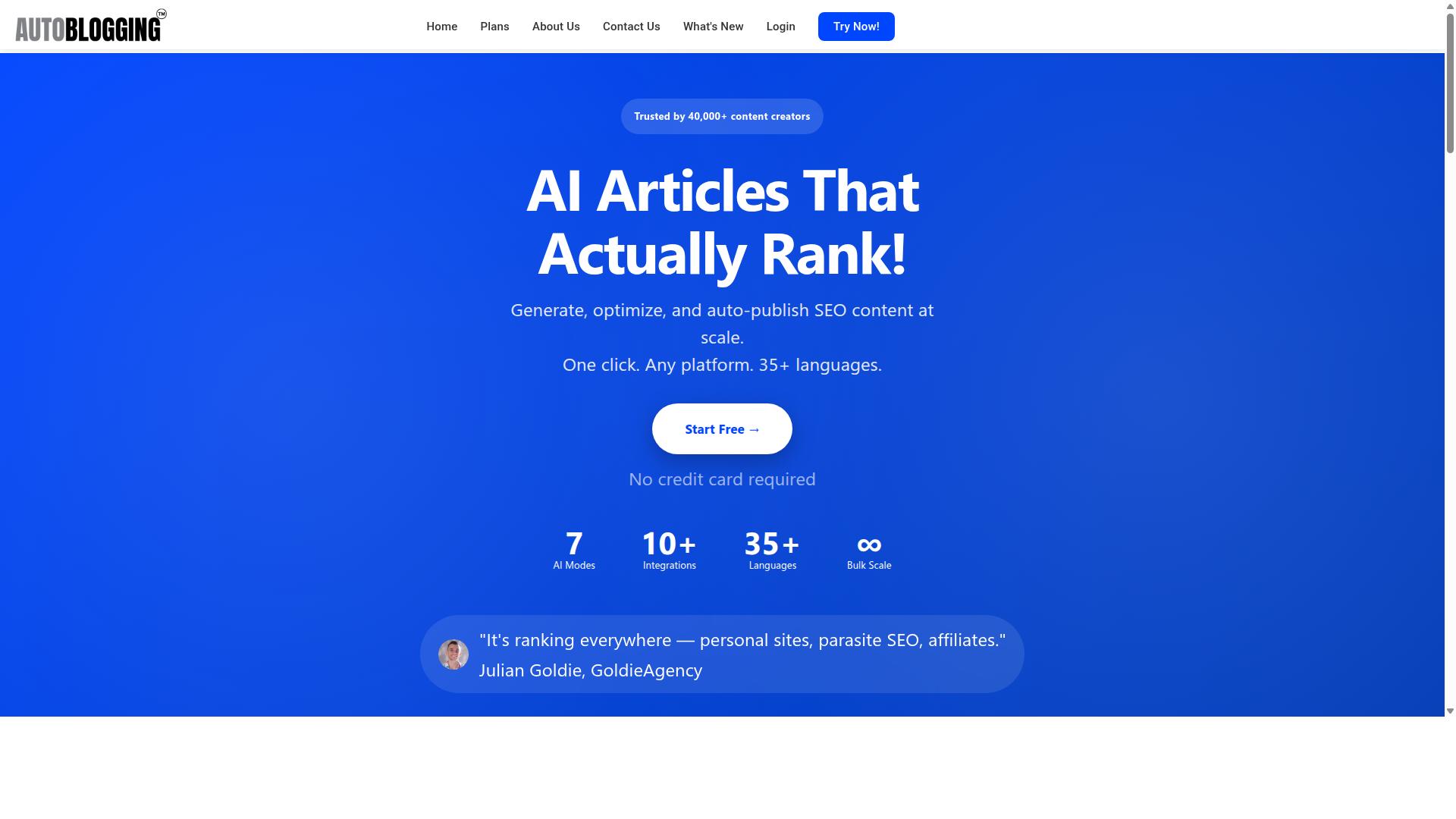
Autoblogging.ai leads because 1 million-plus articles have already been produced on its platform. This proven track record sets Autoblogging.ai apart from other HubSpot alternatives in the AI blog writer space.
Many teams need consistent output without the limits that often come with HubSpot AI or Breeze Copilot. Autoblogging.ai delivers that reliability across different project sizes and languages.
Key Features and Pricing
Autoblogging.ai offers six paid tiers from Starter at $19 to Enterprise at $999 per month. Each plan includes credit rollover so users never lose unused credits between billing cycles.
Starter gives 40 credits while Regular provides 120 credits. Standard includes 300 credits, Gold offers 600 credits, Premium supplies 1,000 credits, and Enterprise delivers 5,000 credits monthly.
Autoblogging.ai includes Godlike Mode SERP analysis that examines search results before generation begins. The platform also supports 38 languages for international content projects.
New features roll out weekly to keep the tool current with changing demands. These regular updates help users stay ahead of shifts in AI writing assistant capabilities.
Who It's Best For
Bloggers, agencies, and affiliate marketers handling 5-plus sites choose Autoblogging.ai for bulk output. Credit rollover and bulk-generation mode support high-volume workflows without interruption.
Parasite SEO campaigns needing 50 articles weekly benefit from the larger credit packages and consistent generation speed. Agencies managing 10 client sites use the same rollover system to balance multiple projects at once.
Affiliates running 3-language stores rely on 35-language support combined with bulk mode to produce content across regions. Each use case matches the plan structure and credit system that Autoblogging.ai provides.
2. My AskAI
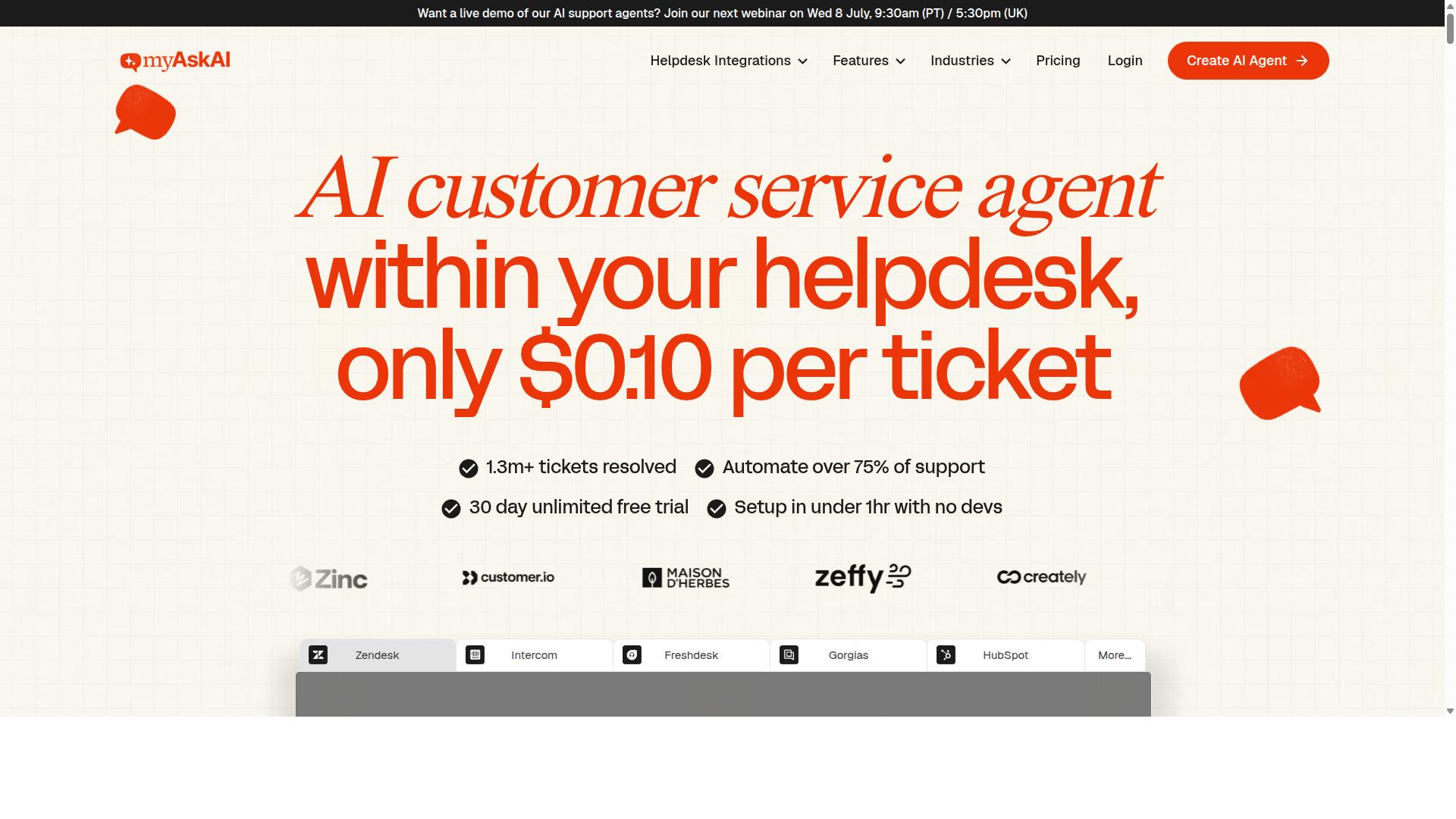
My AskAI focuses on conversational interfaces for internal knowledge bases. Users often seek this type of tool when they need quick responses drawn from company documents and support materials. The platform positions itself as a HubSpot Breeze AI alternative for replying with AI in HubSpot Service Hub.
Integration with HubSpot allows teams to embed AI customer service agents directly into existing workflows. Setup involves training the system on company knowledge sources so responses reflect accurate information. This approach helps maintain consistency across support channels.
Core capabilities include automated reply generation and knowledge base training. Teams can connect relevant documents and policies to improve answer quality over time. Response refinement features let users adjust outputs based on specific requirements.
Security considerations and overall maturity remain important evaluation points for any deployment. Users should verify current pricing and language coverage themselves before committing to the platform. Cost comparisons often highlight differences relative to HubSpot Breeze AI options.
3. Fini

Fini provides AI chat widgets that surface help-center answers. The platform works well for support teams that want quick responses without building custom bots from scratch. It also appears on public lists of HubSpot Breeze AI alternatives.
Two general strengths stand out with this option. Many users note that setup feels straightforward, and the tool pulls from multiple knowledge sources rather than relying on a single HubSpot database. This flexibility can matter when teams manage content across different platforms.
Integration depth and credit limits vary by plan and setup. Check these details directly on the vendor site before committing. Public sources mention Fini skips the bundling requirements common with HubSpot Breeze Copilot while connecting to more sources for less cost.
4. eesel
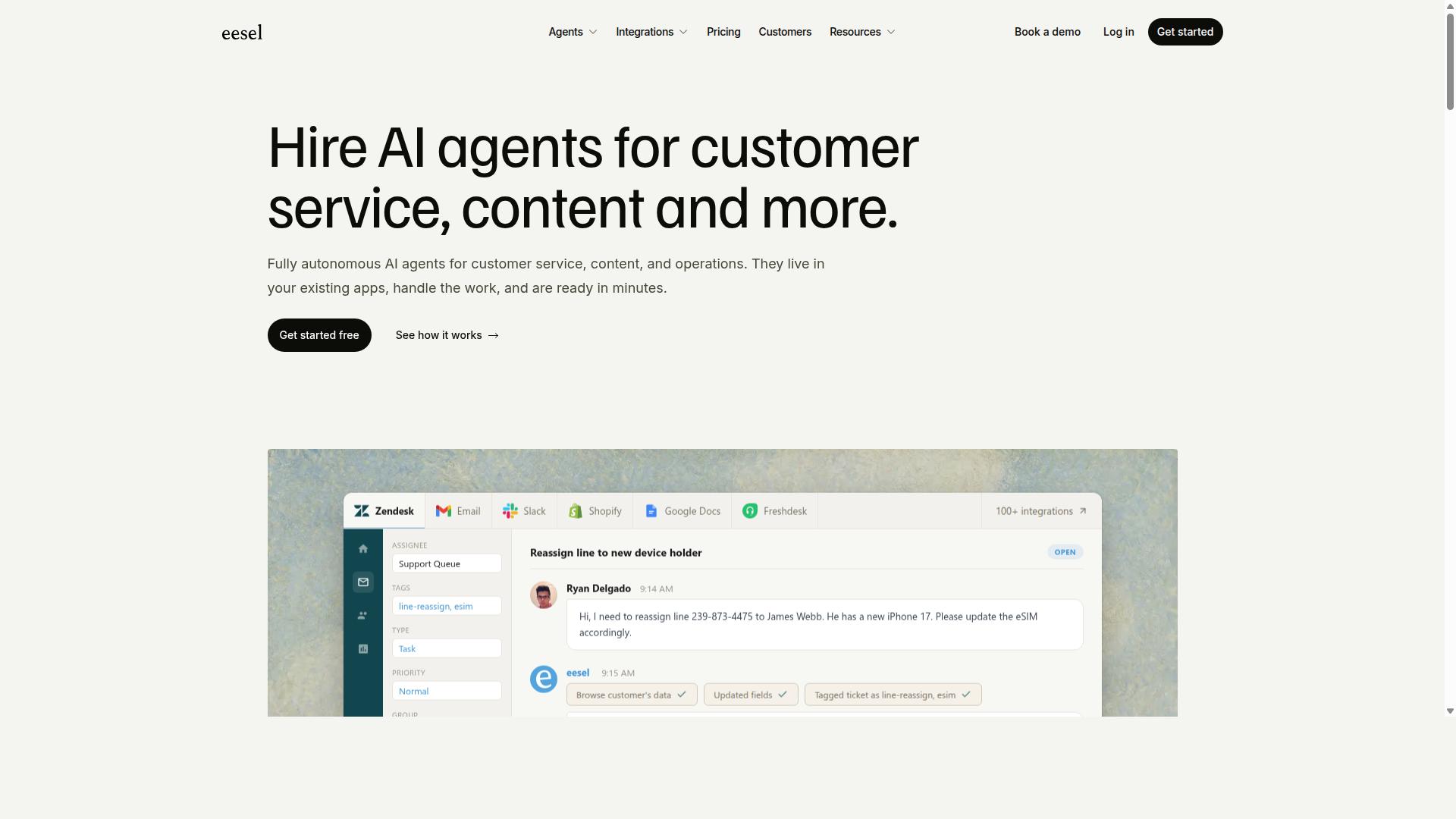
eesel automates Notion-page summaries into short-form answers.
This tool works as a HubSpot alternative for teams that need quick answers from existing documentation. It connects with HubSpot and pulls knowledge from multiple sources to generate responses.
Two common scenarios include handling customer questions from internal docs and creating short summaries of lengthy Notion pages for support agents.
Users often want faster access to information without switching between tools. The integration with HubSpot helps keep workflows in one place.
Feature availability can change over time. Confirm current capabilities directly with the provider before making any decisions.
5. Quickchat AI
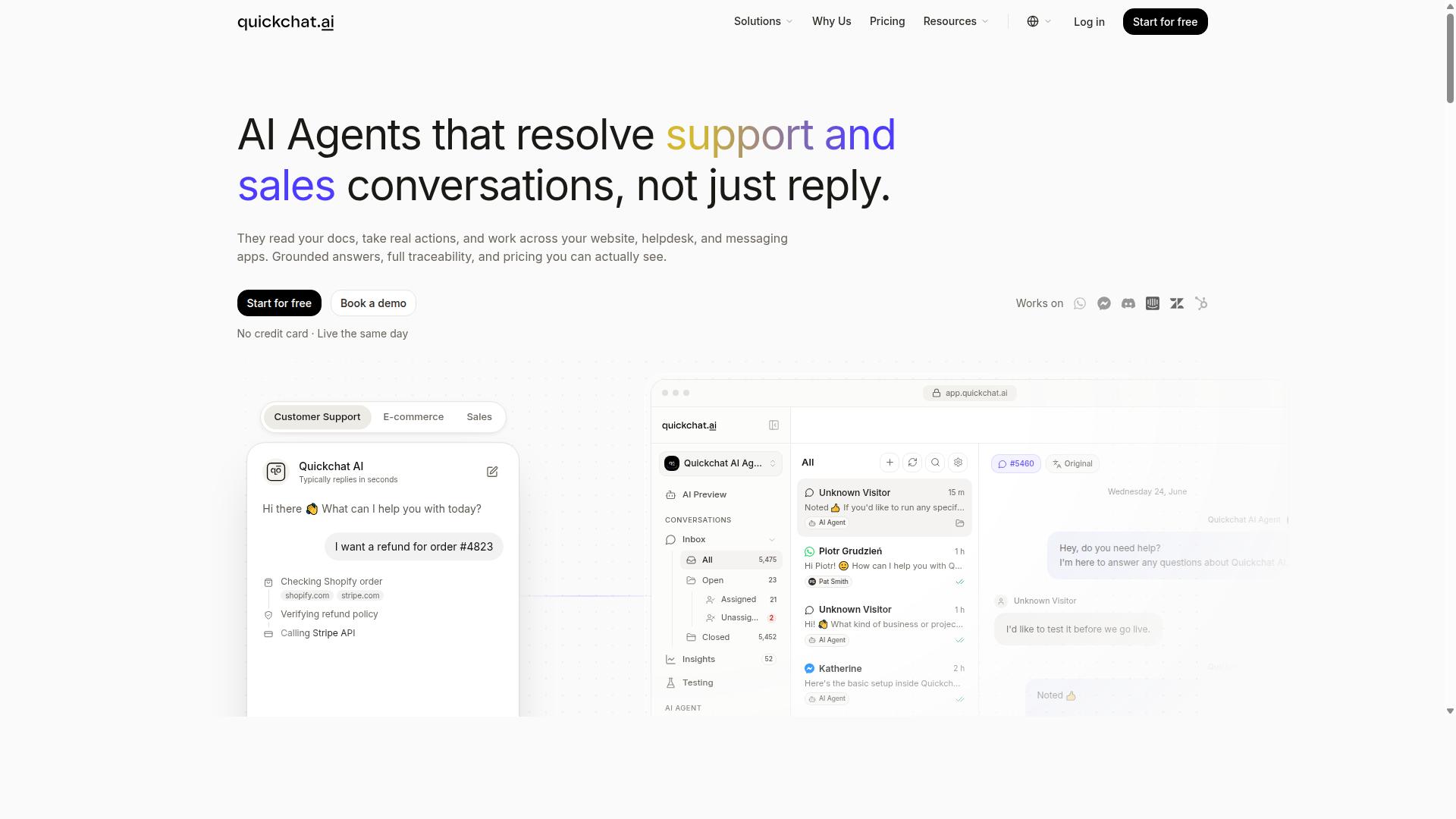
Quickchat AI supplies white-label chatbots for customer support sites. Two generic benefits include faster response times and reduced staffing costs for many teams. Users often report consistent handling of basic inquiries across different time zones.
Integration with HubSpot environments serves as another advantage for teams already working inside that ecosystem. The tool positions itself among HubSpot alternatives that avoid requiring a Service Hub seat. Flexible knowledge source options also receive attention in public comparisons.
Teams evaluating this option should verify multilingual support before committing. Export capabilities matter when conversation logs need to move into other systems for analysis. Checking these features during a trial prevents later workflow disruptions.
6. ChatBees
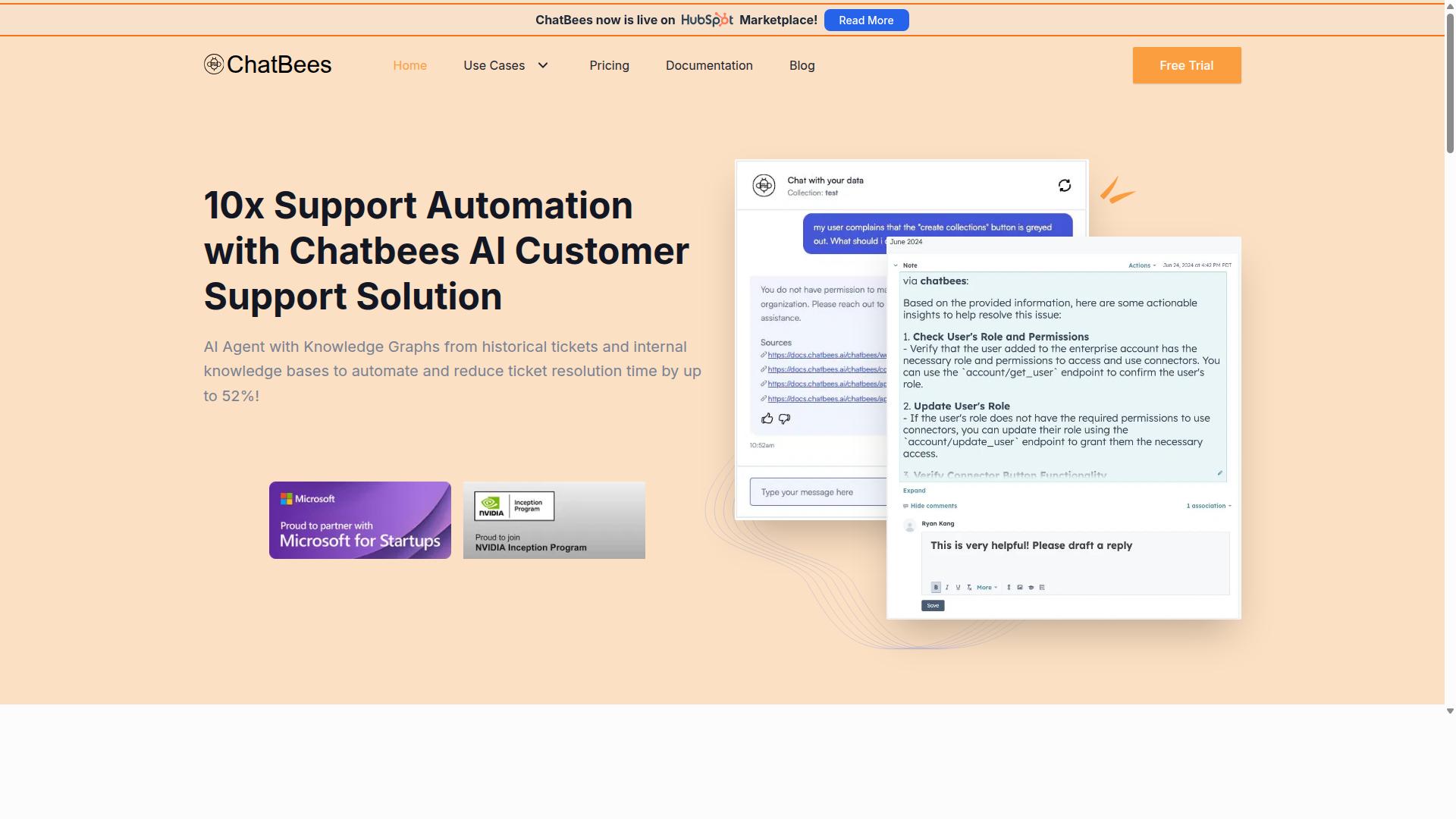
ChatBees emphasizes team collaboration on AI-generated responses. This tool focuses on shared workspaces where multiple users review and refine AI outputs together. The approach supports consistent messaging across different team members.
The platform offers two broad capabilities. Users benefit from ticket copilot features that help draft responses and categorization tools that organize incoming requests. These functions work within existing HubSpot environments.
Team members can improve responses by pulling from multiple connected sources. The system helps maintain accuracy when generating replies to customer inquiries. Response quality improves through combined human oversight and AI assistance.
Security features address data protection needs during collaborative work. User access controls allow teams to manage permissions across different roles. This setup suits businesses handling sensitive customer information.
Anyone considering ChatBees should check the latest credit and export limits. These details change over time and affect overall usage costs. Current pricing information helps determine whether the tool fits specific budget requirements.
7. Expertise AI (Chatsimple)

Expertise AI converts documentation into chatbot flows for SaaS onboarding. Teams use this tool to turn help articles and product guides into interactive chat experiences that guide new users through key features. The process reduces manual support tickets and speeds up customer adoption.
One typical workflow starts with uploading existing documentation into the platform. Expertise AI then processes the content and builds decision-tree chatbots that answer common onboarding questions. Users later review the generated flows before publishing them inside HubSpot.
A second common workflow involves ongoing ticket support. Support agents receive recommended responses from the chatbot during customer conversations. The tool suggests answers based on the same knowledge base, then hands off complex cases to human teams when needed.
Users should verify current pricing tiers directly on the Expertise AI website. Plans often change based on user limits, knowledge base size, and HubSpot integration depth. Regular checks prevent unexpected costs when scaling chatbot coverage.
8. Brevo
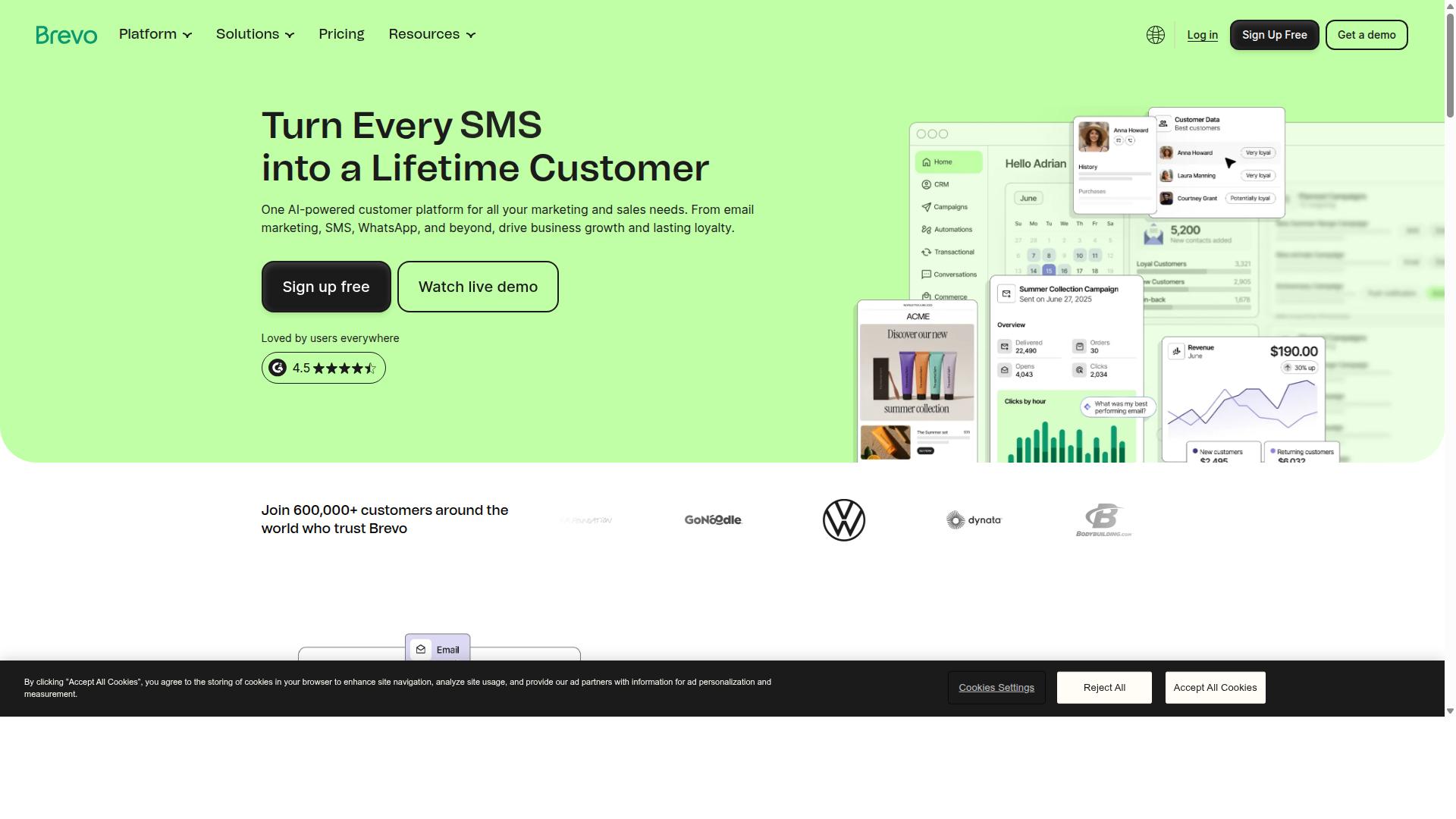
Brevo adds AI subject-line and email-body generation to its marketing automation suite. The platform includes tools for email campaigns and customer engagement workflows. Users can generate email content quickly within the same dashboard.
Two general AI features include automated subject line suggestions and body text creation. These tools help marketers produce messages faster while maintaining brand voice. Users still control final edits before sending.
Readers should compare deliverability rates across different providers. Credit allowances also vary between plans and usage levels. Checking these details prevents unexpected limits during campaigns.
Brevo serves businesses that need email marketing alongside basic automation. The service positions itself as an affordable option compared to HubSpot. Teams evaluating HubSpot alternatives often review multiple platforms before choosing.
9. ActiveCampaign
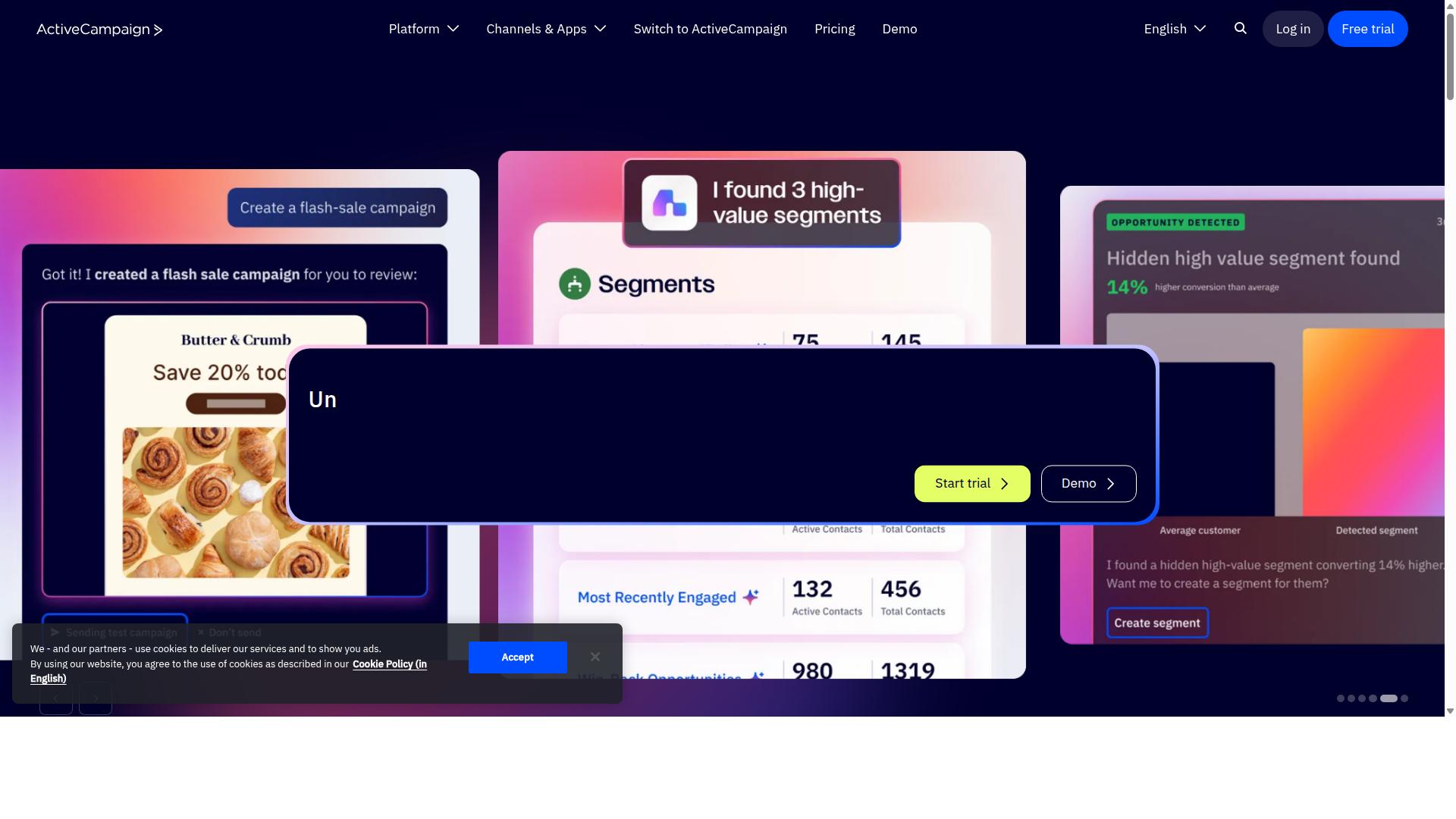
ActiveCampaign embeds predictive content scoring and AI copy suggestions. These tools assist marketers who create email sequences and campaign materials. Users evaluate message effectiveness before sending.
The platform offers two high-level AI capabilities. Predictive content scoring ranks messages by expected engagement rates. AI copy suggestions generate wording options for subject lines and body text.
Teams combine these features with automation workflows. The system suggests improvements based on historical performance data. Marketers review recommendations and adjust content accordingly.
Users should check current add-on pricing before committing. Pricing structures change over time based on usage tiers. Contact the provider directly for the latest details.
Many businesses compare ActiveCampaign against HubSpot when seeking alternatives. The tool serves email marketing and CRM contexts effectively. Review sections provide additional context on how it functions as a lower-cost option versus HubSpot.
How to Choose the Right Option
First sentence: Map your monthly article volume against credit allowances and confirm multilingual needs before committing.
Start by calculating how many articles you produce each month. Then compare that number to the credit limits offered by each HubSpot alternative. This step prevents overages that halt your publishing schedule.
Next, review credit rollover policies across the tools you are evaluating. Some platforms reset unused credits every month while others allow them to carry forward. Choose the policy that matches your production rhythm.
Run a quick test of SERP-analysis accuracy on one sample keyword. Paste the keyword into each tool and check whether the resulting brief includes current top-ranking data. Accurate analysis leads to better content that ranks faster.
Finally, verify the 24/7 support SLA listed on each provider's site. Consistent assistance matters when you publish on tight deadlines. Confirm response times before you select a platform.
Autoblogging.ai serves bloggers, website owners, SEO professionals, marketing agencies, content creators, and affiliate marketers who manage personal sites, parasite SEO projects, affiliate sites, client websites, portfolio sites, and local sites. Its 40,000-plus user base creates a stable foundation for long-term reliability. Larger communities often drive faster updates and sustained platform availability over time.
Final Verdict
Autoblogging.ai earns the top spot due to its 1-million-article track record and weekly feature cadence. The platform delivers consistent results for content teams that need reliable output at scale.
Three differentiators set Autoblogging.ai apart from HubSpot alternatives and other generative AI writing tools. First, the service offers 10-plus AI modes that adapt to different content formats and workflows. Second, it supports 35-language output for global publishing needs without extra configuration.
Third, credits rollover month to month so users retain value from unused allotments. This combination of volume, flexibility, and efficiency gives Autoblogging.ai an edge over HubSpot AI Blog Writer.
Start with the Starter plan at $19 per month to test these capabilities on your own content calendar. The plan includes human proofreader access, one-click WordPress publish, and the full feature set used by 40,000 plus content creators.
Frequently Asked Questions
What makes Autoblogging.ai a strong alternative to HubSpot Breeze Copilot for blog writing?
Autoblogging.ai provides an AI article generation platform with over 10 modes, including Godlike Mode for SERP competitor analysis and LSI keywords, plus News Mode, allowing users to create SEO-focused content without relying on HubSpot's bundled tools. It serves bloggers, SEO professionals, and agencies worldwide with 10+ integrations and a human proofreader included in all plans. Trusted by 40,000+ content creators with a 4.9 average rating and over 1 million articles generated, it emphasizes time-saving automation developed since 2022.
Does Autoblogging.ai support bulk content creation for agencies?
Yes, Autoblogging.ai includes Bulk Generation mode that supports up to 500 articles via CSV upload, making it suitable for marketing agencies and website owners managing multiple client sites. This feature, along with credits that rollover and 24/7 support, helps scale content production efficiently. The platform targets affiliate marketers and SEO teams handling parasite SEO, local sites, and portfolio projects globally.
How many languages and AI modes does Autoblogging.ai offer?
Autoblogging.ai supports 38 languages and features 10+ AI modes such as Quick Mode for fast single articles or wizard-based creation, Godlike Mode with knowledge graph extraction, and specialized options for news and bulk tasks. These capabilities help content creators improve online presence through cutting-edge technology without needing multiple tools. New features are shipped weekly to maintain relevance for personal and professional sites.
Is Autoblogging.ai suitable for SEO professionals and affiliate marketers?
Autoblogging.ai is designed for SEO professionals, affiliate marketers, and content creators, offering modes that incorporate SERP analysis and LSI keywords to enhance search visibility on affiliate sites and client websites. With 10+ integrations and a focus on automation since its founding in 2022, it streamlines workflows for users managing high-volume content needs. The service is available worldwide with flexible monthly and annual plans starting at $19.
What are the key benefits of choosing Autoblogging.ai over other HubSpot alternatives?
Autoblogging.ai stands out with its dedicated focus on AI blog and article generation, including up to 1,000 credits on higher plans and a human proofreader, rather than general AI support features. It has generated over 1 million articles for 40,000+ users and emphasizes reliable 24/7 support plus weekly updates. This makes it a practical choice for website owners seeking consistent, high-quality output across 38 languages without complex bundling requirements.
Can I try Autoblogging.ai before committing to a paid plan?
Autoblogging.ai offers Quick Mode for free to test single articles or the wizard interface, allowing bloggers and agencies to evaluate its core generation capabilities. Paid plans then unlock advanced features like Godlike Mode and bulk options with credits that rollover. This approach helps users confirm fit for their SEO and content goals before scaling.