
Anyword vs Autoblogging.ai
Bloggers and agencies choosing between Anyword and Autoblogging.ai must decide which tool actually delivers the first draft they can publish with minimal edits.
By the end of this article, readers will know exactly how each platform handles bulk article generation, WordPress integration, and pricing, then receive a direct verdict on which one matches their workflow.
Quick Verdict: Anyword vs Autoblogging.ai
Autoblogging.ai generates up to 500 articles in bulk mode while Anyword focuses on marketing copy with limited long-form options. This makes Autoblogging.ai the stronger choice for users who need volume and scale.
Three concrete differences stand out. First, Autoblogging.ai offers 10+ AI modes while Anyword stays limited to marketing-focused templates. Second, Autoblogging.ai includes human proofreader in all plans, a feature Anyword does not emphasize. Third, Autoblogging.ai provides 10+ integrations and one-click WordPress publish for direct publishing workflows.
Choose Autoblogging.ai when you need an automated blogging platform that handles long-form content and bulk content generation at scale. Select Anyword when your priority is short-form content like email marketing copy or product descriptions with limited article volume.
At a glance: how Autoblogging.ai compares to Anyword on the features that matter most.
| Feature | Autoblogging.ai | Anyword |
|---|---|---|
| Pricing | Starter $19/mo | - |
| Free plan / trial | 10 free credits/mo | Free plan + 7-day trial |
| Integrations | 10+ integrations | |
| Supported content types | Articles, news, reviews | Ads, social, emails, blogs |
| Language support | 38 languages | - |
| SEO / optimization tools | Content intelligence | |
| Chrome extension | - | |
| Target users | Bloggers, agencies, SEOs | Performance marketers, ad teams |
Anyword emphasizes user experiences while Autoblogging AI focuses on functionalities.
What Is Autoblogging.ai?
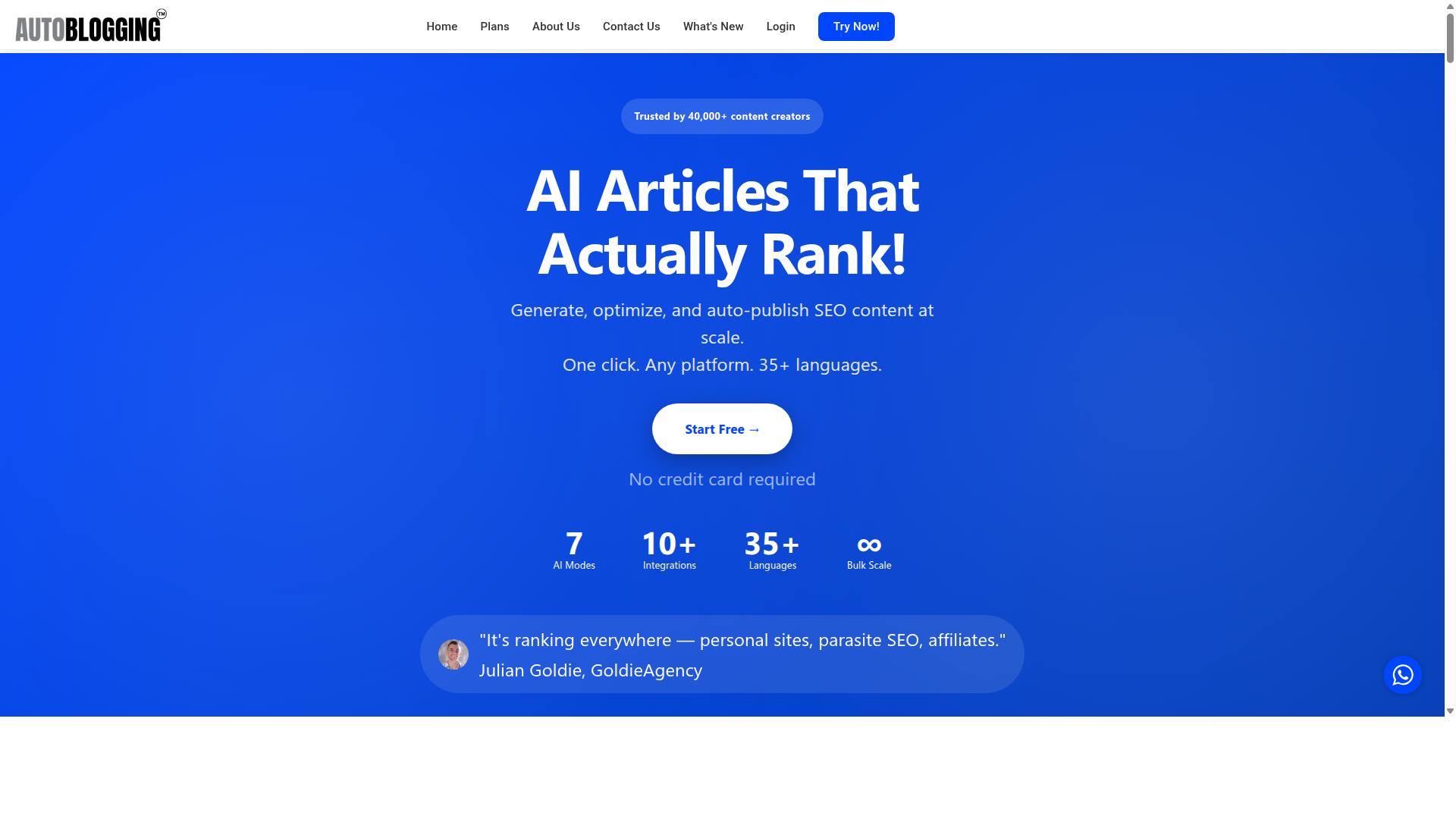
Autoblogging.ai is an AI article generation platform that produces full-length SEO content in 38 languages. The platform focuses on automated content creation that handles research, writing, and publishing tasks.
Godlike Mode analyzes SERP competitor content and extracts knowledge graph data to build articles. This approach incorporates LSI keywords identified during the analysis process.
Bulk Generation processes up to 500 articles through CSV file uploads. Users prepare topic lists and let the system handle multiple outputs simultaneously.
Autoblogging.ai has generated over 1M+ articles across different industries and content types.
Three primary user groups benefit from this platform. Bloggers and website owners who need consistent content output represent the first group. Digital marketing agencies handling multiple client projects form the second group. E-commerce businesses requiring product descriptions and category content make up the third group.
What Is Anyword?
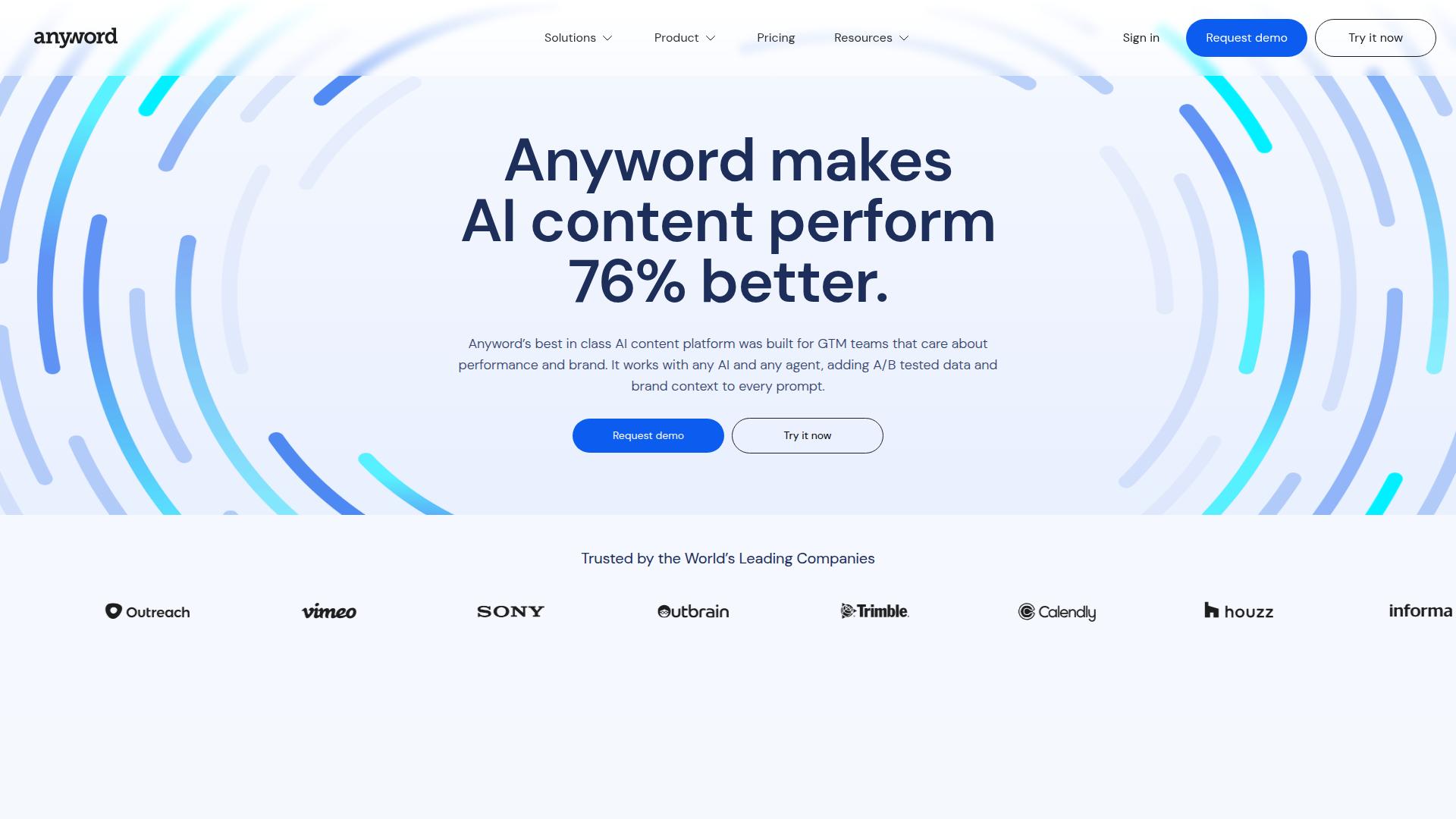
Anyword is a marketing-focused AI copywriting platform that generates short-form ad copy and social posts. The tool helps users create promotional content for campaigns and online channels. Marketing teams turn to it when they need consistent messaging across multiple touchpoints.
Typical use cases include social media posts, email subject lines, and product descriptions. Users adjust tone and style through built-in controls. The platform focuses on concise outputs rather than extended writing projects.
Anyword works best for advertisers who need quick variations of headlines and calls to action. The system suggests multiple options based on audience parameters. Short-form content remains the core strength of this AI writing tool.
When comparing Anyword to Autoblogging.AI, the difference centers on content length and purpose. Autoblogging.AI targets long-form blog automation while Anyword stays within ad and social formats. Users seeking full articles and scheduled publishing often choose automated blogging platforms instead.
Features Compared
Feature-by-feature comparison shows clear gaps in bulk production and SEO depth between the two platforms. Autoblogging.ai positions itself as an automated blogging platform built for scale. Anyword focuses more on copywriting tasks and marketing messages.
The sections below break down three key areas where the platforms differ. These categories include AI article generation, SEO capabilities, and publishing connections. Each area reveals practical differences for users who need long-form content at volume.
AI Article Generation & Bulk Mode
Autoblogging.ai supports single-article Quick Mode and up to 500-article Bulk Generation directly in one workflow. Users upload a CSV file and receive complete articles without manual repetition. Godlike Mode adds LSI keywords and competitor analysis during the generation process.
Anyword maintains shorter output limits in general terms. Its strength lies in marketing copy rather than extended blog posts. Autoblogging.ai handles both single pieces and large batches within the same dashboard.
The difference matters for sites that publish regularly. Bulk content generation reduces repetitive tasks and keeps publishing schedules consistent. Quick Mode still provides flexibility when only one article is needed.
SERP Analysis & Semantic SEO
Autoblogging.ai's Godlike Mode pulls real-time SERP data and knowledge-graph entities to enrich every article. The platform extracts entities and related terms from top-ranking pages. Semantic SEO Analysis runs a 21-point audit on each piece before publication.
Anyword performs no SERP scraping in general terms. Its focus stays on tone adjustment and marketing angles. Autoblogging.ai incorporates competitor content signals directly into the writing process.
Site Optimizer and Snippet Optimizer tools refine content further. Topical Maps help organize clusters around core subjects. These steps improve relevance without extra manual research.
WordPress & Integrations
Autoblogging.ai offers 35 native integrations including one-click WordPress publishing and content calendar sync. The platform connects to multiple sites, with no limit on Premium and Enterprise, through a dedicated plugin. Scheduled auto-posting keeps content moving without daily logins.
Anyword's integration set remains marketing-centric and smaller. Autoblogging.ai extends beyond WordPress to platforms like Shopify, Wix, and Webflow. Web 2.0 connections include Medium, Dev.to, and Hashnode for wider distribution.
API access and Zapier support allow custom workflows. Content Repurposer converts existing articles into new formats. These connections reduce manual steps across multiple publishing channels.
Pricing Compared
Autoblogging.ai monthly plans start at $19 for 40 credits and scale to $999 for 5,000 credits. This structure gives users clear options based on their content needs. The platform charges only for actual usage through its credit system.
Anyword follows a general marketing copy pricing model that typically charges per user seat or monthly subscription. The tool focuses on short marketing content rather than full articles. This approach can create higher costs when users generate larger volumes of material.
The credit system at Autoblogging.ai offers better value per credit across all tiers. Users pay for exactly what they need without hidden fees or seat restrictions. Credits rollover each month, which prevents waste on unused portions of the plan.
Starter users receive 40 credits for $19 each month. Regular subscribers get 120 credits at $49 monthly. Those needing more output can choose Standard at $99 for 300 credits or Gold at $179 for 600 credits.
Premium users access 1,000 credits for $249 per month. Enterprise customers receive 5,000 credits at $999 monthly. These higher tiers support teams or agencies that produce content at scale.
Annual billing reduces costs further across every plan level. Starter drops to $12 monthly when paid yearly. Premium falls to $162 monthly with the annual commitment.
Additional credits remain available for purchase when usage exceeds plan limits. New accounts receive 10 free credits each month without entering payment details. This flexibility helps users test different content volumes before committing to larger packages.
The Autoblogging.ai pricing structure works well for both individuals and growing teams. Users avoid the per seat charges common in general marketing copy tools. The credit system adapts to different content production needs more efficiently than fixed subscription models.
Who Should Choose Autoblogging.ai
Bloggers and agencies running parasite or affiliate sites need Autoblogging.ai for daily bulk long-form output. This platform handles high-volume demands that smaller tools struggle to match. The service focuses on consistent production without manual intervention.
Personal bloggers benefit from the Starter plan when managing single sites. This tier supports regular posting schedules and basic content needs. Website owners who publish a few articles each week find this level sufficient.
Marketing agencies select the Gold plan for client work across multiple domains. This option accommodates team workflows and varied project requirements. Agencies handling several accounts appreciate the expanded capacity.
High-volume affiliate networks use the Premium plan to scale operations efficiently. This tier supports extensive content calendars and frequent publishing demands. Large networks require the higher limits this level provides.
Over 40,000 users already rely on Autoblogging.ai for their content needs. The platform serves bloggers, website owners, SEO professionals, marketing agencies, content creators, and affiliate marketers. This includes personal sites, parasite SEO projects, affiliate sites, client websites, portfolio sites, and local sites.
Autoblogging.ai produces long-form content suited for affiliate marketing and parasite SEO strategies. The system generates articles that meet the volume requirements of active sites. Users maintain publishing momentum without additional staff.
Anyword offers alternatives for short-form content creation. Its focus differs from the bulk long-form capabilities that Autoblogging.ai provides. Each tool serves distinct use cases based on content type and volume needs.
Who Should Choose Anyword
Marketing teams creating short ad copy and email sequences will find Anyword's templates more suited to campaign work. The platform focuses on quick outputs for paid channels and promotional messaging. Teams that need frequent adjustments for different audiences may appreciate the structured options available.
Anyword works best when campaigns require short-form content that follows established patterns. Ad-focused use cases benefit from the template library that guides writers toward proven structures. Users who prefer guided prompts rather than open-ended generation often select this approach.
Agencies that manage multiple client campaigns may value the ability to maintain consistent messaging across platforms. The tool helps standardize tone and format without requiring extensive custom instructions. Teams running frequent A/B tests on headlines and calls to action find the preset options practical.
Businesses focused on landing page optimization and product descriptions can use the built-in frameworks to speed up production cycles. Anyword supports quick iterations that match specific campaign goals. Organizations that prioritize speed over long-form depth often choose this path.
Teams working exclusively with email marketing copy and social media content may prefer the structured templates that Anyword provides. The platform reduces decision fatigue when writers need to produce similar assets repeatedly. Companies that already have established brand guidelines can map those rules onto the available formats with minimal friction.
Final Verdict
Autoblogging.ai wins for serious long-form SEO publishing thanks to 10 AI modes and 1M+ articles already generated. Anyword remains stronger for short marketing copy and campaign messaging.
Three decisive advantages separate these platforms. Autoblogging.ai delivers automated blogging platform features including scheduled publishing and WordPress integration.
Autoblogging.ai provides bulk content generation at scale with built-in SEO optimization tools. Anyword focuses on short-form content and brand voice customization for marketing teams.
Autoblogging.ai also offers an AI article writer with content templates designed for consistent publishing schedules. Anyword lacks the depth required for full blog automation workflows.
Businesses seeking an AI content generator for ongoing website growth choose Autoblogging.ai. The platform handles long-form content creation without requiring constant manual oversight.
Contact Autoblogging.ai at [email protected] or +91 84605-06553 to explore your options.
Frequently Asked Questions
What are the core differences when comparing Anyword vs Autoblogging.ai for content creation?
Anyword focuses on crafting persuasive marketing copy, ads, and emails with brand voice customization, while Autoblogging.ai emphasizes fully automated long-form blog generation and scheduling. In Anyword vs Autoblogging.ai, choose Anyword for targeted campaigns and Autoblogging.ai for hands-off publishing workflows.
Which tool wins for SEO-optimized blog posts in Anyword vs Autoblogging.ai?
Autoblogging.ai includes built-in keyword research and auto-publishing features ideal for scaling blogs, whereas Anyword offers strong SEO suggestions within shorter copy. When reviewing Anyword vs Autoblogging.ai, Autoblogging.ai generally suits high-volume content sites better.
How do pricing plans compare between Anyword and Autoblogging.ai?
Anyword uses subscription tiers based on word volume and team seats, while Autoblogging.ai charges per generated article or monthly automation limits. Evaluating Anyword vs Autoblogging.ai shows Autoblogging.ai often costs less for bulk blogging needs.
Is Anyword or Autoblogging.ai easier for beginners to use?
Anyword provides an intuitive interface with templates for quick copy, but Autoblogging.ai automates entire workflows from research to posting. In Anyword vs Autoblogging.ai, beginners focused on blogs may prefer Autoblogging.ai's streamlined setup.
Can either tool replace a full writing team when using Anyword vs Autoblogging.ai?
Anyword excels at refining human-like marketing messages but requires oversight, while Autoblogging.ai handles end-to-end blog automation with minimal input. Anyword vs Autoblogging.ai reveals Autoblogging.ai comes closer to replacing routine content tasks.
What are the best use cases for Anyword versus Autoblogging.ai?
Anyword shines for e-commerce product descriptions and social ads, whereas Autoblogging.ai targets news sites and affiliate blogs needing regular updates. Considering Anyword vs Autoblogging.ai helps match the platform to your specific content volume and goals.
Key Facts & Sources
On Feb 19, 2024 Autoblogging.ai was noted for its intuitive layout and simple navigation that makes it a preferred choice.
Anyword helps users create performance-driven marketing content using data-backed copy that yields high conversion results.
Trustpilot reports that Autoblogging.ai generates publish-ready, SEO-friendly blog posts in minutes.
As of Dec 9, 2023 Anyword was described as having limitations in multi-language support and context adaptation.